



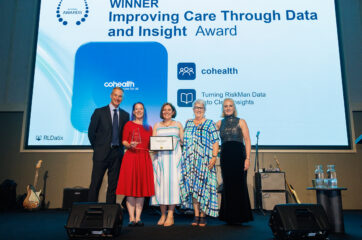
PDSA: Improving Customer Feedback at EACH – Driving Quality Through Customer Insights

Each
Introduction
Each applied a Plan-Do-Study-Act (PDSA) quality improvement approach to transform unsolicited customer feedback into reliable, actionable insight. A review identified that unclear web forms and unstructured phone processes created confusion, misdirected submissions and delays, limiting the organisation’s ability to respond and learn.
The initiative redesigned the website feedback form and call-taker template to improve clarity, accessibility and structured data capture. This created a consistent, user-centred process for customers while strengthening the quality of feedback data.
Since implementation in November 2024, submissions are more accurate, response times faster and insights clearer. The project established a strong foundation for evidence-based decision-making and continuous improvement, ensuring customer feedback directly informs service quality and person-centred care.
Challenge
Unsolicited feedback processes at Each were fragmented and difficult to interpret. Website forms relied heavily on free text and unclear pathways, while phone interactions lacked structured prompts, placing the burden of information capture on customers and call-takers.
This resulted in incomplete or misdirected submissions, slow allocation and limited visibility of trends. Poor data quality restricted the organisation’s ability to identify risks, prioritise improvements and respond efficiently to customer concerns.
Each needed a streamlined, accessible and standardised feedback process that would enable accurate data capture, faster resolution and meaningful insight. Improving both the customer experience and data integrity was essential to strengthen organisational learning and support person-centred service delivery.
Approach
Using the PDSA methodology, Each conducted root-cause analysis and stakeholder consultation across communications, governance, privacy and intake teams. The website feedback form was simplified with clearer pathways and reduced free-text fields, while the call-taker template was redesigned to standardise data collection and reduce cognitive load.
Implementation aligned with organisational branding and accessibility standards. Data monitoring tracked submission accuracy, trends and response times to evaluate impact.
Early results informed refinements and a planned second cycle to integrate unsolicited and solicited feedback streams using RiskMan data. This iterative, collaborative approach ensured the solution aligned with strategic priorities and supported continuous improvement.
Achievements / Outcomes
The redesigned feedback process significantly improved data accuracy and operational efficiency. Incorrect submissions reduced from 60.87% to over 99% correct form use within a year, enabling faster triage and allocation. Staff now receive structured, reliable information to support timely resolution and trend analysis.
The Quality team has improved visibility of feedback themes, enabling targeted improvement initiatives and stronger governance reporting. Customers experience clearer, more accessible feedback channels and faster responses, strengthening trust and engagement.
The initiative has embedded feedback data into organisational learning and established a scalable model for integrating customer insights into quality improvement and person-centred care delivery.
Lessons for Others
• Simplify feedback pathways
• Standardise data capture fields
• Reduce free-text reliance
• Test with end-users early
• Monitor accuracy metrics
• Iterate using PDSA cycles
• Integrate feedback sources