



Clinical Nursing Workforce Profile and Utilisation:

The impact of a shift towards a more inexperienced nursing workforce in the UK (Post-COVID)
Since the COVID-19 pandemic, the UK nursing workforce has undergone significant structural changes, particularly in the distribution of the NHS band grades. The impact of such changes has seen a greater proportion of less experienced staff at the front end of direct patient care, where they are making some of the most safety critical decisions. This is exacerbated by stretched senior staff presence resulting in less opportunity for mentorship, skills development and clinical supervision structures.
Coupled with this, the utilisation of our existing workforce demonstrates a widening gap between planned headroom and the actual availability of our workforce for deployment. As such, reactive management of these variable and unplanned gaps can result in inappropriate skill mixes and further impact on the clinical confidence of our less experienced workforce.
So Who Do We Have and How Are We Utilising Our Workforce?
In considering this question, data from both the main workforce planning e-rostering solution and clinical deployment solution across the NHS in the UK have been observed. Key data for unavailability, activity, geographic changes, along with red flag and professional judgement application over time and by staff band, has been considered.
Headline Numbers
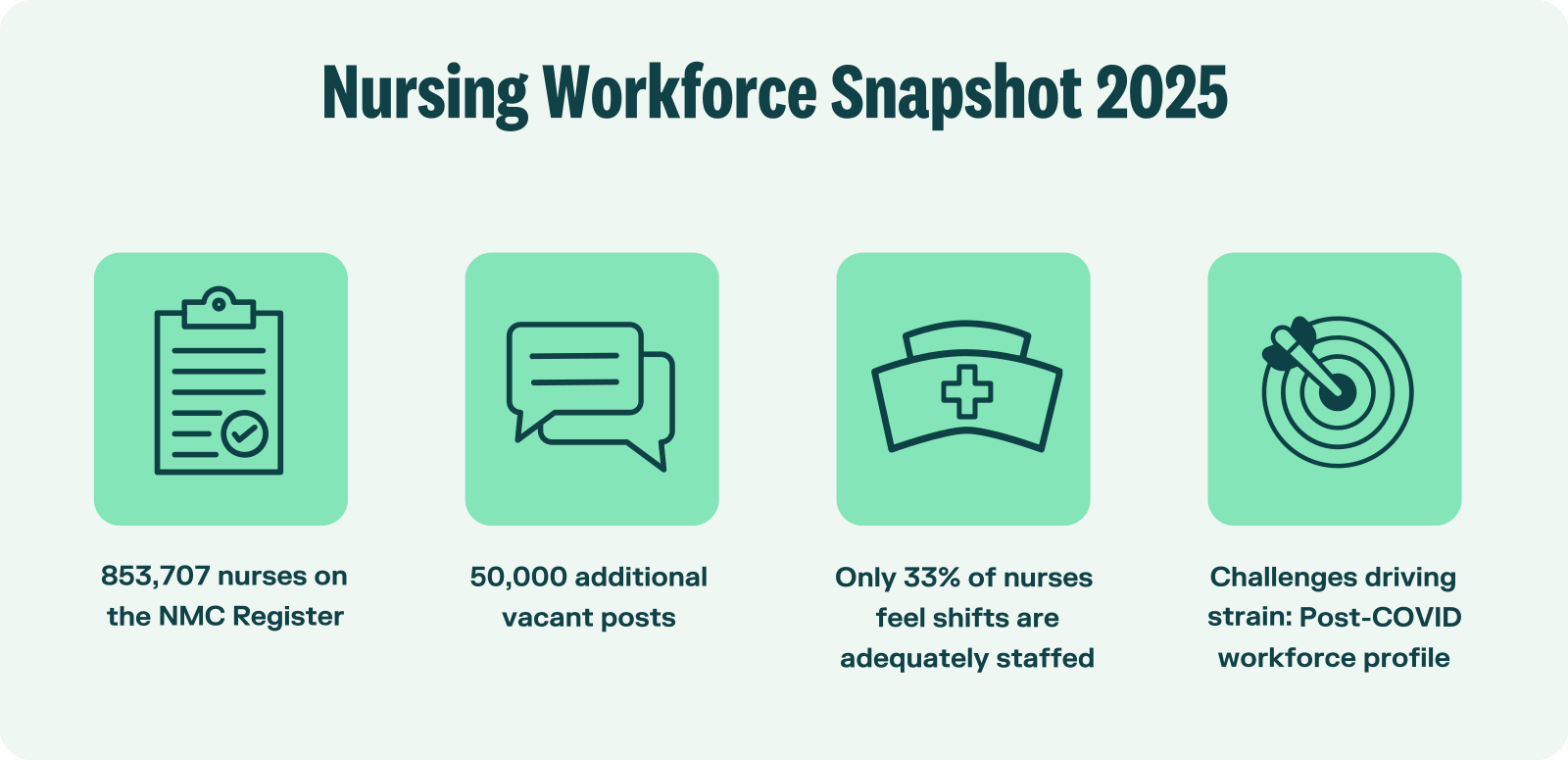
The headline numbers suggest we have more qualified nurses in 2025 than ever before with 853,707 on the NMC Register (NMC, 2025) with circa 50,000 additional vacant posts. However, what is perhaps most concerning and reflective of the perceptions of this less experienced workforce, is that only a third of nursing staff feel they have enough registered nurses on shifts (Royal College of Nursing 2024).
If only it were just a numbers game. The changing profile of our workforce post-COVID, the increasing care and capacity requirements, along with the actual availability of our clinical workforce, creates a perfect storm to throw the numbers into disarray.
The Unseen Pressures Behind the Numbers
Additionally, much remains unseen and therefore not necessarily captured in these required numbers. Excess capacity and corridor care, increasing patient acuity and complexity, a lack of experienced senior mentorship, and greater reliance on non-EU recruits requiring adaptation periods of supervision all contribute to further pressure on the entire workforce.
For some areas, we are only starting to quantify some of the additional unseen requirements, such as across community care, through increased ability to match clinical capacity with patient requirements and accurately record deferred care, the community equivalent of corridor care. The numbers here suggest vast increases will be required
The Workforce Utilisation Gap
Across all sectors, there is another significant challenge to the numbers: the existing workforce is currently operating with a consistently growing gap of unavailability.
Not from vacancies, but from the unaccounted absence of those considered present within the established workforce. If we generally accept headroom for nursing as being set around 22%, this is a far cry from the reality, which is that the average provider is now operating at 26–32% unavailability.
This further gap is largely being managed by additional duties on top of the temporary staffing requirements covering vacancy gaps. As a result, the resilience of this less experienced workforce is buckling, as evidenced by the dominant driver of this overall unavailability: sickness between 5–10% due to stress, anxiety and depression.
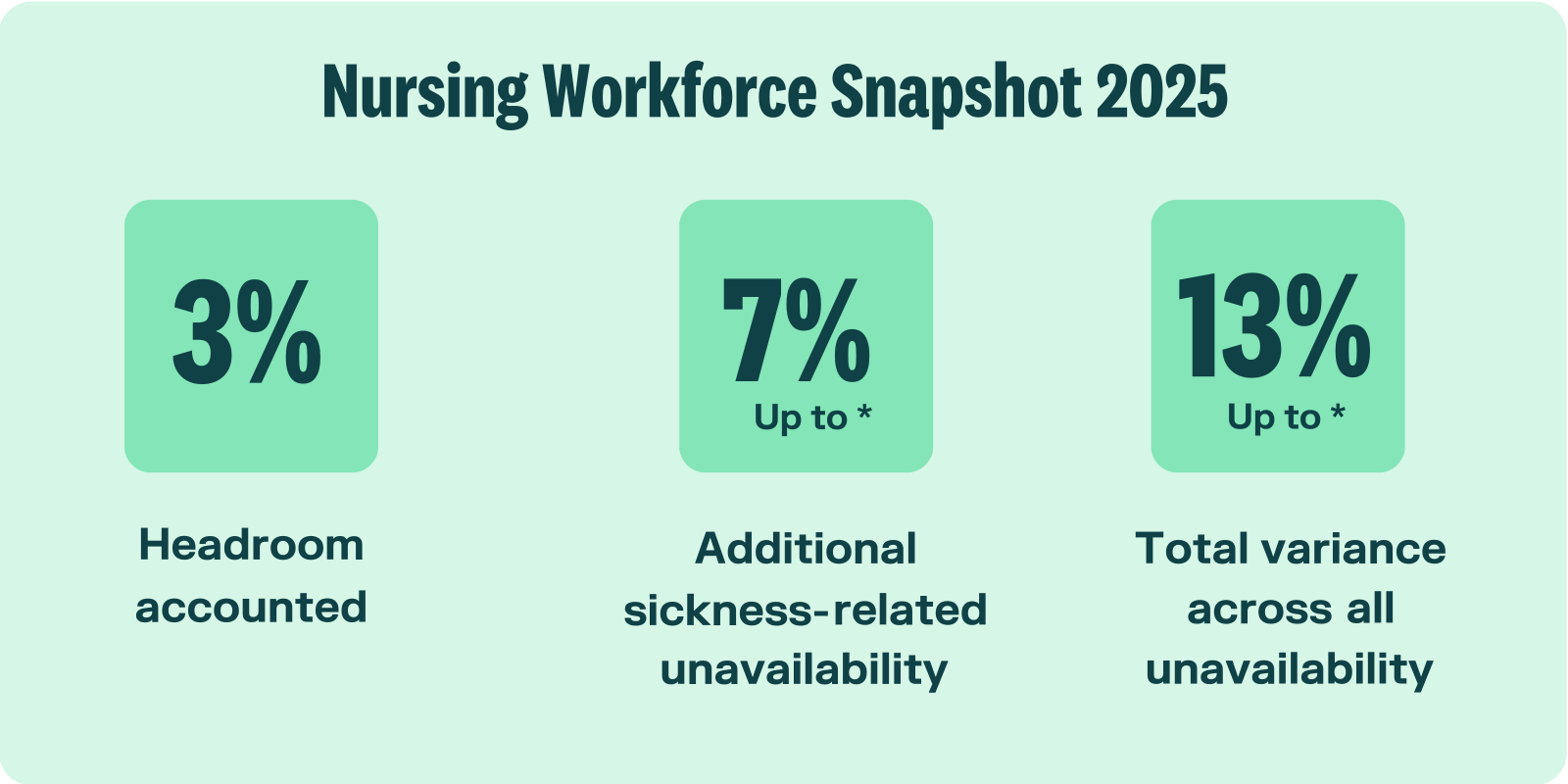
With 3% being accounted for in headroom, there is up to 7% additional unavailability for sickness alone, with an overall variance of up to 13% across all unavailability.
This changing profile of our workforce post-COVID, the increasing care and capacity requirements, along with the actual availability of our clinical workforce, creates a perfect storm to throw any numbers into disarray.
What Impact does all this have on Safe Staffing and Patient Safety
While recruitment has increased, experienced staff losses and reliance on lower-band roles have raised concerns for care quality, staff wellbeing and system resilience.
As an indicator, Red Flags and Professional Judgements are being applied by clinical staff with lower experience and skill level today compared to pre-COVID.
- In 2019, Band 7 highlighted 1/3 of critical workforce-related risks
- By 2025, this has reduced to 1/4
- Band 5 and 6 staff are now accountable for the increasing majority
The mitigation process for these risks has also shifted — from Band 7 and 6 in 2019 to Band 6 and Band 5 in 2025. This shift is significant.
A Loss of Organisational Memory
Newly qualified nurses have entered the workforce during a highly stressful post-pandemic environment.
Those responsible for safe staffing (Band 6 & 7) have often been recruited or promoted since the pandemic, with the majority in the last two years. This has resulted in diminished organisational memory of previous safe staffing principles across the UK.
Many provider organisations report:
- inconsistencies in applying acuity tools
- reliance on outdated command-and-control leadership styles
- a workforce that knows no other way of working than to request additional numbers
As such, escalation of staffing requirements has become routine and based on an individual’s perception of acceptable staffing levels.
More and more clinicians are increasing their reliance on software solutions to guide safe staffing levels against live patient acuity, making the insight, knowledge and perspective behind acuity entry critically important.
Given many senior staff who traditionally mentored new nurses have left, retired, or are distanced from ward-level care, the less experienced nurses may struggle with:
- acuity scoring
- clinical judgment
- prioritisation under pressure
NMC research supports this, showing increased departures within the first decade of practice and earlier-than-expected retirements.
We all need to listen to this more inexperienced workforce. They are asking for help, in the only way they know how.
So Where Is the Balance?
There is either:
A significant productivity opportunity of 7–13% if organisations focus on grip and control,
or
A need to revise baselines as influenced by rising acuity, additional capacity, skills and workforce profiles to reduce the reactivity and variance created in the current climate.
If headroom is already adequate, practice, culture and behaviours driving escalating unavailability must change, which if addressed, can significantly impact on the predictability and consistency of service delivery.
If headroom is now considered inadequate, given the uniform increasing gap across all sectors and services in the UK, perhaps establishments should be higher to avoid high-cost temporary staffing and the skills variation that is played out with the existing headroom vs unavailability maths.
The likelihood is that there is validity in both.
Rising unavailability is not sustainable. In some areas it is creating an ever perpetuating cycle of pressure on a less experienced workforce and variance in care delivery and patient safety.
Yet, simply increasing numbers of our workforce to balance the unavailability, is likely to only further extend the inexperienced workforce at lower bands. Experienced mentorship is priceless in growing a confident, resilient workforce, this feels like where the system has recently unravelled.
The Path Forward
Supporting a younger, less experienced post-COVID workforce requires:
- redefining leadership
- moving from task management to nurturing capability, confidence and resilience
- rebuilding mentorship
- strengthening skills development
- restoring clinical supervision
Many providers are already on this journey, using workforce utilisation visibility to support smarter decisions.
In partnership, we must consider smarter intelligence-led workforce planning solutions that balance technological innovation with respect for clinical expertise and professional judgement.
Our future workforce needs support to anticipate patient needs using:
- data-driven planning
- deployment tools to forecast demand
- predictable baseline staffing models
Supporting the workforce, at all levels, with prompts about predicted risks reinforces:
- critical thinking
- clinical decision-making
- consistent, safe staffing
This type of guidance can help them make optimal decisions for patient care and safety, enabling staff to identify any additional requirements. It also offers reassurance and direction, particularly for those who are less experienced and may need extra support when making these decisions.
We may indeed have a shift toward a more inexperienced nursing workforce in the UK, but our graduates bring:
- enthusiasm
- adaptability
- innovation
It is all of our responsibility to listen, nurture, support, and most of all include them as a voice for developments, strategy and reform for the future.
Authors

Karen Swinson
Clinical Lead at RLDatix

Jason Lee
Customer Success Data Analyst at RLDatix
Download Whitepaper
This insight draws on RLDatix’s clinical workforce utilisation intelligence and was developed by our nursing and workforce specialists, providing NHS providers with evidence-based guidance to strengthen workforce resilience, support a less experienced nursing workforce and improve safe staffing across all care settings.