








Intelligent Clinical Archive
Switch off legacy systems. Keep every patient’s story.
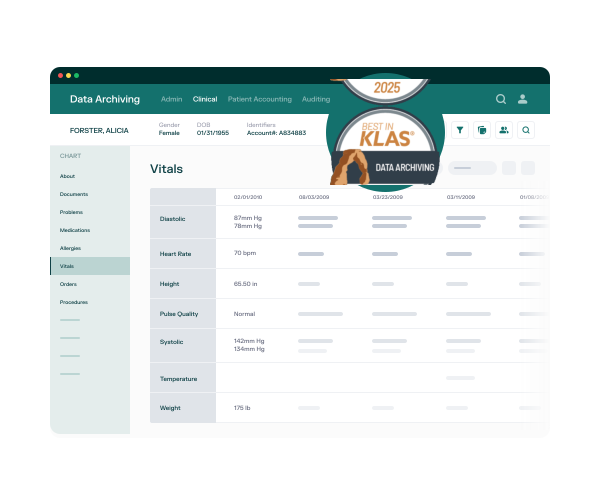
Safely retire applications you no longer need without losing a single record. Our Best In KLAS archive ensures that a complete longitudinal history is accessible to clinicians in the EPR.
Proven at Scale
We’ve supported the world’s most ambitious EPR and data archiving programmes
10bn+
documents and images archived1,000+
live systems300M+
patient records100%
of customers would buy againBuilt for Health and Care
Retain the clinical record, not the technical debt
Behind most EPRs sit a number of legacy applications that are retained purely to hold patient history. Each one carries licence fees, ageing infrastructure, and a growing cyber risk.
Whether you’re an NHS Trust, Integrated Care Board, regional system, or private care network, our intelligent clinical archive structures and preserves every record and data point, ensuring that patient history remains accessible and clinically useful, so you can decommission legacy systems with confidence.
We integrate into all major EPRs




The Value of Clinical Archiving
Decommission legacy systems while preserving data access and workflows
1. Save Money
Immediate cash savings
The value of a digital programme is often difficult to quantify. Retiring legacy systems can save up to 95% of your recurring digital estate costs to invest in productivity, optimisation or your frontline.
Cancel ongoing legacy contracts and avoid costly renewals and the need for ongong support.
Decommissiong ageing servers and storage alongside the applications they ran.
Remove old and unsupported systems from your cyber risk register, limiting costly attacks, data theft, and downtime.
2. Enhance Clinical Continuity
Access patient history from inside the EPR
Safe decisions often require historical details – a diagnosis from 2019, an allergy from past encounters, a family history documented by a service that no longer exists. We put a complete historical record, in context, directly into your clinician’s workflow, so they stop wasting time hunting for lost information or logging into disparate systems.
Semantic search helps the care team find what’s needed without requiring an exact term or procedure code.
Real-time Optical Character Recognition across 100+ file types makes scanned documents, images and handwritten notes fully structured and searchable.
Single click access from the EPR reduces wasted time spent hunting for history, or logging in and out of seperate systems.
3. Unlock Research and Analytics
Move from retention to activation
Before the data goes into the archive, we normalise, cleanse and de-duplicate it all, then map it into one shared structured model – so it becomes actionable. Aggregating history from a dozen incompatible systems into a single longitudinal view unlocks value through research, prevention, and population health management.
Standard SQL access to every discrete element at no additional charge, your BI tools, your analysts, no export fees.
Structured, de-identifiable datasets for quality improvement and clinical research, without maintining or resurrecting a retired system.
Actionable data allows for advanced analytics for population health interventions, cohort analysis and the single patient record ambitions.
4. Support Compliance and Governance
Easily manage legal and retention requirements
Structured data, full fidelity and history, along with highly configurable retention rules, ensures that your compliance and legal obligations are met, SARs are quick to respond to, audit is straightforward and regulatory requirements can be handled with ease.
Configurable retention rules so you keep what you need, until you don’t.
FOI, subject access and medico-legal retrieval from a single governed interface, with support for redaction workflows.
A full version history retained in each data point’s structure, who recorded what, when, and how that record was changed.
Role-based access control with support for legitimate relationships, fully audited, for clinical, business and administrative users.
The RLDatix Difference
Legacy systems are the burden, not the data
Departmental systems adopted over decades, pathology, oncology and more, become technical debt the moment you consolidate to a single enterprise EPR.
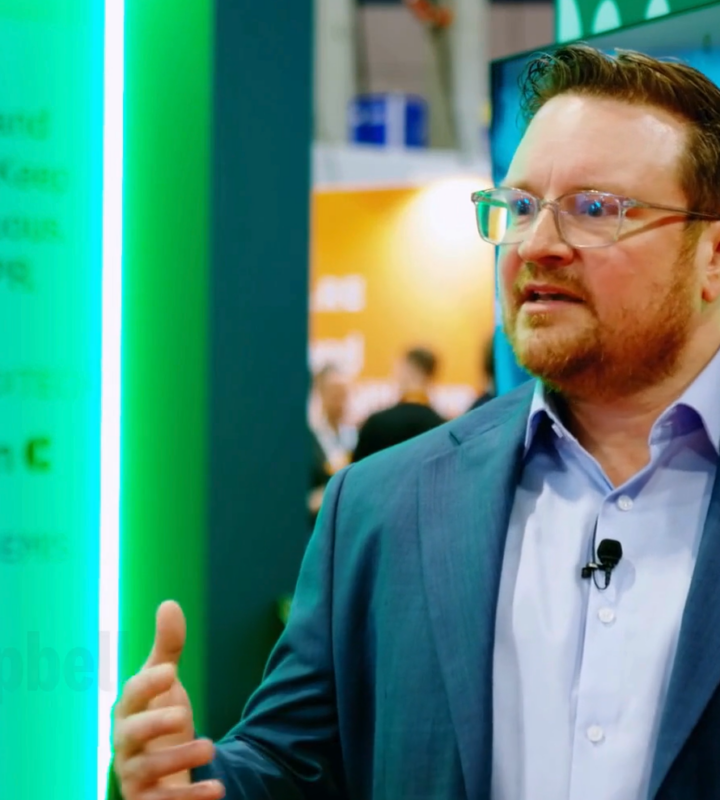
EPR go-lives succeed when clinicians trust they can still see the whole patient story. Justin Campbell explains how the archive keeps every data point that didn’t migrate accessible in one longitudinal view so clinicians can say yes with confidence: same level of care, practising to the ‘top of their licence’.
Why RLDatix
Features that set us apart
Our cloud-native platform is recognised as Best In KLAS for data archiving, with 100% of clients say that they see immediate value.

Reliability
99.9%+ uptime, point-in-time recovery, and triple-redundant architecture.
Support for 100+ file and image types
100+ supported file and image formats with high fidelity; exportable; large document support (1,000+ pages).
Extraction libraries for 250+ source systems
From Lorenzo, iSoft and RiO to Cerner (Oracle), EPIC, MEDITECH, CaMIS, Allscripts (Altera) and GE Centricity – plus Intersystems, System C, Dedalus, TPP, EMIS and many others, however old the system or obscure the format.
Real-time optical character recognition (OCR)
Documents and images (regardless of whether supported by source system); copy-search-paste capabilities.Interoperable by design
One record, whole-system access
Our intelligent archive supports the entire care team beyond the four walls of the hospital. Configurable governance and permission means the right teams can access structured, actionable data from your patients’ whole care journey.
The complete record in context, including retired systems like RiO and Paris, with role-based access rules.
Secure access under role-based permissions and legitimate relationships.
Requests from partner organisations answered from one place, without chasing.
Open standards that complement the integrated record rather than duplicating it.


Testimonials
See what customers have to say about RLD



RLDatix is unusual in the vendor space in that they do keep every promise they make … They solve any and all problems that we bring forward to them, and they are good at solving problems.
Chief Medical Information Officer
We made a poor decision years ago to go with another company to do our data archiving, and that was a total disaster. Then we went through another vendor selection process and chose RLDatix who has been our partner ever since in the space.
Chief Medical Information Officer
RLDatix’s biggest strength is their customer service. Our account manager is fantastic. Even if I just have a question on how to do something, they will get back to me immediately … When there are issues, they make sure that those issues get handled right away.
Director
They have really great people and really strong methodologies … RLDatix definitely has expertise when it comes to data conversion and archiving.
Director
Implementing or replacing an EPR?
Discover how we approach data migration for a complete record at launch, and a smaller legacy estate from day one.
Latest Resource
Advancing NHS Legacy Information Management
NHS trusts are under increasing pressure to modernise legacy information management, ensuring compliance, interoperability, and readiness for AI-driven healthcare. This whitepaper presents a staged maturity model, adapted for the NHS, to guide trusts from fragmented, rigid legacy data practices to intelligent, cloud-native information management.
Read Now

FAQs
Explore healthcare data archiving and how to archive data safely.
RLDatix Galen archiving is best understood as a clinical historical record access system: a mostly read-only, healthcare-specific way for clinicians to view the full longitudinal history when needed. It’s not “dumping data to a drive” or raw storage, because that doesn’t work at the point of care.
Clinicians must be able to access what they need quickly without wasting any time. If the archive feels like multiple logins, old-style screens, or PDFs, adoption and safety suffer – so usability and workflow fit matter. RLDatix Galen is integrated into the EPR, accessible in a single-click, and presented in context to the clinician so that they can quickly find information relevant to that patient.
In real clinical practice, safe decisions often depend on “looking back” to understand a patient’s history – especially as long-term conditions, co-morbidity, and complexity increase. The archive makes that history reliably accessible, so the new EPR isn’t a “shiny system” that only captures care from today onward, but contains the complete patient story.
RLDatix Galen is built for clinical use at the point of care, not just technical data movement or long-term storage. That shows up in a few practical ways:
- Clinical-first design: RLDatix focuses on how clinicians actually retrieve and use history in their care and workflows, so the outcome is safer, faster access to the right information.
- Integrated into EPR workflow: Rather than forcing clinicians into separate systems and repeated logins, RLDatix Galen uses SSO to make information available to teams right there and then.
- Contextual information surfaced in the moment: It’s not simply a “vault” of records, RLDatix Galen helps surface relevant context during care, supporting clinical decision-making and continuity.
- Understands unstructured content: RLDatix Galen can apply OCR to interpret flat files and scanned documents (including scans of paper and handwritten notes), so historically “hard-to-use” content becomes more accessible.
- Semantic search with LLMs: Instead of relying only on rigid keywords, clinicians can search and filter by meaning, rather than rigid keyword, to find what they need faster, especially when they don’t know the exact term used historically or when terminology varies across systems and time.
No. RLDatix Galen’s Intelligent Archive is a healthcare-specific platform designed for safe clinical access to the full patient history, especially during and after an EPR change. An Enterprise Data Warehouse is usually designed for reporting and analysis, not day-to-day and frontline clinical record retrieval.
The difference matters:
- Designed for clinicians: RLDatix Galen supports one-click access to history in the flow of care; warehouses usually sit outside clinical workflows.
- Speed to value: RLDatix Galen can typically be implemented in weeks, whereas data warehouse programmes often take many months to deliver usable outcomes.
- Cost and predictability: RLDatix Galen is usually a subscription-style service with more predictable costs. A warehouse approach often needs bigger up-front investment (platform build, hardware/software, specialist resources) plus ongoing maintenance.
- Security and compliance out of the box: RLDatix Galen is built with healthcare-grade security and governance in mind. Warehouses often require heavy custom configuration, and changes/upgrades can introduce new risks.
- Works with the EPR and clinical workflow: RLDatix Galen is intended to be used at the point of care (quick access to history inside clinical work). Warehouses tend to sit outside clinical workflows and are mainly used for retrospective reporting.
- Handles real-world record types: RLDatix Galen is built to manage the “messy mix” of legacy content (structured data plus documents and scans) in a way clinicians can actually use. Warehouses are typically strongest when data is already clean and structured.
- Easier to keep modern: RLDatix Galen benefits from continuous updates without large upgrade projects. Warehouses often need manual upgrades and can fall behind as standards and needs change.
- Best-fit use cases: Choose RLDatix Galen when the goal is decommissioning legacy systems safely while keeping history clinically accessible and usable for patient care. Choose a warehouse when the primary goal is analytics, research, and central reporting.
A major requirement for historical data is medico-legal / subject access request (SAR) workflows, often for years after go-live, where organisations must produce complete records in a timely way. RLDatix Galen’s approach is to preserve data so it can be accessed through approved pipelines and support processes like redaction and GDPR sanitisation, rather than placing all the workload on the Trust each time.
RLDatix Galen is designed to preserve the clinical record with full fidelity, so you don’t lose meaning, provenance, or auditability during migration or archiving. In practice, that means:
- Preserving the original clinical context (who recorded what, when, and in what setting), rather than flattening everything into simplified documents.
- Retaining change history where it exists in the source systems, including amended results, updated notes, corrected entries, cancellations, and superseded versions, so teams can see how the record evolved over time.
- Maintaining traceability and provenance from source to target, supporting governance, audit requirements, medico-legal workflows and information requests.
- Avoiding “document-only” degradation where structured or versioned data is converted into static PDFs that are harder to validate, search, or interpret safely.
This approach helps you turn off legacy systems with confidence, knowing the historical record remains complete, reliable, and usable.
Keeping old systems live is expensive and often happens because teams fear losing access to history; but it drives ongoing cost without improving clinical usability. Meanwhile, dumping data into a lake or converting it into documents can make retrieval hard and can trap valuable structured data, limiting analytics and future use.
Historical data is hugely valuable for longitudinal analysis, population health and research – if it remains structured and accessible. Archiving that structures and preserves fidelity avoids locking data into document formats that are expensive to use for large-scale analytics later.
RLDatix Galen can extract and transform data from a wide array of NHS legacy platforms, from core patient administration (PAS) to specialty and departmental systems, so you can migrate what matters into your new EPR and archive the full clinical record for access and retention.
Typical sources include PAS (e.g., iPM/OASIS/Sunrise/PatientCentre), EPR/clinical systems (e.g., Lorenzo, MEDITECH, Cerner Millennium, SystemC), ED, maternity (BadgerNet, Euroking), theatres, ICU, cardiology, oncology, radiology/RIS, PACS, pathology/LIMS, order comms/results, EDMS/document management, and community/mental health platforms (e.g., RiO, Paris), plus other specialty systems.
Whatever your new EPR vendor, we’ll be able to map and migrate your data to your new EPR’s specific nomenclature. Our archive can be integrated into any modern EPR, so whether your moving to EPIC, Oracle/Cerner, Meditech, Nervecentre, TPP or EMIS, RLDatix Galen will be able to support your transition and launch.
On the content side, RLDatix Galen can handle the reality of “mixed” clinical records, not just neatly structured tables. That includes:
- Structured clinical data (demographics, encounters, orders, results, meds, allergies, problems)
- Clinical terminology and coding (e.g., SNOMED CT / local code sets, where present)
- Documents and correspondence (letters, reports, PDFs, rich text, text summaries)
- Images and scanned files (including scanned paper records)
- Handwritten notes captured as scans/images
- Workflow-related artefacts where they exist in source systems (e.g., forms, templates, departmental workflows)
This breadth is important because EPR transition success depends on both getting the right structured data into the new workflow, and ensuring the rest of the history remains searchable and usable in an archive without needing to keep the old systems running.
Most successful EPR transitions work best as a single strategy: migrate what the new EPR needs to function, and archive everything else for seamless clinical access. In our experience, it’s best that they go hand-in-hand so that there is never any scenario where someone needs something and doesn’t have it, during transition and after go-live.
Yes. RLDatix Galen has supported over 1,500 migration and archiving projects, including some of the most complex and ambitious EPR deployments. That repeatable experience is critical because robust clinical migrations have many failure points when organisations try to do it alone or without partners with deep understanding of the process, vendor mapping and nuance of specific EPR platforms.
Book a Demo
See why RLDatix is a trusted partner for more than 10,000 organisations around the world.