


What four decades of patient safety can teach us about the future

Patient safety has come a long way from the days when recording what went wrong was the best most organisations could manage. Over four decades, the focus has shifted towards understanding risk and acting on it earlier. Datix has been part of that story since 1986, and that history, now carried forward through RLDatix, holds a clear lesson: collecting information is only valuable when it helps teams learn, act and prevent harm.
The question that shaped Datix’s beginnings
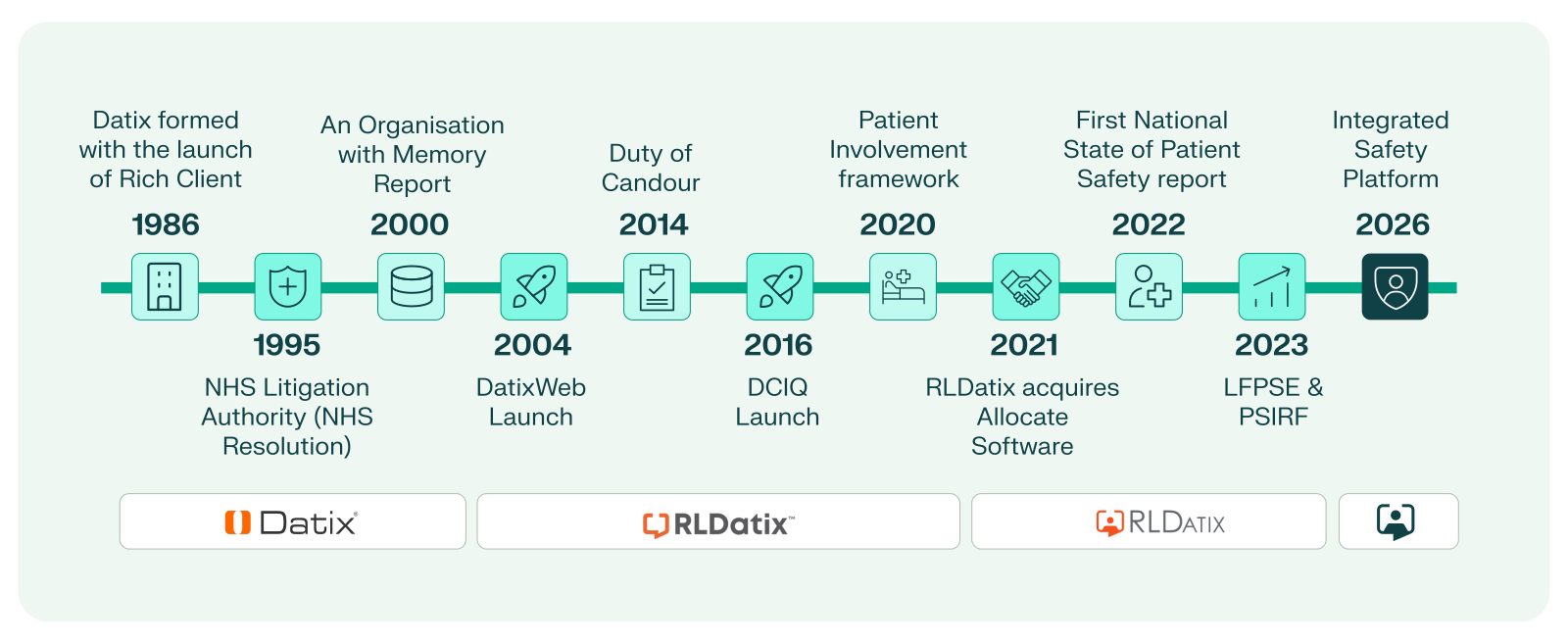
In 1986, before patient safety was even a recognised concept, a solicitor called Brian Capstick had an idea. Working at Capsticks Solicitors, a law firm specialising in defending NHS hospitals against clinical negligence claims, he saw claims mounting and asked a simple question: what if we could capture information from these claims, understand what was causing them and start preventing them? That question led to the creation of Datix and a product called the Rich Client. The founding principle was straightforward. If you can see patterns in harm, you can do something about them. Patient safety improvement still starts with the willingness to look at what the information is telling you.
Making patient safety information accessible to frontline teams
In 2000, the landmark NHS publication An Organisation with a Memory changed everything. It laid the foundations for patient safety as we know it and made clear that organisations needed to learn from failure systematically. That drove demand for better patient safety incident reporting. In 2003, we launched DatixWeb. Until then, the original Rich Client sat in back offices where staff punched in numbers. DatixWeb put a web interface directly in clinicians’ hands, enabling frontline teams to access information, see learning from incidents and act on changes to drive improvements in safety culture. But software alone does not change culture. Reporting only matters when staff see that their reports lead to visible action.
Why reporting must lead to learning and action
Learning from patient safety incidents is where many organisations still fall short. Reports go in, but the connection between recording an event and making a real improvement often breaks down. I have seen this pattern repeat across the NHS for years. In 2016, we launched DCIQ in direct response to this challenge. The message from the National Patient Safety Agency had been clear: organisations were often failing to either capture and leverage key learnings during investigations or implement the safety actions needed to address the underlying contributing factors. DCIQ was designed to help organisations capture, investigate and learn from incidents, using data-driven strategies to identify risks, understand contributor factors and drive improvements in safety and quality. It gave teams the ability to understand contributing factors, assign improvement actions and track whether changes were actually working. Patient safety investigations need to lead to genuine change, not just completed paperwork.
"Recording incidents was never the hard part. The real challenge is making sure every report leads to learning and genuine improvement. Organisations must commit to closing that gap.”
Connecting workforce and safety information
Workforce and patient safety have always been connected in practice. Workforce factors contribute to around 50% of safety incidents. Yet for decades, workforce data and patient safety data lived in completely separate systems. In 2021, RLDatix completed the acquisition of Allocate Software, combining its patient safety, risk, compliance and provider management capabilities with Allocate’s leading workforce management solutions. For the first time, we brought workforce management and safety capabilities into one organisation. This opened up a question I believe matters deeply: can leaders now investigate whether incidents are rising on wards where staffing consistently falls below planned levels? Connecting patient safety data with workforce data does not give automatic answers, but it helps leaders ask the right questions rather than relying on assumptions. We continue to develop these connections, and the ambition is significant.
The next chapter: acting on risk earlier
The next chapter for proactive patient safety is about using information from incidents, workforce, audits and policies together to identify concerns before they escalate. We have been working to bring audits, standards, policy and intelligence capabilities into the UK market, giving leaders the leading indicators they need for earlier intervention rather than always responding after harm has occurred.
"The next step is giving leaders the leading indicators they need to intervene earlier. Technology should surface the signals. People must decide what to do about them.”
Patient safety improvement does not end with better reporting. The question I would leave with every leader is this: how effectively does your organisation turn safety information into action?