
CEO Reflections
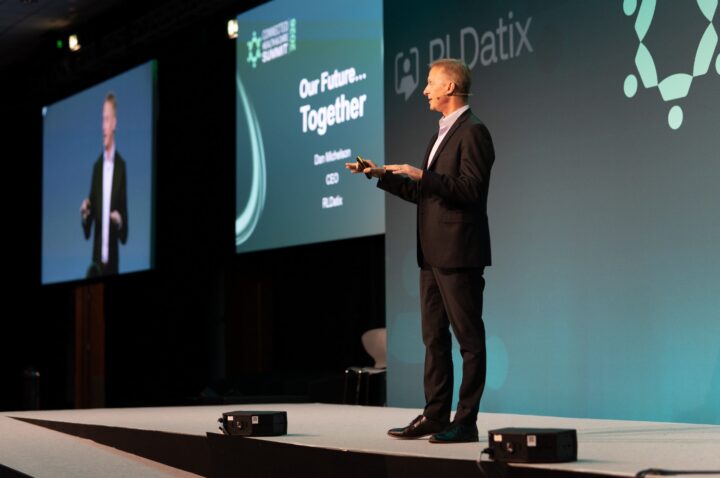
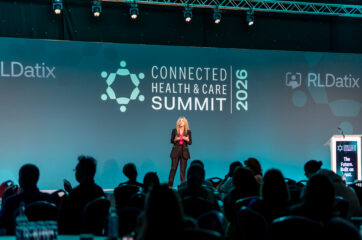
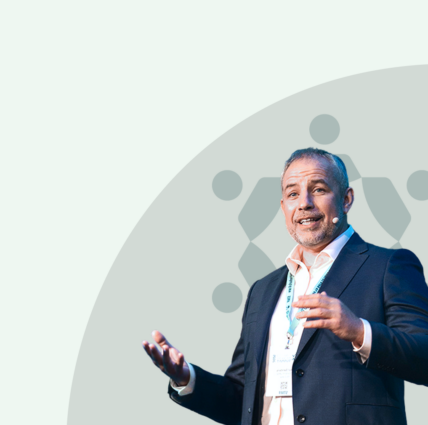
What does it take to rebuild trust with customers, transform a product, and set a shared vision for the future of health and care technology? In this closing keynote, RLDatix CEO Dan Michelson reflects on the journey since he joined the company, from acknowledging hard truths about service and product quality, through to the innovations now in market. He shares what he has learned about leadership, trust, and why the mission to raise the standard of care everywhere is one that can only be achieved together.
Key themes from the panel
- Service transformation delivered. Over 50 workforce efficiency assessments identified £350 million in potential savings, averaging £7 million per organisation.
- Loop app transformed. From a 1.3 App Store rating with 500,000 users to a 4.5 rating with 1.7 million users. One customer described the impact by writing “The app changed my life”
- Real AI innovations already in market. Ask Optima, Smart Match, Lyra for QCS, Loop Locate, and RLD Intelligence are live and being used by customers today, not future concepts.
- A customer success organisation built from scratch. An entirely new function that did not previously exist, designed to help customers get to where they need to go, not just respond to problems.
- A clear vision for the future. To become one of the most important and trusted health and care companies in the world.
The challenges addressed and how the products respond
When Dan Michelson joined RLDatix, many customers had lost confidence. There were real problems with product quality, particularly with Loop, and responsiveness in customer support was not meeting expectations. When the CEO met with the National User Group, every single person raised the same concern. The App Store rating for Loop was 1.3, and the user base was growing rapidly, meaning the problem was only going to get bigger if nothing changed.
The response began with improving service. Trust requires action, not just words. The team invested heavily in customer support, built a customer success organisation that had never existed before, delivered workforce efficiency assessments that identified real financial savings, and expanded professional services. At the same time, the engineering team tackled the product quality issues head-on, transforming Loop from a 1.3 to a 4.5 rating. Once service was stabilised, the focus shifted to innovation, with AI-powered solutions, new compliance tools, and RLD Intelligence all brought to market.
What this means in practice and who it is relevant to
The transformation is measurable. Loop went from a product that was the single biggest source of customer frustration to one where users are writing reviews saying, “This app changed my life. Managing my work and life balance used to be constant stress. Not anymore. Now I can share my roster with my partner, pick up overtime to help manage my house cost or a holiday, and I can connect and communicate with my team and wider organisation.”
Beyond Loop, the innovations now in market include Ask Optima, Smart Match, Lyra for QCS, Loop Locate, and RLD Intelligence. These are not concepts for the future. They have already been launched and are already being used by customers.
The CEO also shared a framework for workforce engagement based on research across close to 2,000 companies in 96 countries. It identifies four drivers: community (do I feel like I belong?), opportunity (do I feel like I have a future?), relationships (are they trusted or toxic?), and experiences (am I growing?). The research suggests that 70% of an employee’s experience is shaped by their immediate team, reinforcing the critical role leaders play in creating positive workplace cultures.
Where This Applies
- NHS trusts and health systems seeking a trusted technology partner
- Independent healthcare and social care providers looking for innovation and service quality
- Workforce, safety, and compliance leaders driving culture and performance improvement
- Any healthcare organisation globally committed to raising the standard of care
Frequently asked questions
The vision is to become one of the most important and trusted health and care companies in the world. Important means the work RLDatix does is mission-critical and making a real difference. Trusted means that when organisations think about this work, they cannot imagine doing it with anyone else. The company serves over 10,000 healthcare and care organisations globally.
When the CEO joined in October 2024, Loop had a 1.3 App Store rating and 500,000 users. The engineering team undertook a major effort to understand the problems and condition the product. The user base grew to 1.7 million, and the rating is now 4.5, with users describing the app as life-changing for managing their work-life balance.
Ask Optima, Smart Match, Lyra for QCS, and Loop Locate are all AI-powered innovations that are already launched and being used by customers. RLD Intelligence is also live, with customers actively planning how to activate its benchmarking and insight capabilities. These are not future concepts but products in market today.
Based on research across close to 2,000 companies in 96 countries, the CORE framework identifies four drivers of workforce engagement: Community (do I feel like I belong?), Opportunity (do I feel like I have a future?), Relationships (are they trusted or toxic?), and Experiences (am I growing?). 70% of the employee experience is shaped within the immediate team.
This definition of leadership came from the head of one of the world’s largest leadership institutes, who had worked with close to 20,000 leaders. Rather than defining leadership in abstract terms, he described what leaders do: they make the people around them and the situations they are in better. It is a simple but powerful way to evaluate any leader.
The mission is to help raise the standard of care everywhere. RLDatix focuses on three areas: the patients and people organisations serve, the workforce who serves them, and the data that enables learning and improvement across both. Solutions are built for the purpose of solving problems in these three domains.
The company invested heavily in customer support to improve responsiveness, built a customer success organisation from scratch to help customers achieve their goals proactively, delivered over 50 workforce efficiency assessments identifying £350 million in savings, and expanded professional services. The consistent feedback from customers is that it just feels different.
Based on extensive research into the science of trust, the CEO shared that trust cannot be demanded. It has to be given, which requires vulnerability. Sharing what you have in common builds initial connection. Discovering your differences enables growth. But people are often separated and isolated, and solving that is the daily challenge for every leader and every organisation.