




RLD Safety | Bringing together incidents, risks, policies and audits.
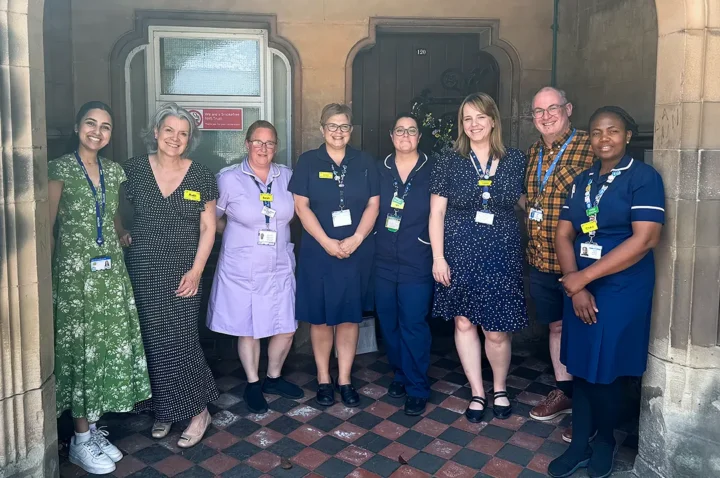
University Hospitals of North Midlands NHS Trust developed a ward-based improvement approach, led collaboratively by Continuous Improvement and Quality & Safety teams, to move wards from retrospective assurance to real-time learning. Using structured huddles, ward scorecards and PDSA testing, teams are improving how they use safety data, strengthening ownership and embedding continuous improvement into daily practice. Early evidence shows stronger engagement, more confident use of data and improvement in key quality and safety metrics.
Ward teams were operating in high-pressure environments where maintaining quality and safety alongside operational demands was challenging. Although reporting systems and performance metrics existed, they were largely used retrospectively, limiting teams’ ability to engage with data in real time or use it to drive immediate improvement.
There was a particular need to better support wards identified as “requires improvement” (Silver) within the Care Excellence Framework (CEF), the organisation’s internal accreditation model. Existing approaches focused on retrospective assurance rather than proactive improvement, meaning issues were often identified after they had become embedded rather than being addressed early.
Improvement activity was frequently perceived as separate from day-to-day clinical work, with limited ownership at ward level and reliance on external support to drive change. Multidisciplinary engagement in improvement work was also inconsistent, reducing the effectiveness and sustainability of interventions.
The core challenge was therefore to shift from a reactive, assurance-led model to a proactive, embedded approach that enabled ward teams to own their data, build capability, and integrate continuous improvement into routine practice while maintaining focus on patient care.
A ward-based improvement model was developed collaboratively between Continuous Improvement (CI) and Quality & Safety (Q&S) teams, targeting wards identified through the Care Excellence Framework (CEF) as requiring improvement.
The model introduced structured improvement huddles as a core routine, enabling teams to regularly review quality and safety performance in a focused, consistent way. These were supported by ward scorecards that aligned key metrics to organisational Quality & Safety indicators, ensuring a clear and shared understanding of performance.
Improvement was driven through Plan-Do-Study-Act (PDSA) cycles, enabling teams to test, learn, and refine changes in small, manageable steps. Visual management boards were implemented to make data, actions, and learning visible at ward level, reinforcing transparency and accountability.
Continuous Improvement teams provided hands-on coaching and training to ward leaders, supporting them to facilitate huddles effectively and use data confidently in day-to-day decision-making. This helped embed capability rather than creating dependency on external support.
The model represents a shift from retrospective assurance to proactive, team-led improvement, strengthening ownership within wards. Quality & Safety colleagues, including harm-free care educators, now play an expanded role in sustaining the model by reinforcing routines, supporting data use, and delivering targeted education aligned to ward-identified priorities.
Early observations show a clear shift in how ward teams engage with quality and safety. Improvement huddles are becoming more consistent and embedded into routine practice, with reducing reliance on external facilitation. Teams are interacting more meaningfully with data, demonstrating greater shared awareness and collective ownership of performance metrics.
The style of facilitation has evolved from one-way information sharing to more interactive, reflective discussion, with leaders using structured questioning to encourage critical thinking and learning. Teams are also beginning to use PDSA cycles more effectively, supporting iterative improvement and deeper understanding of local challenges.
There are emerging signs of improved staff engagement, with ward teams more confident in contributing ideas and participating in improvement activity. One of the original pilot wards has since achieved Gold (Good) Care Excellence Framework accreditation after previously receiving silver (requires improvement). Whilst the quality of care was already strong, improvements in key performance measures enabled the ward’s data to better reflect the care being delivered, with these improvements being identified as a significant contributor to achieving Gold accreditation. Early results suggest the approach is supporting both measurable improvement and the development of a stronger culture of continuous improvement, learning and reflection.
The model is now being rolled out across additional ward areas, initially prioritising those identified through the Care Excellence Framework as requiring improvement. Lessons from early implementation are informing a more streamlined and proactive deployment approach.
The work has also strengthened collaboration between Continuous Improvement and Quality & Safety teams, establishing a shared and scalable model that embeds improvement into everyday ward practice and is transferable across clinical settings.