

Engaging People: The Fundamentals of Effective Workforce Communication
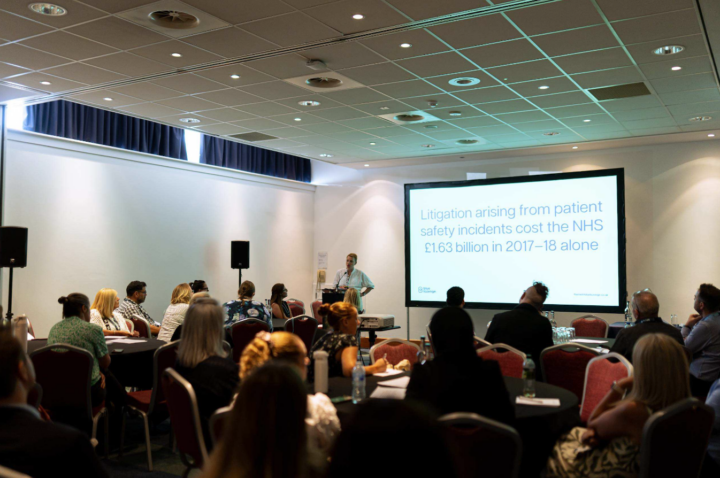
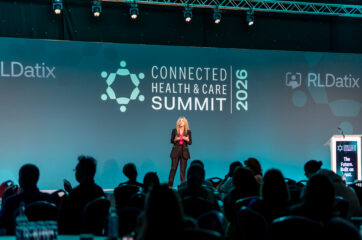
What would the NHS do with an extra £2 to 3 billion every year? Rachel Royall presents this as an estimate of the potential cost of poor communication, once you add up avoidable harm, legal payouts and lost productivity. In this interactive session from the Connected Health & Care Summit 2026, Rachel Royall, founder of Blue Lozenge and former Director of Communications at NHS Digital, uses real clinical scenarios to expose where communication fails, reveals a scenario in her own cancer diagnosis experience, and introduces the HEART model for rethinking communication in healthcare.
Watch Rachel Royall use her own cancer diagnosis to show how poor communication costs lives and billions, then lead an interactive workshop on three real clinical scenarios and introduce the HEART model for healthcare communication.
What the session covers and the scale of the problem
This session combines hard data, interactive scenario exercises and a deeply personal story. Figures discussed during the session include:
- Poor communication is the sole cause of approximately one in 10 patient safety incidents and a contributing factor in roughly a quarter
- 55% of people report experiencing poor communication from the NHS
- Communication problems are the single biggest category of patient concerns about hospital care
- Litigation costs in the NHS have reached approximately £3.6 billion, with a large proportion attributable to communication failures
- Better goals-of-life conversations alone could save an estimated £3 million per trust per year
- Everyday friction in information flow costs over £1 billion a year in lost productivity, equivalent to 20,000 full-time staff or 40 million patient appointments
- All three workshop scenarios are real. Scenario one is based on Rachel Royall’s own delayed breast cancer diagnosis
The three scenarios and what the room found
The room split into patient and staff perspectives to analyse three scenarios. In the first, a woman with a family history of breast cancer is told to use an online form, waits weeks, has her appointment switched to a telephone consultation, and is told the GP is too busy to read the comments. The room identified three triage points where the system failed, and an audience member suggested that an AI bot would have flagged the keywords immediately.
In the second, a consultant changes a medication plan during a busy ward round without clearly communicating to the nurse or the patient. The nurse continues the old regimen overnight. The room identified missing handover processes and a lack of consent.
In the third, a patient is discharged with a follow-up plan that never reaches the GP. The room described feelings of abandonment and highlighted that patients should never leave any area of care without understanding what happens next and when they will be contacted again.
The HEART model and who this is relevant to
Rachel Royall reveals that she is scenario one. She contacted her GP about a breast lump with a family history, was directed to an online form, waited weeks, had the appointment switched to telephone, and the comments were never read. She is now being treated for cancer following chemotherapy and a double mastectomy. She describes assuming that of course someone would triage the comments box, and argues that if the form is not going to be read, it should not exist because it creates a clinical safety risk.
She introduces the HEART model for redefining communication in healthcare. Hear with empathy to truly understand, not just listen at surface level. Explain with transparency using clear language. Accelerate operational impact by involving communicators in fixing the problems that generate complaints. Reputation as safety, because a safer organisation has a better reputation. And Transform behaviour through campaigns that change how people act. She argues that reputation management done properly is not burying bad news but making care safer, and that communication teams can have a much broader role than managing social media.
This session is relevant to communications leads, patient experience teams, clinical governance teams, chief executives, medical directors, patient safety leads and anyone responsible for complaints, engagement or organisational reputation.
Frequently asked questions
The session is presented by Rachel Royall, founder of Blue Lozenge, a strategic communication company working across healthcare. She has worked at Cabinet Office, Department of Health and Social Care, NHS Digital and London Ambulance Service. She led communications for the patient safety commissioner and for the maternity and newborn safety investigation team. Her personal breast cancer diagnosis forms the first of three workshop scenarios.
Rachel Royall presents several figures. She estimates that poor communication costs the NHS an estimated £2 to 3 billion per year when you add avoidable harm, legal payouts and lost productivity. Litigation costs have reached approximately £3.6 billion, with a significant proportion linked to communication failures. Better goals-of-life conversations could save £3 million per trust per year. Lost productivity from everyday communication friction costs over £1 billion annually, equivalent to 20,000 full-time staff or 40 million appointments.
The HEART model presented by Rachel Royall redefines the purpose of communication in healthcare across five principles. Hear with empathy: listen two-way and go beyond surface-level feedback. Explain with transparency: use clear language, not jargon, and be honest about difficult issues. Accelerate operational impact: involve communicators in fixing the problems behind complaints. Reputation through safety: a safer organisation has a better reputation. Transform behaviour: use communication to change how people and organisations act.
A woman with a family history of breast cancer contacts her GP about a lump, is directed to an online form, writes about the lump and family history, and waits weeks. The appointment is switched to telephone on the day. The receptionist says the GP is too busy to read the comments. The scenario illustrates how delay and missed information contributed to a later cancer diagnosis. Rachel Royall reveals at the end, the scenario is based on her own experience.
Across all three scenarios, the room identified the same themes: multiple triage points where information was available but not acted on, systems that collect data nobody reads, handovers without clear verbal summaries, patients left without understanding what happens next, consent assumed without conversation, and communication routes that are not accessible to everyone. An audience member suggested that an AI triage bot would likely have flagged the first scenario immediately.
Rachell Royall describes it as an illusion of communication. She recounts being given FFT forms repeatedly during her maternity experience and argues that filling out a form does not mean clinicians have received feedback about care. She quotes George Bernard Shaw: “The biggest problem with communication is the illusion that it has been received.”
Blue Lozenge is the colloquial name for the NHS logo. Rachell Royall explains that the logo was created in 1999, bringing together over 600 different identities across the NHS into one globally recognised brand. She considers it one of the most successful strategic communication exercises ever and named her company after it as a tribute to the power of communication done well.