

Women in Leadership Across Health and Social Care: Culture, Career Pathways and What Needs to Change
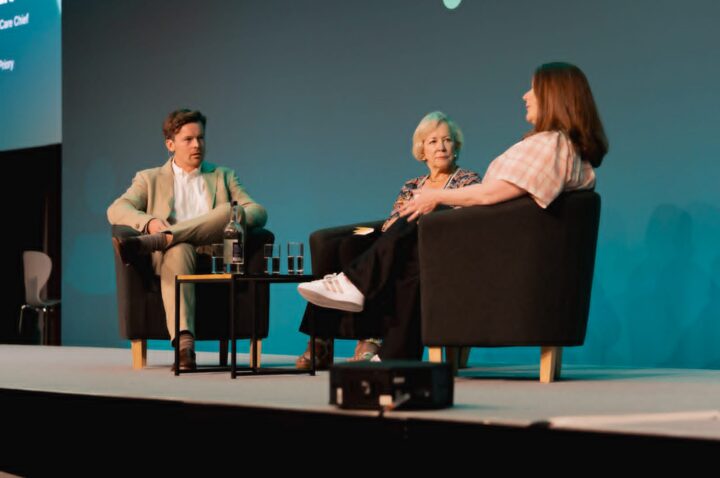
Women hold the majority of frontline roles in health and social care, yet remain under-represented in senior leadership. In this panel from the Connected Health & Care Summit 2026, Jayne Stutt, Chief People Officer at Priory Group, and Ruth Carnall, former Chief Executive of NHS London and chair of the UK’s largest care home company, share their experiences of building careers, shaping culture and creating pathways for the next generation of women leaders.
Watch two senior leaders from health and social care discuss the role of culture in safety, the reality of building a leadership career, and what organisations can do to better support women into senior roles.
Key themes from the panel
This panel brings together perspectives from independent healthcare, social care and NHS leadership, hosted by Johnny Newsham, Head of Independent Health and Care Sectors at RLDatix. The key themes were:
- Culture is the foundation of safety. It is built day to day through leadership behaviours, creating environments where staff feel trusted and supported to speak up
- Social care is far more complex than many in the health sector recognise, with frontline staff managing significant clinical risk while enabling vulnerable residents to live a life
- Care workers are wrongly labelled as unskilled. Recruitment must focus on the purpose and impact of the role, not just pay
- Clear career pathways can help people progress in social care, from support worker roles through to leadership positions, alongside opportunities such as nurse apprenticeships and specialist roles.
- Women leaders should invest in qualifications, seek out mentors and not be afraid to challenge in the room
The challenges discussed and how leadership shapes the response
The panel identified a set of connected challenges running across health and social care. Frail elderly people are being cared for in hospital settings that are wholly inappropriate, with hospital care costing approximately £3,000 a week in the example discussed, when care homes have the capacity to deliver better outcomes at a lower cost. The same applies to mental health, where individuals spend extended periods in A&E rather than receiving specialist care in appropriate settings.
Ruth Carnall argued that the single biggest change would be longer-term contracts for social care providers. Greater security of funding would unlock capital, improve capacity and create a more stable foundation for the workforce. Jayne Stutt highlighted how Priory Group already demonstrates an integrated pathway between health and social care divisions, with bespoke therapeutic placements developed in partnership with commissioners to support individuals in the least restrictive environment possible.
Why this discussion matters and who it is relevant to
Social care employs a predominantly female workforce, and yet the path from frontline carer to senior leader remains unclear in many organisations. Ruth Carnall started her NHS career in finance in 1977, whereby her career has helped demonstrate women could lead large scale transformations at the top of the NHS. Jayne Stutt built her career over 14 years at Priory, moving from HR business partner to Chief People Officer, supported by female mentors and encouraged to invest in formal qualifications that gave her the confidence and credibility to lead.
Both panellists reflected that the defining moments in their careers came from others willing to take a risk on them, from investing in their own development, and from speaking up in situations where their voice was not always expected.
The discussion also challenged every leader in the room to examine their recruitment and succession assumptions. Jayne Stutt urged leaders not to default to familiar profiles when filling roles, to consider whether positions need to be full-time, and to recognise that diversity in leadership intersects with caring responsibilities, ethnic origin and personal and professional circumstances.
This session is relevant to HR directors, chief people officers, workforce leads, care home managers, clinical leaders and anyone responsible for talent development, succession planning or culture across health and social care settings.
Frequently asked questions
The panel features Jayne Stutt, Chief People Officer at Priory Group, who has spent 14 years with the organisation across HR and leadership roles, and Ruth Carnall, former Chief Executive of NHS London with over 35 years in the health service, who subsequently chaired the UK’s largest care home company. The session is hosted by Johnny Newsham, Head of Independent Health and Care Sectors at RLDatix.
Jayne Stutt argues that safety depends on trust. The individual who sees something wrong has to trust that they can speak up, that they will be heard and that they will not suffer as a result. She says culture is built day to day by leaders through their actions, not by posters on the wall. Ruth Carnall adds that safety in social care depends on layered protections from board level through to the individual carer working alone at night with a vulnerable person.
Jayne Stutt outlines how Priory Group maps career progression from support worker through to care home manager. The organisation puts staff through nurse apprenticeship programmes each year, qualifying as mental health nurses. For those who do not want a management route, specialist roles such as autism specialist allow staff to develop accredited expertise, earn more and bring additional capability to their service without leaving frontline care. Ruth Carnall reinforces that the sector needs to make these pathways more visible to attract new talent.
Jayne Stutt says the single biggest step in her career was completing a formal qualification. Although she did not consider herself academic, the validation gave her the foundation and credibility to feel confident in rooms where she might not always be respected as an equal. She also credits a female mentor who backed her through a difficult period. Ruth Carnall advises women to take a longer-term view of their careers, noting that she regrets prioritising work over family at certain points and that five fewer years as a CEO would not have diminished her career or impact.
Ruth Carnall describes a difference in the attitudes she observed among social care staff compared to what she encountered in the NHS. She found that social care workers consistently described their role with genuine dedication and love for the people they care for, with very little negativity about management or the system. She contrasts this with the NHS, where cynicism about how the system works remains more common, and argues that addressing this remains a leadership responsibility.
Ruth Carnall reflects on prioritising work over her children at key moments in her career. Looking back, she says the things she regrets are the times she did not spend with her family, not the meetings she missed. Jayne Stutt supports this view and describes how Priory’s CEO, Rebecca, uses what she calls the “power of pause,” encouraging the leadership team to step back from decisions rather than rushing, which reduces pressure and leads to better outcomes.
Ruth Carnall argues that the single most impactful change would be offering longer-term contracts to social care providers. At present, limited security over capital funding in social care, forcing reliance on expensive private funding sources. Longer-term contracts would unlock cheaper capital, improve capacity and enable care homes to take on frail elderly patients currently occupying hospital beds at £3,000 a week in settings that actively worsen their health. She says it does not have to cost more. For the same money with greater security, the system would get far more impact and capacity.
Ruth Carnall urges everyone to communicate the compelling impact of health and social care work on individuals, families and communities, rather than describing it in technical terms. Jayne Stutt asks leaders to challenge their assumptions every time they recruit or plan succession. She says leaders should question whether a role still needs to be full-time, whether there are different ways to structure it, and whether the most obvious candidate is really the best one. Her message is that repeating established approaches can produce the same patterns of recruitment and leadership.