

Workplace Culture and Patient Safety: Why Civility Saves Lives
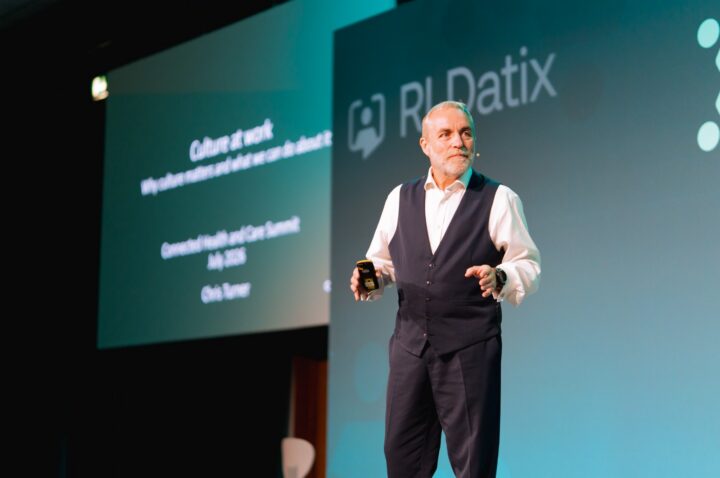
Team behaviour in health and social care is not a soft issue. Research shows that prosocial team cultures deliver measurably better patient outcomes, while antisocial behaviours lead to avoidable harm. In this session from the Connected Health & Care Summit 2026, Chris Turner, consultant in emergency medicine and founder of Civility Saves Lives, explores what culture really means, how disagreement shapes decisions and why recognizing good behaviour can help drive lasting cultural change.
Watch Chris Turner, emergency medicine consultant and founder of Civility Saves Lives, explore how team behaviour can influence patient safety and what every leader can do to build a better workplace culture.
Key themes from the session
This session runs as a condensed interactive workshop, drawing on research and real-world examples from healthcare, social care and elite sport. The key themes were:
- Culture is everything we accept in our workplace, both the good and the bad, and it is not static
- Teams with prosocial behaviours, where people feel trusted, heard and valued, save more lives. Teams with antisocial behaviours see avoidable deaths increase
- When faced with disagreement, people either fight to win, avoid the discomfort, or respond with curiosity. Only the curious consistently make the best decisions
- Organisations contain hundreds of microcultures. The culture at the top does not automatically reach the frontline
- The biggest mistake in culture change is starting with the bad stuff. The most effective starting point is acknowledging and reinforcing the good
Why behaviour matters and what the research shows
Chris Turner defines culture simply: it is the way we do things around here, and it is everything we accept. Drawing on research by Jeremy Dawson and Michael West, he discusses evidence that, in health and social care, teams where staff believe they are in a good team have been associated with lower mortality. The reverse is also true. Teams with antisocial behaviours see people die unnecessarily.
The critical mechanism is information sharing. Research by Jessica Mesmer-Magnus found that the highest-performing teams do not just share information. They discuss it. And discussion only happens in environments where people feel safe to disagree. Chris Turner identifies three responses to disagreement: fighting to win, which relies on dominance and can limit the information available to a team; avoiding the discomfort, which means useful knowledge may not surface; and responding with curiosity, which creates an opportunity to understand different perspectives and support better decision-making.
What this means in practice and who it is relevant to
Chris Turner argues that most organisations make the same mistake when trying to improve culture. They focus on eliminating bad behaviours. But research shows the return on investment from that approach is poor. His approach is to start by recognising and reinforcing the good behaviour that already exists.
His approach is to start by recognising and reinforcing the good behaviour that already exists. A staff member walks through the door on a difficult day and chooses to be the best version of themselves. Nobody notices. Meanwhile, people with antisocial behaviours are may be rewarded or even promoted. Over time, that person an become disengaged. Their language shifts to “this place,” linguistically distancing themselves from the organisation’s values. Some spiral further into burnout. Recent research discussed by Chris Turner suggests that burnout can be associated with a statistically significant loss of empathy, affecting how people understand their own feelings and how they are perceived by others.
Chris Turner’s takeaway is direct: when you see someone doing something good, choose your moment and tell them. Be specific. It costs nothing, it changes how both people feel, and it is the foundation of every culture worth working in.
This session is relevant to patient safety leads, workforce directors, care home managers, clinical leaders, HR teams and anyone responsible for staff engagement, wellbeing or culture across health and social care.
Frequently asked questions
Chris Turner is a consultant in emergency medicine and founder of Civility Saves Lives, an initiative focused on the impact of behaviour and workplace culture on teams and patient safety. He founded Civility Saves Lives after giving a talk on the impact of behaviour on team performance that gained significant traction. He has since delivered TED Talks and worked with organisations across health and social care, elite sport and the public sector. The session draws on over a decade of research and practical work with teams on culture, behaviour and performance.
Chris Turner defines culture as the way we do things around here. It is everything we accept. If an organisation accepts brilliant, compassionate behaviour, that is its culture. If it accepts aggression or indifference, that is its culture too. He stresses that culture is not static and that organisations contain hundreds of microcultures at team level. These microcultures can have a significant influence on day-to-day experience and performance, rather than being determined solely by executive-level culture. Leaders at every level shape the culture around them through their daily behaviour.
Drawing on research by Jeremy Dawson and Michael West, Chris Turner discusses evidence that in health and social care, staff who believe they are in a good team are associated with environments where mortality is lower. Teams with prosocial behaviours, where people feel trusted, heard and valued, save more lives. Teams with antisocial behaviours, where people feel isolated, unseen and unheard, can experience poorer outcomes. The research provides measurable evidence of an association between team effectiveness and outcomes.
Chris Turner describes three responses people have when they encounter the discomfort of disagreement. The first is fighting to win, which relies on dominance and often leads to the wrong outcome even when it feels like victory. The second is being accommodating or avoidant, where people hold back useful information to avoid conflict. The third is curiosity, where people seek to understand the other person’s perspective. Only the curious group consistently sets itself up for the best decisions.
Chris Turner argues that it would be a mistake to believe the culture at executive level permeates evenly through an organisation. In reality, every organisation contains hundreds of microcultures at team level. In a 10,000-person organisation, these microcultures are far more determinant of day-to-day experience and performance than the culture at the top. Executives have the most influence to spread, but it is thin at team level. The most impact comes from the members and leaders of each individual team.
Organisational indifference is what happens when a staff member comes to work, chooses to be the best version of themselves, and nobody notices or acknowledges it. Over time, Chris Turner argues that the person can become disengaged and reduce the effort they put into their work. Their language shifts to “this place,” linguistically distancing themselves from the organisation’s values. Chris Turner describes this as a form of disengagement. Some may go on to experience burnout. He argues that staff engagement is a key predictor of performance across health and social care.
Chris Turner highlights research from the last three to four years suggesting that burnout can be associated with reduced empathy. They struggle to understand what they themselves are feeling and cannot read how they are landing with others. From the outside, their interactions can look brutal, but the reality is a person who has lost the ability to gauge their own impact. This makes burnout not just a wellbeing issue but a direct patient safety risk.
Chris Turner asks every person in the room to do one thing. When you see someone at work doing something good, choose your moment and tell them. Be specific about what they did well. If they are below you in the hierarchy, let them know nothing bad is coming. Then notice two things: how they respond, and how you feel. He argues that this single behaviour, practiced consistently, is the foundation of every great team culture. Failing to do it sustains mediocrity. He illustrates the point with the example of a clinical director who had not received a positive comment from a colleague in two years.