




RLD Safety | Bringing together incidents, risks, policies and audits.

Bolton NHS Foundation Trust is a medium-sized acute trust within the Greater Manchester Integrated Care System (ICS) region that also provides community services. The organisation employs over 6,000 staff in addition to its use of bank and agency professionals
Bolton NHS FT has been using RLDatix systems for over 10 years, allowing the Trust to capture all absence and staff unavailability. The Trust ‘actively rosters’ its staff, meaning it plans in advance
and actively maintains in real-time, the work allocations for in excess of 85% of the Trust’s entire head count.
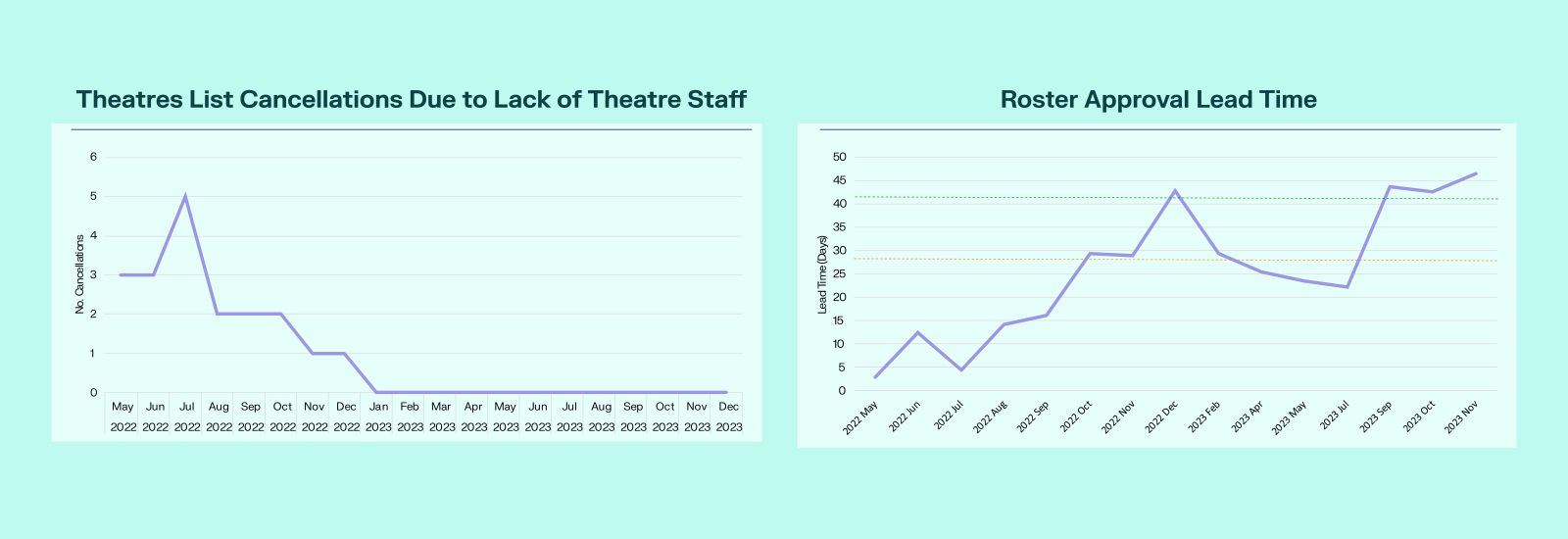
When the Trust first implemented ActivityManager in July 2022, they had between three and five theatre lists being cancelled a month due to theatre staffing. Since introducing the system across the Trust’s theatres, following a successful pilot within the Urology department and then more widely across operating departments, Bolton NHS FT was able to dramatically reduce theatre cancellations to zero across a 12-month period.
Since introducing ActivityManager, staff feedback has indicated:
agree or strongly agree viewing the roster is easier and/or better than before
agree or strongly agree the process for booking annual leave and making other requests is easier/better
agree or strongly agree having the roster further in advance has improved work/life balance
agree that eRostering enables them to provide better patient care

Two years ago, rosters across the Trust’s theatre teams were being confirmed only two weeks ahead of time. This lack of notice and effective scheduling contributed to high levels of sickness absence which in turn led to high numbers of theatre lists being cancelled.
In addition, not having more than two weeks’ notice had an impact on engagement and staff wellbeing as staff were not able to plan their work days in advance and ensure a good work life balance.
Although staff absences were reported digitally for rostering and human resources, as Kris Booth, the Trust’s theatres team manager, explains:
“Workforce allocations were recorded using pencil and paper, which was not an effective system and would unfortunately lead to duplication of people on the off-duty rosters. This system also enabled staff to swap shifts with one another without those overseeing the rostering process having sight of the personnel changes, or any meaningful audit trail of these roster changes.”
Kris Booth, the Trust’s theatres team manager
To deliver on its ambition to reduce theatre list cancellations, the Trust decided to introduce activity-based rostering via ActivityManager. The urology department acted as the ideal setting for the initial pilot, as it comprised one theatre and one clinic group. The pilot’s success was, in part, due to very positive engagement from the team concerned, as Kris explains:
“We managed to ensure the small cohort of staff in urology were really engaged and bought into the pilot.”
The team in charge of the rollout successfully built the roster based on eight-week lead times across all the provider’s main operating theatres. Within the band 7 theatre teams across the wider Trust, there was initially some concern about the transition from paper to digital rostering. This led to some discussion around the idea of sticking with a dual system to track allocations and off-duty rosters both on paper and through the digital system. But Kris points out that this uncertainty vanished overnight:
"Within 24 hours, offline processes had ceased entirely. The Trust hit elective backlog targets, with staff feeling the benefits too”.
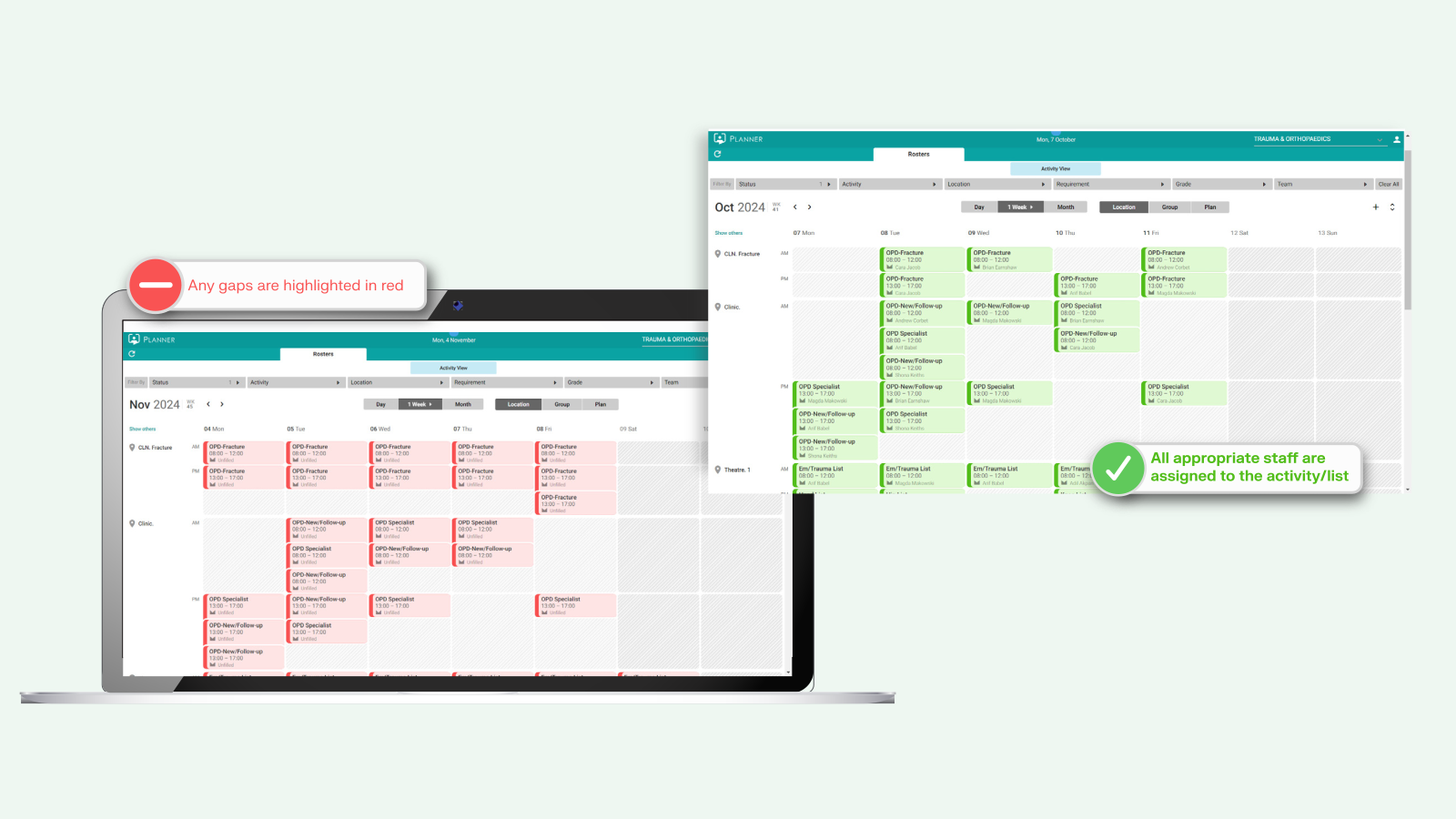
Subsequently, the ‘planner view’ within the platform, displays any theatre list not filled with all staff that are required, making it much easier to ensure that all sessions are covered.
This was a major turning point for Bolton NHS FT, as it enabled much more efficient and flexible activity-based rostering and live scheduling.
The ambition behind the system implementation was to reduce theatre lists cancelled due to shortages of theatre staff. Monthly cancellations of lists due to theatre staff absence is now zero.
This has been aided by the fact that staff have seen demonstrable improvements in roster approval lead times, which topped six and a half weeks as of November 2023.
David Mulligan, the Trust’s Head of Workforce Systems, explains “As a single source of truth for Bolton’s theatre allocation, the system encapsulates the activity that theatre teams are scheduled to do on the roster, there’s a much greater consequence to it, rather than it simply identifying who is set to work and when.”
This has unlocked a wealth of operational and cost benefits. Divisional leaders can receive accurate forecasts for their whole-time equivalent needs, which has proved vital for future planning of how many people are required to fill a particular roster. This in turn has been instrumental in the Trust’s robust recruitment process, as it quickly helps articulate demand with data-backed insights as to the resources that workforce leaders will need going forwards. Hand in hand with robust recruitment, the Trust has also seen a reduction in agency expenditure. David explains:
“Agency spend is down hugely, thanks to multiple contributory factors across the Trust. Where Allocate ActivityManager has supported us, is by helping to ensure that when we do go out to agency, it’s because we know we definitely need someone to fill a specific activity, in a specific location and we are confident that the theatre session is definitely going to go ahead. Previously, we were getting agency cover for activities that we hoped would go ahead and still having to pay the fee, even if the session was cancelled. We can now more flexibly use our own staff to cover gaps.”
Elsewhere, workforce leaders have improved sickness management processes, as they now provide a ‘true reflection’ of staff absence and cover, meaning the activity can easily be allocated to others.
For staff, these changes have transformed previously poor levels of work/life balance and engagement, with 89% of staff surveyed agreeing or strongly agreeing that having the roster further in advance has improved work/life balance. Teams now know exactly where they are working before they arrive on premises, guided by the goal that all staff are allocated into the correct theatres and sickness managed by 8am each day, leading to 86% of staff agreeing that it’s much easier to view the roster than it was before. This target has been hit 95% of the time.
One unforeseen benefit that arose from implementing the platform was improved levels of statutory and mandatory training within the workforce, due to the education team’s ability to pinpoint individuals who require additional training within the roster. These individuals can be brought in on flexi shifts and notes added to the roster so that they can better understand what is expected of them during that flexi shift.
Finally, having seen the benefits realised through ActivityManager’s implementation across urology and main theatres, Bolton NHS FT has started projects to expand the platform’s use to day case theatres, ophthalmology, pharmacy and podiatry.
“Our management team were unable to make efficient, safe, rostering plans and staff only had short notice of their shift allocations, driving costly variable pay rates. We now have a large workforce thoroughly engaged with an electronic roster that is available weeks in advance. The operating theatre is a safe and supportive work environment and short notice cancellation of shifts due to staff fatigue is rare, whilst management time is released to support and engage staff. The new system has been transformational for the department.”
Niamh Brockenshaw
Matron, Main Theatres Department & Day Care Unit