
From Benchmarking to Action: How RLDatix Is Using AI and Data Intelligence to Raise the Standard of Care
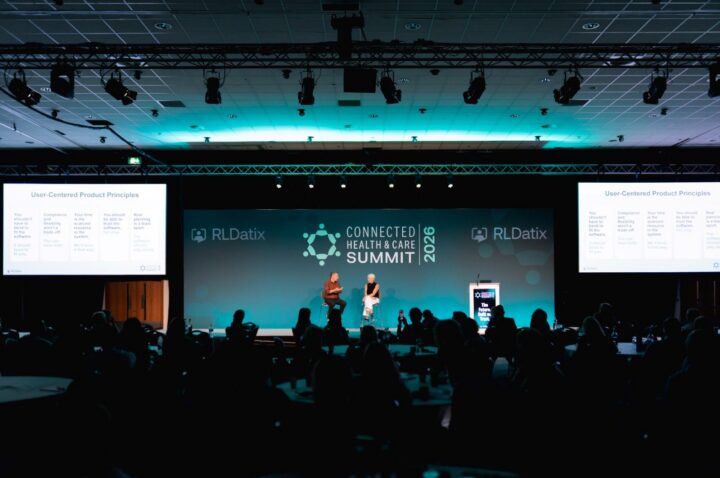
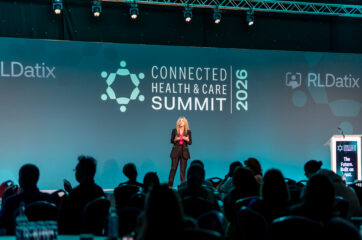
Health and social care organisations need technology that works the way their teams work, not the other way around. In this product keynote from the Connected Health & Care Summit 2026, the RLDatix product leadership team walks through what was promised, what was delivered and what is coming next, from AI-enabled shift matching and benchmarking intelligence through to a compliance solution that brings together incidents, policies and audits into a connected workflow.
Watch the RLDatix product leadership team present the latest innovations across workforce, safety and data intelligence, including live demos and early adopter results from NHS sites.
What was announced and what the results show
This keynote covers product delivery, early adopter outcomes and the roadmap ahead. The headline results were:
- Smart Match, the AI-enabled shift matching tool, increased bank fill rates by 10% and reduced time to fill urgent shifts by 29% in early adopter sites
- 31% of bank workers in the Smart Match pilot said they are now more willing to work in other units, and workers were 55% more likely to book a matched shift
- Loop Rewards reached 180,000 click-throughs and 35,000 active users within two and a half months of launch
- RLD Intelligence, formerly Oversight and Discover, achieved 99.7% visitor adoption with 1,500 page views in the last 30 days alone
- A new compliance solution connecting incidents, policies and audits is planned to launch in September
The challenges addressed and how the products respond
The keynote addressed several connected operational challenges. Fewer than four in 10 bank workers are active, meaning the majority of people who sign up do not regularly take shifts. Agency spend is not just a financial issue but also effects safety, staff satisfaction and service continuity. Job planning compliance sits at around 29% first-time sign-off because the process is too complex. Patient safety incidents have not decreased, and the link between investigation findings and operational improvement can remain disconnected.
The products respond directly. Smart Match uses AI to identify the bank worker most likely to accept a shift based on location, timing and history. RLD Intelligence provides dynamic benchmarking across rostering, temporary staffing, job planning and safety. The new compliance solution closes the loop between incidents, investigations, policies and audits. Pulse, coming later this year, is intended to proactively alert teams to emerging problems and suggest actions before they escalate.
What this means in practice and who it is relevant to
The results from early adopter sites show measurable operational impact. Smart Match increased bank fill rates by 10%, reduced time to fill urgent shifts by 29%, and made 31% of bank workers more willing to work across units. Self-booking rose by 18%. These are not projections. They are outcomes from live NHS environments.
RLD Intelligence now covers the full operational landscape: rostering, unavailabilities, temporary staffing, job planning, incidents and safety culture. Users can benchmark against peers by ICB, organisation size or care type, then drill down to ward level to identify exactly where variation exists and why. Professor Mark Radford described it as a “phenomenal step forward for organisations and leaders.”
The product team also demonstrated a user-centred redesign of job planning, replacing a complex tabbed interface with an intuitive calendar view designed with direct input from 20 consultants. The guiding principle throughout is that software should adapt to the user, not the other way around. Chad Jennings, VP of Product Management for Europe, reinforced that design is not how it looks but how it works.
This session is relevant to workforce directors, rostering leads, patient safety teams, finance directors, medical staffing managers and anyone responsible for operational performance, temporary staffing or safety culture across health and social care.
Frequently asked questions
Smart Match is an AI-enabled feature within the RLDatix temporary staffing suite that identifies the bank worker most likely to accept a shift based on factors such as location, timing, shift history and existing commitments. In early adopter NHS sites, it increased bank fill rates by 10%, reduced time to fill urgent shifts by 29%, increased self-booking by 18% and made 31% of participating bank workers more willing to work in other units. Workers were 55% more likely to book a matched shift. It is moving from early adoption to general availability.
RLD Intelligence is the name for the combined suite of Oversight, Discover and Act. Oversight provides benchmarking across the full RLDatix customer base, allowing organisations to see how they perform against peers by ICB, size or care type. Discover lets users drill into the data at ward level to identify where variation exists and better understanding what is contributing to it. Act supports improvement through playbooks, coaching, community learning and, in the future, Pulse, which will proactively suggest actions based on AI-driven analysis.
The compliance solution, planned for launch in September, connects policies, audits and incident investigations for the first time within the RLDatix platform. Organisations can document and update policies, link them to specific audits, and tie those audits back to investigation findings from safety events. The goal is to close the loop between identifying a problem through an incident, understanding why it happened, putting a corrective action in place and measuring whether that action has been affective.
Pulse is an AI-driven feature coming later this year that will proactively alert users to emerging operational problems and suggest actions before those problems escalate. For example, if a roster was signed off six weeks ago but charge cover is now missing two weeks from now due to a swap or holiday change, Pulse will flag the issue and offer options to resolve it. The long-term vision is for some of these actions to be automated where trust in the recommendations is established.
Loop Rewards is a staff benefits feature within the Loop platform, similar in concept to a Blue Light Card. It gives health and social care workers access to rewards and discounts tailored to them. It launched two and a half months before the summit and had already been clicked through by 180,000 people, with 35,000 actively using it. It is available to all Loop users and is designed to support staff recognition and wellbeing.
Chad Jennings, VP of Product Management for Europe, described three principles. “First, design with the user, not for the user, meaning users are involved throughout the process, not just at the beginning and end. Second, rapidly learn by building prototypes quickly and iterating based on feedback. Third, understand that products exist in an ecosystem, especially in hospitals where multiple teams and interfaces work together.” For job planning, the team interviewed 20 consultants and built multiple prototypes before arriving at a simplified calendar-based interface designed to reduce the barrier to entry.
RLDatix has partnered with the Menopause Charity to provide information and support to Loop users. With 75% of the NHS workforce being women and 1.8 million people using Loop daily, the partnership aims to normalise the conversation around menopause and ensure women can access trusted, evidence-based resources through the platform. The charity’s CEO highlighted that one in 100 women experience early menopause under the age of 40, making awareness important across all age groups.
The engineering team has deployed an AI-enabled observability tool across all RLDatix products that identifies problems before customers encounter them. On Loop, this approach delivered a 43% reduction in the defect backlog over nine months. Optima will see a significant increase in release frequency, with AI used to correct defects faster and test deliveries more thoroughly before they go live. The team committed to reducing upgrade times for larger trusts and making releases smaller and more iterative.