



RLD Safety | Bringing together incidents, risks, policies and audits.
How DCIQ supported stronger assurance, faster learning, and improved visibility across a complex ambulance service environment
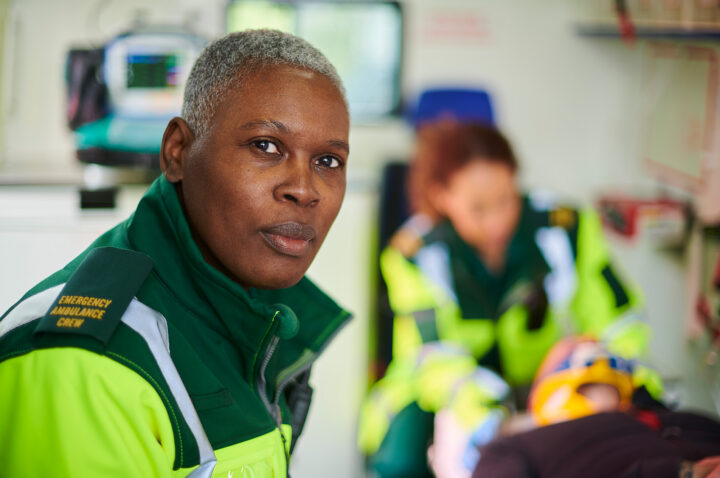
North West Ambulance Service NHS Trust delivers care in a highly dynamic, high-risk environment, often under intense time pressure, in uncontrolled settings, and with limited opportunity for retrospective intervention.
NWAS recognised that fragmented systems and inconsistent data were limiting its ability to understand risk, learn from harm, and assure safety at scale.
To address this, the Trust implemented and continuously optimised RLDatix DCIQ, alongside establishing a dedicated Datix Support Team and an Incident and Risk Management Team. The system was configured around real operational workflows, with redesigned forms, clearer categorisation, embedded guidance, and dashboards designed to support timely action.
As a result, DCIQ became NWAS’s single source of truth for safety intelligence, helping leaders gain clearer oversight across incidents, claims, complaints, learning from deaths, and duty of candour processes.
“It’s been really important that we haven’t seen this as a plug-and-play system. The strength has been in designing processes that reflect how our clinicians work, and ensuring the technology supports that — not the other way around.”
“Consistent improvement in the system and how we use our data to inform decision making has been integral to the work we do.”
Natalie Samuels, NWAS Head of Violence Prevention Reduction
Operating across a large ambulance service brings distinct governance challenges. Care is delivered rapidly, across multiple locations, and often in circumstances where complete information is not immediately available.
NWAS identified several barriers to stronger assurance:
“It’s not just about logging incidents; it’s about understanding what’s happening, what’s going wrong, and what we can improve.”
Pamela Morris, DCIQ Portfolio & Assurance Manager
NWAS took a user-centred approach to configuring DCIQ, aiming to make the system support real work rather than add administrative burden.
Key changes included:
“We work from the end of the process back – what does the board need, what does the team need – and we design the system around that.”
"We’re not gatekeepers. We work openly with teams so they understand how the system works and feel confident using it.”
NWAS Datix Support Team
Stronger governance and assurance
Since implementation, NWAS has achieved a High Risk Assurance rating for three consecutive years.
The Trust linked this progress with the maturation of the platform and the embedding of enhanced Incident and Risk Management resource. DCIQ now provides a single view across incidents, risks, claims, complaints, learning from deaths, and duty of candour activity. This sustained level of assurance reflects more than compliance. It demonstrates an organisation that has confidence in its data, controls, and oversight mechanisms.
This gives leaders greater visibility and supports a more proactive approach to assurance, moving from retrospective reporting to proactive assurance, identifying emerging risks early and tracking progress against mitigation actions with confidence.
“That visibility means we can act sooner instead of finding issues months down the line.”
Pamela Morris, DCIQ Portfolio & Assurance Manager
Better data quality and reporting confidence
NWAS identified violence and aggression reporting as an area where clearer definitions and stronger categorisation were needed.
Following redesigned forms and targeted education with the Violence Reduction Team, the Trust reported a reduction in misclassification and improved confidence that trends more accurately reflected frontline reality. At first glance, NWAS observed a reduction in recorded incidents; crucially, this reduction did not result from a decrease in violence itself, but from improved accuracy and clarity in reporting.
Alongside improvements in data quality, NWAS also reported reductions in physical assaults during its wider quality improvement work.
“During the NWAS Quality Improvement Project, we saw a 30% reduction of physical assaults.”
“From data improvement and appropriate mapping, we have been able to improve our performance which has led to reduced violence and better outcomes for our staff. This all begins at the point of reporting through DCIQ”
Natalie Samuels, NWAS Head of Violence Prevention Reduction
This means leaders can make decisions using more reliable information. This shift also illustrates a deeper cultural change: staff became more confident in reporting, understood the purpose behind the data they submitted, and could see how accurate data led to targeted education and preventative action.
“Confidence in the system changes everything – once teams trust it, they engage with it.”
Pamela Morris, DCIQ Portfolio & Assurance Manager
Greater defensibility in legal and regulatory processes
DCIQ has also become central to governance within NWAS’s Legal and Services Team.
The Claims module is now used exclusively, enabling a fully paper-free process. DCIQ data is also routinely used in coroner’s court proceedings, reflecting organisational confidence in the integrity, traceability, and completeness of records. This was achieved through close collaboration with the Legal & Services Team to translate their requirements into intelligent form design and associated workflows.
“Our legal services team is now paper free and relies solely on DCIQ.”
Pamela Morris, DCIQ Portfolio & Assurance Manager
This shift shows how well-structured digital records can improve operational efficiency while strengthening information governance. In high-stakes legal environments such as coroner’s court proceedings, the integrity, traceability, and completeness of DCIQ records supports defensibility and audit readiness.
Faster learning from deaths processes
Previously managed through spreadsheets, Learning from Deaths processes lacked visibility and created unnecessary delays.
By moving the process into DCIQ, NWAS created clearer oversight of review status, responsibilities, and timelines within a secure, auditable system. In some cases, workflows were also redesigned so reviews could run in parallel, helping reduce delays.
“Moving learning from deaths into DCIQ has freed teams up to focus on learning, not spreadsheets.”
This has helped teams spend less time on administration and more time on review activity, allowing clinicians and safety teams to focus on insight rather than administration, ensuring lessons are identified and acted upon sooner.
Improved patient feedback handling
The full implementation of the Feedback module gave complaints teams real-time visibility of workload, progress, and emerging themes.
“The timeliness of complaints reviews has drastically improved.”
Pamela Morris, DCIQ Portfolio & Assurance Manager
Through careful prioritisation, resource allocations and system driven workflow that allows faster identification of bottlenecks and areas requiring attention, NWAS reported that complaint review times have reduced drastically, to the extent that the team now operated with no backlog.
“Over the past three years, we have successfully reduced our overdue and open complaints from over 300+ to consistently maintaining a caseload of approximately 100 open cases.”
Michelle Wainwright, Resolution Manager
For patients and families, this can mean faster responses and more timely resolution of concerns.
“Our team’s performance in meeting Service Level Agreements (SLAs) has shown impressive improvement over time. In the financial year 2023/24, we achieved a 76% closure rate within SLA, which has steadily improved to 90% in 2025/26.”
In a high-pressure ambulance setting, timely information and trusted processes matter.
NWAS’s experience shows that digital governance systems deliver greatest value when they are configured around real operational needs, supported by engaged specialist teams, and actively used to guide decisions.
For NWAS, this has meant stronger assurance, clearer oversight, reduced administrative burden, and greater confidence in the data used to support patient safety and governance.