



NAMSS 2026: Five themes shaping the future of credentialing
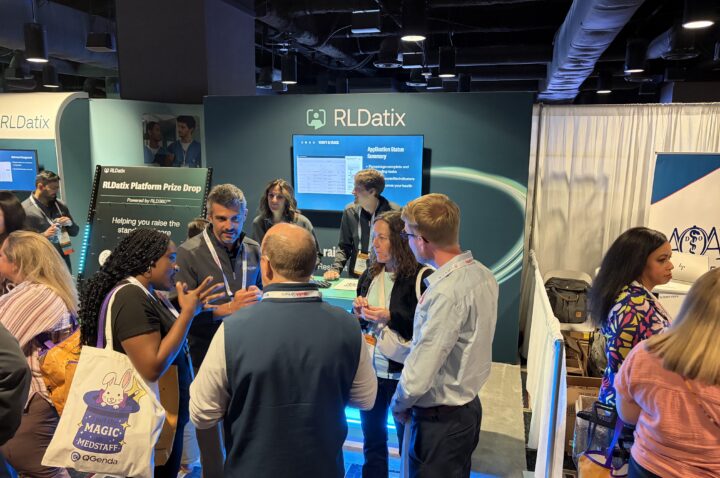
The NAMSS 50th Annual Conference brought healthcare leaders together in New Orleans to talk honestly about what comes next for medical staff services. Attendees spent less time discussing where healthcare is today and more time focused on what organizations need to do to prepare for what is next. One question kept surfacing: how do organizations connect provider information, professional expertise and technology to make better decisions? Below are five themes from NAMSS 2026 and what they mean for healthcare leaders and Medical Services Professionals (MSPs) moving forward.
Credentialing is becoming a strategic function
One of the strongest themes throughout NAMSS was the continued expansion of the MSP role. Provider credentialing is no longer viewed solely through a compliance lens. It is increasingly seen as a function that affects provider readiness, organizational efficiency, financial performance and patient outcomes. According to the Association for Advancing Physician and Provider Recruitment 2026 Benchmarking Report, the typical physician start date occurs 229 days after a position is posted, a span that includes credentialing, privileging, licensing and onboarding.
Rather than asking how to process applications faster, attendees were asking how medical staff services teams can help solve larger business challenges. Sessions focused on onboarding, enrollment modernization and using credentialing data to support enterprise decision-making. A symposium titled “Why Unified Data Is the Next Competitive Advantage in Credentialing” challenged leaders to move past fragmented approaches and consider what becomes possible when provider data lives as a single, trusted source of truth.
The takeaway is clear. Organizations are looking to their Medical Services Professionals for strategic insight across the provider lifecycle, not just administrative expertise.
Trusted provider data needs to inform decisions
Provider data emerged as a recurring topic. Organizations continue to collect more information than ever, but many attendees discussed the challenge of turning it into meaningful action. Conversations centered on provider data governance, data integrity and the need for a trusted source of provider information.
Whether the discussion focused on provider directories, analytics, enrollment or workforce planning, the underlying challenge was the same: organizations need better provider data management to support smarter decisions. Sessions explored moving beyond data collection toward data-driven decision-making, and how provider information can improve operational performance and identify risks earlier.
Provider data is becoming one of the most important assets healthcare organizations hold, but only if it can be trusted and put to work. That is the gap RLDatix set out to close with RLD360 Credentialing, announced during NAMSS 2026. Combining software with built-in automation and NCQA-certified verification services, the offering is designed to give health systems one verified record of each provider. Because RLD360 Credentialing is a module of the RLD360 platform, each provider record connects workflows across payer enrollment, peer review, safety and compliance, helping organizations turn provider data from something they collect into something they can act on.
AI adoption needs practical use cases and human oversight
AI generated significant conversation at NAMSS 2026, but the discussion has clearly matured. Rather than debating whether AI will impact medical staff services, attendees focused on how credentialing automation can be implemented responsibly and where it delivers meaningful value.
Sessions examining AI-driven automation sparked broader conversations around governance, human oversight and organizational preparedness. Participants discussed what safe adoption looks like and how organizations can balance efficiency with accuracy and accountability. The key questions: which tasks are suitable, how are outputs checked, who remains accountable and how is success measured?
There was strong recognition that AI in credentialing is not a replacement for professional judgment. The organizations making progress are those using technology to support experts rather than remove them from the process. The practical starting point: begin with a defined problem and an agreed oversight process.
Continuous readiness relies on current provider information
Another consistent theme was the shift from episodic credentialing compliance to continuous readiness. As regulations and expectations around provider oversight evolve, organizations need accurate information and ongoing visibility into compliance and risk.
Rather than preparing periodically for surveys, organizations are working to monitor provider data continuously and identify potential issues before they become larger problems. Continuous readiness depends on provider information that stays current and connected, with clear ownership and enough transparency for teams to see what needs attention now.
The question for leaders: can your team see today what needs to be resolved, or does it take a separate exercise to figure that out?
MSP leadership development must keep pace with change
Although technology and data featured prominently, many of the most engaging conversations centered on developing the next generation of MSP leaders. Sessions on leadership development, career pathways, internships and succession planning reflected a shared concern: medical staff services needs a sustainable pipeline of talent prepared for increasingly complex roles.
Today’s MSPs must navigate the consistent evolution and complexities of the healthcare field. The expanding MSP leadership role calls for skills beyond traditional credentialing expertise. Organizations should support growth in data interpretation, communication and change management. Building those capabilities requires intentional investment and will determine who is prepared to lead the profession through change.
One practical step: create opportunities for experienced professionals to mentor colleagues and involve emerging leaders in wider organizational projects.
Turning the NAMSS conversations into action
The conversations at NAMSS 2026 revealed a profession in transition. Attendees were not focused on incremental improvements. They were asking how to make better use of provider data, adopt technology responsibly, maintain readiness in a complex environment and prepare the workforce for the future.
These themes share a common obstacle. Provider data sits in one system, quality and compliance data in another and risk in a third. Credentialing teams are asked to deliver strategic insight from information that was never connected.
RLD360 Credentialing takes a different approach. It brings credentialing into the same platform that connects quality, compliance and risk, so provider data is trusted at the source, kept current and visible to the people who need it. Medical staff can work from a single source of provider information instead of managing siloed data across a health system. That is what makes continuous readiness practical rather than aspirational, and it gives MSP teams a way to show leadership the impact of their work.
Ready to see how it works?
Explore RLD360 Credentialing →