


Clinical engagement: the rate-limiting step in patient safety
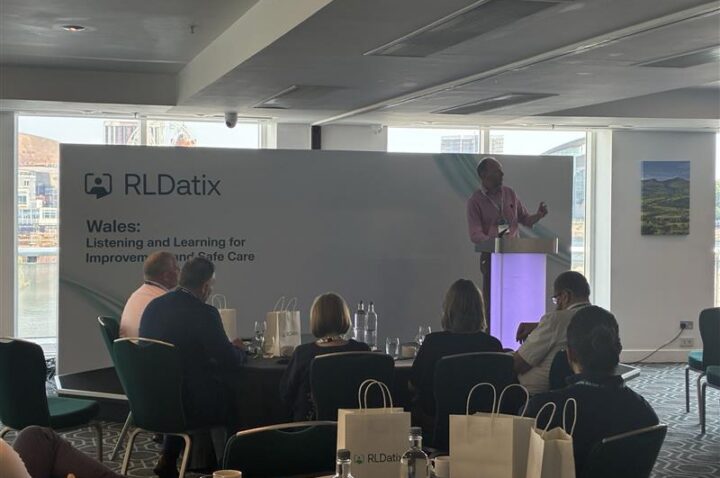
Insights from Dr Darren Kilroy, Medical Director at RLDatix, recorded at the RLDatix Wales: Listening and Learning for Improvement and Safe Care event, 23 June 2026, St. David’s Cardiff
Data does not walk up to a patient and do something. People do. And it is people’s opinions, behaviours and culture that make the difference between things going well and things going badly. Dr Darren Kilroy, Medical Director at RLDatix and a former NHS clinician with nearly 30 years of frontline and board-level experience, delivered a session with no slides, a pack of playing cards and a direct challenge to the room.
Key takeaways from this session
- Data has no opinion. People do. Clinical engagement is the rate-limiting step in patient safety. Without the engagement and culture of frontline teams, no amount of data or reporting will reduce harm.
- Appoint leaders on values, not seniority. When Darren rebuilt an entire medical leadership team based on values rather than time in post, the result was more diverse, younger and genuinely engaged in data and improvement.
- Go out and find clinicians. Don’t wait for them to come to you. Walking the wards and being present in clinical areas is one of the simplest and most effective ways to build engagement.
- Professionalise safety and governance roles. The people who track, monitor, analyse and interpret safety data are fundamental to making care safer. Celebrating and professionalising what they do is the key to the future.
- Workforce and patient safety are inherently linked. Training, working hours, agency staffing and staff wellbeing connect directly to patient outcomes. These are not separate agendas.
The rate-limiting step
Why clinical engagement matters more than another report
Darren Kilroy opened by framing the challenge in the simplest possible terms. Over a career spanning nearly 30 years and approximately a quarter of a million patient interactions, he operated for most of that time in what he described as total ignorance of data, insight or anything other than his own intuition.
"For the vast majority of that time, I operated in total ignorance of data, of insight, of anything other than my intuition and I believe I was doing the right thing.”
Dr Darren Kilroy, Medical Director, RLDatix
That experience shaped his conviction that the gap in patient safety is not data or intelligence. It is the grip and control of engagement between the data and the people at the fingertips who are actually having to do something with it.
"The data has not got an opinion. People have. And it’s people’s opinions and culture that make the difference between things going well and things going badly.”
He chose not to use slides. His reasoning was deliberate: you are not going to improve clinical engagement through a PowerPoint session, and you are not going to improve the quality of care by looking at another report.
Appointing on values
What happened when an entire medical leadership team was rebuilt from the ground up
Darron shared a story from his last NHS appointment; at an organisation he described as one of the most culturally bankrupt he had ever worked in. The outgoing Chief Medical Officer’s parting comment was a warning about difficult consultants, not a handover on mortality data or leadership culture.
He inherited a governance structure where senior clinical leaders were retained through responsibility payments with no clear link between leadership roles and the safety or quality performance of their divisions. His response was to stand down the entire medical leadership team and start again.
The key criterion for reappointment was one word: values.
"We appointed an entire new medical leadership team based on values. Not your knowledge of leadership, not your time in post. Values.”
The result was a completely different profile of people. More diverse, younger, and genuinely interested in data, improvement and working together in a way they had never experienced before.
"They felt unleashed by the opportunity to engage in that.”
The first instruction to the new team was equally direct: there would be no meaningful leadership meetings unless they had a constructive argument about what they were doing every time and challenged each other using the data.
That shift, rooted in honesty, trust, respect and enjoyment, transformed the culture. Mortality governance, previously neglected under the old leadership, became the most interesting and rewarding thing the team worked on for the next six months.

A pack of cards and the reality of risk
Bringing clinical engagement to life on the ward
The centrepiece of Darren’s session was a live exercise using a standard pack of playing cards. Each person in the room was dealt a card. Number cards represented patients admitted that morning to one of four wards (Diamonds, Spades, Hearts, Clubs). Kings, queens and jacks were the staff in charge. Jokers were agency staff.
The scenario was based on reality. On an average morning in Cardiff, approximately 40 patients are admitted to the acute medical take. Darren Kilroy guaranteed that within those 40, some would come to harm before lunchtime.
The exercise made it tangible. One ward was short-staffed because the Queen of Diamonds was off sick. Her replacement was a Joker: an agency nurse who had never worked on that ward before. The patients on Diamond Ward were now at increased risk, not because of any individual’s intention, but because of the system conditions.
On Hearts Ward, an agency doctor without appropriate training in anticoagulation therapy was called to see a patient who had a funny turn. The prescription was wrong. The patient would suffer a pulmonary embolism that afternoon.
"That is the reality of bringing clinical engagement to life in teams. It brings home to people the reality that any one of us, at any stage, is a heartbeat away from ending up on a ward somewhere.”
The point was not the cards. It was the method. A pack of cards costing a pound from Amazon can do more to engage clinicians than any slide deck, because it makes the abstract real.
"We rely upon each other’s culture, engagement, data familiarity, leadership and role modelling to make sure that we’re all working together to make that as safe as possible.”
Go out and find them
The simplest way to improve clinical engagement
Darren’s advice on engaging clinicians was disarmingly practical. Do you meet them? Do you meet them every day? If you don’t, go out and find them.
"Put yourself out there. Go out and find doctors and nurses and therapists and pharmacists and just wander around. It sounds crazy, but when you go out in the field and you put people in the clinical areas, the clinical staff really love it.”
Many people feel nervous about being in clinical spaces because they feel out of context. Darren was emphatic that this is not the case. The more that people who are not clinical can mingle with those who are, the better. Presence builds trust, and trust builds engagement.
Professionalise the people who make safety work
You are fundamental to making care safer
Darren Kilroy directed his strongest message at the safety, governance and quality professionals in the room. Having spent years at board level reviewing data, reading reports and looking at analytics, his conclusion was clear: none of that data walks up to a patient and does anything. It is the people who track, monitor, interpret and act on it who make the difference.
"You are the people who work around those clinical personas to make sure that the actions they take, the outcomes that they engender, the ways in which they interact with each other and with the people around them are tracked and monitored and described and then analysed. It is your expertise and knowledge that make the difference.”
The more that the health system celebrates and professionalises the work of safety and governance professionals, the better the future of clinical engagement and safer care will be.
Workforce and safety are the same agenda
Darren’s final reflection drew together his two career phases: workforce and patient safety. The light-bulb moment, he said, was recognising that they are inherently linked. Training, working hours, exception reporting, agency use, psychological distress: all connect directly to patient outcomes.
"The more that we recognise and lean into the links between training of staff, hours spent working, being aware of the psychological distress and impacts that working can have on all of us, and linking that into patient outcomes and the way in which we deliver good care, the better.”
The common thread
The consultants Darren was warned about on his first day, the ones described as difficult and irritating, turned out to be the ones who genuinely understood patient safety. They asked questions. They were inquiring of mind. They looked at data and tried to do something with it.
"That’s why they were irritating, because they asked questions and they were inquiring of mind and they looked at data and tried to do something with it.”
Clinical engagement is not solved by a report, a dashboard or a new system. It is solved by values, presence, trust and the recognition that the people who work in safety and governance are not supporting actors. They are fundamental to making care safer.
Continue the Conversation
Improvement programmes succeed when clinicians are actively engaged in the process. Building trust, securing buy-in and creating shared ownership remain critical to sustainable change.
Related Summit sessions:
- Medical Job Planning and Rostering: How to Build Clinical Buy-In and Navigate Difficult Conversations
- Anaesthetics Workforce Management: Planning, Deployment and Clinical Engagement
- Teams Run on Trust: From Surgery to Formula One
See how healthcare organisations are improving engagement, collaboration and trust across clinical teams.
FAQs
Clinical engagement refers to the active involvement of frontline clinical staff, including doctors, nurses, therapists and pharmacists, in the processes that drive safer care: reporting incidents, using data, participating in governance, challenging practice and contributing to improvement. Darren argued that without meaningful engagement from the people delivering care, no amount of data or reporting will reduce harm.
At an organisation with significant cultural and governance challenges, the existing medical leadership had no clear link between their roles and safety or quality performance. By appointing entirely on values, including honesty, trust, respect and a genuine interest in improvement, the new team was more diverse, more engaged and more willing to use data constructively. The result was a transformation in how the organisation approached mortality governance and clinical safety.
It is a simple engagement tool using a standard pack of cards to simulate a real hospital morning. Number cards represent patients, face cards represent ward staff and jokers represent agency workers. The exercise makes the reality of risk tangible: staffing gaps, unfamiliar agency workers and the cascade of decisions that can lead to harm. It is designed to be used with clinical teams to bring home why engagement in safety data and governance matters.
Staffing levels, agency use, working hours, training gaps and staff wellbeing all connect directly to patient outcomes. When staff are under-resourced, fatigued or unfamiliar with a ward’s systems and policies, the risk of harm increases. Darren argued that workforce and patient safety should not be treated as separate agendas but recognised as inherently linked, with the same data and leadership attention applied to both.
Because they are the people who track, monitor, analyse and interpret the data that describes what is happening in clinical care. Clinicians deliver care, but it is the safety and governance workforce that ensures the actions, outcomes and patterns are visible, understood and acted on. Darren’s view, based on decades of board-level experience, is that professionalising and celebrating these roles is the single most important investment in the future of patient safety.