
Innovation and the future of patient safety technology
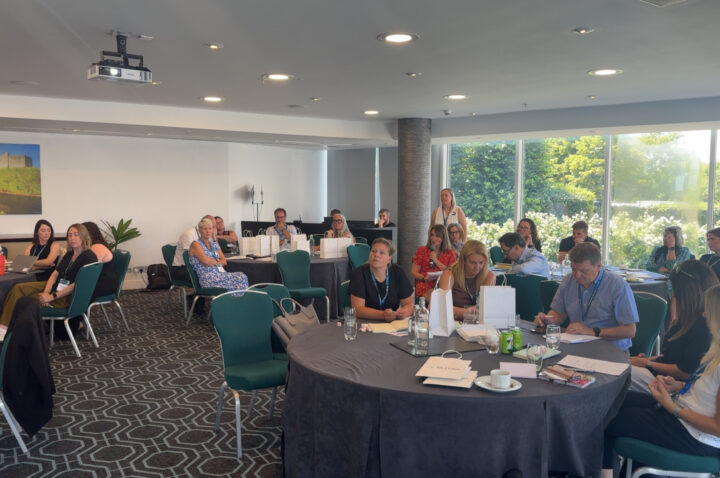
Insights from Mark Lingood and Chad Jennings, RLDatix, recorded at the RLDatix Wales: Listening and Learning for Improvement and Safe Care event, 23 June 2026, St. David’s Cardiff
Patient safety is not improving globally. Despite decades of effort, an estimated 22,000 avoidable deaths still occur in the UK each year. The question facing the technology teams building the next generation of safety systems is specific: where can innovation make a measurable difference? Mark Linggood, who has worked across patient safety for nearly 30 years, and Chad Jennings, VP of Product at RLDatix, dialled in to share what the learning systems of the future are likely to look like.
Key takeaways from this session
- Patient safety is not improving. Despite best efforts, the numbers have not shifted. An estimated 22,000 avoidable deaths still occur in the UK each year. Technology and patient safety professionals need to work together to change that.
- The learn cycle needs to close. The transition from investigation recommendations to sustained action on the ground is where the system breaks down. Recommendations are often not feasible, too costly or unable to drive the behaviour change needed.
- Incident reporting will look very different in the future. Lighter initial entries, voice and text input, ambient listening and AI-assisted summarisation will replace lengthy forms, making reporting easier and more contextual.
- Leading indicators are the biggest gap in patient safety today. Healthcare is stuck in lagging indicators. New tools like RLD Safety Intelligence will surface leading indicators, including cultural signals and process adherence, benchmarked across organisations.
- Workforce data and safety data are statistically linked. Pilot work with NHS Wales organisations found that a one standard deviation increase in agency staffing rates correlates with a 15% increase in harm incidents.
The three domains of patient safety
Learn, resolve, control
Mark framed the session around three interconnected domains. The first is the learn cycle: the traditional quality improvement loop where events are reported, investigated, recommendations are made, safety actions are taken and outcomes are evaluated. When this cycle closes successfully, learning happens and harm is prevented from recurring.
The second is the resolve cycle: the parallel process of reacting promptly to minimise the impact of safety events on patients and staff, including duty of candour and peer support.
The third is the control environment: the underlying infrastructure of enterprise risk management, policies, quality standards and the audit programme that assures controls are working. Mark argued that optimising this domain has the greatest potential for moving toward predictive and preventive models of patient safety.
Rethinking incident reporting
From lengthy forms to lighter, contextual inputs
Incident reporting will be done very differently in the future. NHS England currently receives around three million patient safety incidents reported centrally each year, with over 20 million in its database. The volume of incidents is not the problem. It is how we learn from them and drive behaviour change where the real value lies.
Mark described a shift from broad, detailed forms that can deter reporting toward lighter initial entries where more contextual information is requested based on the type of incident and the opportunity for learning.
"I see a shift from these big lengthy forms to quite light initial entries, and then only going back to ask for further contextual information based on the type of incident and the opportunity for learning.”
Mark Linggood, RLDatix
In the future, ambient listening, video surveillance and voice-based input will play a growing role. AI is already being used in clinical settings to optimise handover notes, with Epic reporting 30 minutes of time saved per physician through ambient listening alone.
Five lenses for AI in patient safety
How RLDatix thinks about where AI adds value
Chad Jennings introduced the framework RLDatix uses to evaluate where AI should be applied, centred on five “how might we” questions:
Surface the invisible
What patterns live in the data that users can’t see but would change how they operate? For example, using sentiment analysis on incident reports to detect a blame culture.
Anticipate the future
What do users wish they could see coming before it happens? For example, forecasting harm incident rates based on workforce plans and rosters.
Remove friction
What tasks do users do repeatedly that they wish could just happen? AI and large language models are particularly effective at automating form completion, document review and updating risk scores based on live assurance data.
Personalise the experience
How should the interface change based on knowing who is using it? A patient safety manager, a quality improvement lead and a frontline clinician all need different information at different times.
Guide and unblock
Where do users get stuck, give up or call support? A copilot that helps create safety dashboards and reports, or guides users through unfamiliar workflows, can reduce the learning curve and improve data quality.
"When new technologies come along, people can get caught up using technology for technology’s sake. What we try to do is centre this back in our customers and users.”
Chad Jennings, VP of Product, RLDatix
Learning nudges: getting the right information to the right person at the right time
The future of how safety learning reaches the frontline
One of the most practical innovations Mark described was the concept of learning nudges. Instead of relying on staff to absorb lengthy policy updates or review incident reports after the fact, what if the system prompted them with the right information in context at the moment, they need it?
"What if a nurse or agency staff member turning up to a ward for their shift was prompted with the key policy updates? What if they were prompted with the current risks, or incidents that happened that week, or what to look out for?”
Mark Linggood, RLDatix
The balance is critical. Over-nudging creates alert fatigue, which is already a significant problem in clinical settings. But targeted, contextual prompts that reinforce behaviour change at the point of care represent a fundamentally different approach to closing the learning loop.
The leading indicators gap
Healthcare is stuck in lagging indicators. It is time to change that.
The Global Patient Safety Report published by Imperial College London calls out the same gap year after year: healthcare has plenty of lagging indicators (incident rates, mortality rates, patient experience scores) but very few leading indicators of safety.
RLDatix is investing in filling that gap. A new product, RLD Safety Intelligence, will surface a range of leading indicators including cultural signals, adherence to key safety processes and benchmarked comparisons across organisations.
"These leading indicators are not going to give you the answer. They’re not going to tell you what to change. But they’re an early warning system: get in there, have a look what’s going on before it manifests in poor quality outcomes.”
Mark Linggood, RLDatix
From reactive risk management to event-driven risk management
Monthly reviews replaced by real-time signals
Risk management in healthcare is still largely a reactive, periodic process: review the risk register monthly or quarterly, gather the data, update the score, feed it into board papers. Mark argued that this can and should become event driven.
Using an infection control risk as an example, he described a future where policy adherence, hand hygiene audits and environment cleaning audits are all linked automatically to the relevant risk. When compliance shifts, the risk score updates in real time and alerts are sent to risk owners based on actual changes in the environment, not on a calendar cycle.
"There’s no reason why we can’t automatically start to track assurances against the risk and make risk management event-driven by changes in compliance, rather than a monthly quarterly review process.”
Mark Linggood, RLDatix
Workforce and safety: the statistical evidence
A 15% increase in harm incidents for every standard deviation rise in agency staffing
The most striking finding presented in the session came from pilot work conducted with NHS Wales organisations. RLDatix’s data science team took workforce data from one side and safety data from the other, combined them and mined for correlations.
The results were statistically significant at the 0.01 level. When bank and agency staffing rates increase by one standard deviation from the norm, harm-related incidents increase by 15% and never events increase.
"We know workforce factors are contributing towards incidents all the time. We find them in investigations. But is there an opportunity to start spotting these in real time?”
Mark Linggood, RLDatix
This is not a magic bullet. Organisations will still face staffing pressures and will still need to use agency staff. But the correlation opens a practical question: can rosters be optimised, staff scheduled more effectively and training targeted more precisely to improve safety outcomes with the resources available?
Research by Rebecca Lawton, author of the Yorkshire Contributory Factors Framework, found that approximately 47% of all patient safety incidents have workforce-related contributing factors. The opportunity to detect those factors in real time, rather than discovering them retrospectively through investigations, represents a fundamental shift in how patient safety can work.
The common thread
The future of patient safety technology is not about collecting more data. It is about closing the loops that have been open for decades: turning recommendations into sustained action, surfacing leading indicators before harm occurs, making risk management responsive to real-world signals and getting the right information to the right person at the right time.
Healthcare has been stuck at the descriptive end of the analytics maturity ladder for too long, answering the question “what happened?” The combination of connected data, AI and the innovations described in this session offers a path toward answering the far more valuable questions: why did it happen, what is likely to happen next, and what can we do to prevent it?
"If we can innovate to help you, and you can help save the lives of patients, then we’re all winning and we’re all doing our job properly.”
Mark Linggood, RLDatix
Continue the Conversation
Digital innovation, advanced analytics and artificial intelligence are creating new opportunities to improve safety, reduce risk and support better decision-making.
Related Summit sessions:
- AI and Patient Safety: The Risks, the Opportunities and What Needs to Change
- From Systems of Record to Systems of Influence: How AI is Reshaping Healthcare
- Right Care: Datix GRC solution | Learn | Predict | Prevent
Explore how healthcare organisations are harnessing emerging technologies to support safer care and stronger operational performance.
FAQs
The learn cycle is the quality improvement loop through which healthcare organisations learn from safety events: reporting an event, investigating it, making recommendations, translating those into safety actions and evaluating whether those actions are sustained. The cycle only closes when behaviour changes on the ground. A parallel resolve cycle focuses on minimising the immediate impact of events through duty of candour and peer support.
Leading indicators are forward-looking signals that suggest safety risk may be building before harm occurs. They contrast with lagging indicators such as incident rates and mortality data, which describe what has already happened. Examples of leading indicators include adherence to key safety processes, cultural signals in incident reporting language and workforce metrics such as agency staffing rates. RLDatix’s new RLD Safety Intelligence product is designed to surface and benchmark these indicators across organisations.
Learning nudges are targeted, contextual prompts delivered to staff at the point of care, for example when arriving for a shift, to reinforce key safety information such as recent policy updates, current risks or incidents that occurred that week. The concept aims to close the gap between investigation recommendations and frontline behaviour change, while avoiding the alert fatigue that comes from over-notification.
Pilot analysis conducted by RLDatix with NHS Wales organisations found statistically significant correlations between workforce metrics and safety outcomes. A standard deviation increases in bank and agency staffing rates was associated with a 15% increase in harm-related incidents. Research by Rebecca Lawton has shown that approximately 47% of patient safety incidents involve workforce-related contributing factors. Connecting workforce and safety data in real time creates the opportunity to optimise rosters and deploy resources more effectively for safety.
Incident reporting is expected to shift from lengthy, detailed forms to lighter initial entries where additional information is requested based on the type of incident and the learning opportunity. Voice and text-based input, ambient listening and AI-assisted summarisation will make reporting faster and more contextual. The goal is to lower the barrier to reporting while increasing the quality and usability of the information captured.