
From Systems of Record to Systems of Influence: How AI is Reshaping Healthcare
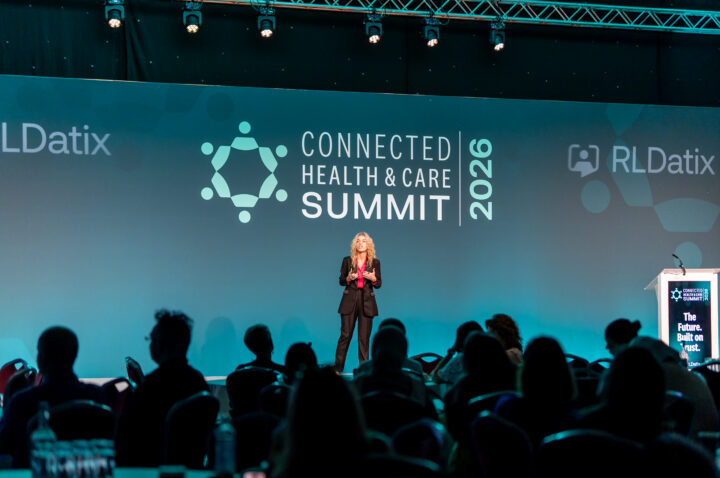
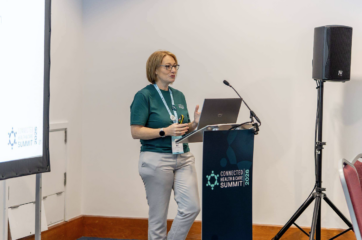
ChatGPT reached 100 million users in two months. A billion in four months. Over 230 million people now use it for health-related questions every week. The front door of healthcare has already changed, and the ignore-and-wait strategy is no longer safe. In this keynote from the Connected Health & Care Summit 2026, Dr Louise Schaper, a healthcare futurist with over 20 years across clinical practice, digital health and policy, argues that AI is not the second opinion anymore. It is increasingly becoming the first. The clinician is becoming the second. And people that control the interface layer, controls healthcare economics.
Watch Dr Louise Schaper explain why AI is already the front door of healthcare, why three trillion-dollar companies are building healthcare as a core product line, and what you need to do now before the gap between consumers and systems widens further.
What the keynote covers and the central argument
This keynote argues that consumer AI is fundamentally changing healthcare economics, clinical relationships and business models. The central arguments were:
- It takes 17 years for published healthcare innovation to become common practice. ChatGPT reached a billion users in four months. The speed is unprecedented
- Three trillion-dollar companies, Apple, Google and Microsoft, made simultaneous strategic moves into healthcare in January. These are not pilots. They are strategic product lines
- 230 million people use ChatGPT for health-related questions weekly. This is mainstream behaviour
- ChatGPT is no longer the second opinion. It is the first. The clinician is the second. Patients return home and ask AI for a third
- Information asymmetry, the foundation of medical authority, is shrinking. Triadic care, where patient, clinician and AI are all in the consultation, is emerging
- Healthcare organisations no longer control how AI is used. It comes directly to consumers and clinicians outside institutional walls
Three predictions and what organisations should do now
Dr Louise Schaper makes three predictions. First, patients will share more with AI than with clinicians because they know it will not judge them. Research dating back to the 1960s supports this. Second, patients will arrive at appointments with USB sticks asking to download their entire medical record into AI. No EMR vendor has a one-click download button, but consumers will expect it. Third, consumer behaviour is outpacing policy. It took 12 years to act on social media. Healthcare cannot afford a 12-year lag on AI.
On what to do now: revisit digital strategies, pull forward data priorities, develop AI governance policies, train clinicians for triadic care, invest in digital literacy, and put AI on every meeting agenda, not just as a risk item. Interoperability is no longer a technical nice-to-have. It is a strategic requirement.
What this means for the sector and who it is relevant to
Dr Louise Schaper uses her role on the board of Asthma Australia to illustrate how even non-profit health organisations are losing referral share because their websites are built for humans, not chatbots. As of three weeks before the summit, there are more chatbots on the internet than humans. Organisations that have not optimised for AI discovery are already invisible in the new interface layer.
She frames the economic argument directly. Whoever owns the AI interface layer controls distribution, attention, influence and margin. Healthcare has seen this pattern in media and travel. The difference is that healthcare funding models, designed for six-minute consultations, are not built for patients who arrive armed with synthesised summaries, suggested options and risk interpretations from AI. Business models must adapt or the gap between consumer expectation and system capacity will widen.
Dr Louise Schaper closes by arguing this is not dystopian. AI can scale access to health information at 2 AM in any language without a waiting list. The question is whether healthcare leaders choose to shape that change or just react to it.
This session is relevant to chief executives, chief digital officers, medical directors, policy leads, clinicians, data teams and anyone responsible for digital strategy, AI governance or organisational transformation.
Frequently asked questions
The keynote is presented by Dr Louise Schaper, an internationally recognised digital health strategist and health informatics expert based in Australia with over 20 years in healthcare. Spanning occupational therapy, digital health and policy. She sits on the board of Asthma Australia and hosts a podcast on healthcare transformation. She began her career as an occupational therapy student and now focuses on the trends shaping healthcare’s future.
Over 230 million people use ChatGPT for health-related questions weekly. Consumers now ask AI first, see a clinician second, and return to AI third to interpret results. This makes AI an increasingly important interface layer through which healthcare is accessed. It is not Dr Google. It synthesises, personalises and suggests next steps. Three trillion-dollar companies have made healthcare a core product line, not an experiment.
Triadic care describes a clinical consultation where three parties are present: the patient, the clinician, and AI, sometimes physically through a device, sometimes metaphorically through information the patient brings. It changes the dynamic from clinician-as-authority to clinician-as-collaborative-partner. Dr Louise Schaper argues every good clinician wants engaged patients, and AI can deliver engagement at a scale that has never been possible.
First, patients will share more with AI than clinicians because AI does not judge. Research supports this back to the 1960s. Second, patients will bring USB sticks requesting full medical record downloads to feed into AI. No EMR vendor supports this yet, but consumers will expect it. Third, consumer behaviour is outpacing policy. The 12-year social media lag cannot be repeated with AI at this speed of adoption.
Revisit digital strategies with AI as a core consideration, not an add-on. Pull forward data priorities because fragmented records become a liability. Develop AI governance policies. Train clinicians for collaborative triadic care. Invest in digital literacy for the public. Put AI on every meeting agenda, not just as a risk discussion. Build websites for chatbots, not just humans.
The risk of inaction is inequity. People with digitised records and access to good AI will get better outcomes. Those without will use the same tools with wrong information and get poor advice. Healthcare has a moral imperative to prevent that gap widening. Interoperability, data access and digital literacy are equity issues, not just technical ones.