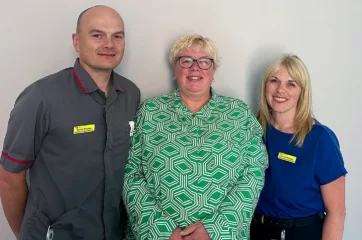





Ramsay Health Care UK transformed workforce operations across 34 hospitals by redesigning its bank staffing and payroll model. Led by a core rostering team of 4 in collaboration with Payroll, Digital, Workday, and RLDatix, the programme introduced weekly bank pay, centralised payroll processes, and delivered the first Optima–Workday integration. This removed duplication, reduced manual effort, and improved system utilisation. The initiative significantly enhanced productivity, improved payroll accuracy, and enabled teams to deliver more efficient services with existing resources, strengthening workforce competitiveness and operational performance at scale.
Ramsay Health Care UK, operating across 34 hospitals in England, faced significant inefficiencies in its distributed workforce and bank staffing model. Bank colleagues experienced payroll delays of up to six weeks, negatively affecting morale, retention, and competitiveness in a challenging labour market where more frequent pay cycles are increasingly expected. Payroll processes were fragmented across sites, with each hospital using bespoke extraction methods, resulting in inconsistency, duplication of effort, and operational inefficiency.
In addition, the lack of integration between Workday and Optima required manual data entry across systems, increasing administrative burden and the risk of error. Although both systems were in place, they were not being fully leveraged, leading to underutilised technology, limited scalability, and inefficient workflows.
These combined workforce, operational, and system challenges highlighted the need to redesign processes to improve efficiency, enhance service delivery, and better support both colleagues and organisational performance.
The solution was a transformation programme focused on standardisation, centralisation, and system integration across Ramsay Health Care UK. Delivered by a core rostering team, the programme coordinated activity across Payroll, Digital, Workday, RLDatix, and site teams while managing high volumes of operational support cases.
A key milestone was the introduction of weekly bank pay, requiring a full redesign of payroll processes to support both weekly and monthly cycles within Optima and the removal of legacy site-specific configurations. This improved colleague experience and aligned Ramsay with industry expectations for pay frequency.
Payroll extraction processes were centralised from 34 individual hospitals into a single function, reducing duplication, improving consistency, and freeing up capacity within local teams. In parallel, Ramsay delivered RLDatix’s first Workday integration, connecting Optima and Workday to automate joiners, movers, leavers, and absence processes. This removed manual dual entry, reduced errors, and streamlined workforce administration.
Overall, the programme delivered an end-to-end process redesign that standardised workflows, reduced operational complexity, and enabled fuller use of existing digital systems, creating a more efficient and scalable operating model.
The programme has delivered clear, measurable improvements in productivity, efficiency, and operational performance across Ramsay Health Care UK. The introduction of weekly bank pay has strengthened workforce competitiveness, improving attraction and retention by providing a more consistent and reliable payment experience for bank colleagues.
Centralising payroll operations across 34 sites has reduced duplication, standardised processes, and enabled more efficient use of resources. Automation of key workforce processes has significantly reduced manual administrative workload, improved data accuracy, and reduced payroll errors, resulting in faster and more reliable payroll processing with less rework and greater operational control.
At site level, reduced administrative burden has freed up staff time to focus on frontline service delivery, improving overall productivity without increasing capacity. Financial performance has also improved, with a marked reduction in both partial and full overpayments, alongside improved overpayment recovery rates, strengthening governance and reducing financial leakage.
Since go-live, over 7,000 payments have been successfully processed, demonstrating the scale, stability, and reliability of the new operating model. Overall, the programme has delivered a more efficient, accurate, and scalable workforce system that supports improved productivity, stronger financial control, and enhanced service delivery.