




A look back at RLDatix Connected Healthcare Summit 2026
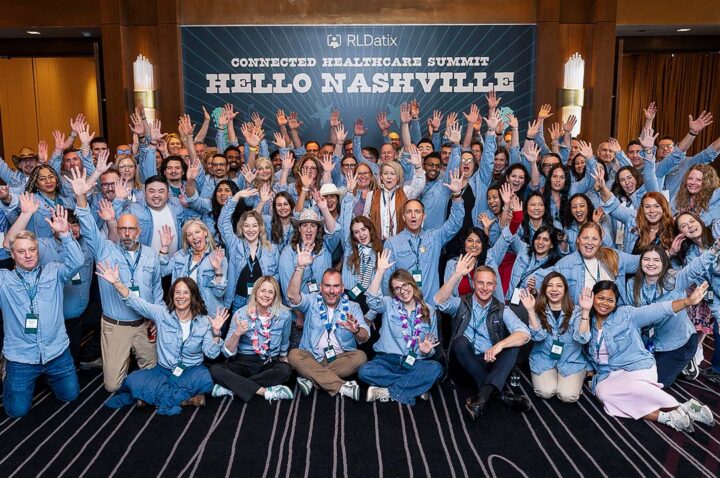
The RLDatix Connected Healthcare Summit 2026 brought over 400 healthcare professionals together in Nashville to talk about what’s actually working in patient safety and where the industry needs to go next. Across 80 peer-led presentations, the conversations kept coming back to four things: connecting fragmented systems, turning healthcare data into decisions, using AI responsibly and learning from the people doing the work every day. Here’s what stood out, who shared their stories and what you can take back to your team.
Summit 2026 at a glance
RLDatix Summit 2026 pulled together one of the biggest and most diverse groups the event has seen:
- 400+ customer attendees
- 229 health systems represented
- 80 customer speakers
- 25 C-suite executives
The room was full of healthcare leaders from quality, safety, risk, compliance and clinical teams. That mix of perspectives meant you could sit down with someone from a completely different system, compare notes on a shared challenge and walk away with something you could actually use.
Three conversations that shaped the Summit
- Connecting systems to support safer care: Nearly 90% of healthcare leaders say disconnected systems are putting patient safety at risk. That stat framed some of the Summit’s biggest conversations around connected healthcare. Organizations making progress aren’t adding more point solutions. They’re consolidating into a single platform where teams can report, govern and act across the entire enterprise. The shared conviction: ease of use is a safety imperative, not a nice-to-have.
- Turning healthcare data into action: Healthcare data keeps getting richer, but many organizations still can’t connect it to a measurable reduction in patient harm. The Summit conversations that cut through weren’t about dashboards. They were about what happens next: moving from a trend to a leadership conversation, from a near-miss cluster to a revised protocol and from data to behavior change. For healthcare risk management teams, that shift from collection to action was the message.
- Putting responsible AI into practice: Responsible AI in healthcare came up in nearly every track. The question has shifted from “should we use AI?” to “how do we govern it, keep human judgment central and know when it’s working?” Organizations shared real deployments in policy generation and risk detection. AI governance was the common thread: AI should make the people doing the work better at it, not replace them.
Practical lessons from customer-led sessions
The most talked-about sessions came from peers who showed up with real numbers and honest lessons from their own organizations.
- Tahoe Forest: responding faster with peer support: Stephen Hicks, Quality Analyst, and Ashley Davis, Patient Safety Officer, shared how Tahoe Forest transformed a peer support program that used to take eight hours to coordinate into one that deploys in ten minutes. Every peer supporter is now reached and responding within 30 minutes. The lesson for anyone building peer support in healthcare: remove the coordination burden and the program scales itself.
- MGB: bringing safety reporting together across 14 hospitals: Andrea Shellman, Senior Manager of Patient Safety & Risk at MGB, walked through how fourteen hospitals consolidated into a single patient safety reporting system. The result was real-time visibility across every site and the ability to spot the same event happening in two places at once. For healthcare risk management teams spread across multiple locations, a shared view of safety data changes everything.
- WVU Medicine: using AI to simplify reporting: Nicole Williams, Digital Strategist at WVU Medicine, showed what happens when AI is built into everyday reporting workflows. Monthly reporting time dropped from six hours to one. Her approach is worth borrowing: pick a specific task, measure the before and after and let the result tell you whether AI in healthcare is earning its place on your team.
Learning and connection beyond the sessions
Peer learning in healthcare doesn’t only happen in session rooms. HUBQuarters gave attendees a space for product demos, troubleshooting with RLDatix experts and hands-on collaboration. The Executive Exchange gathered 25 healthcare executives for an off-the-record roundtable on industry trends and strategy. Nashville’s social program, from the Poolside Welcome to the Final Encore Reception at Friends in Low Places, turned colleagues into collaborators. 62% of attendees said the people in the room were the most valuable part of Summit.
Celebrating the 2026 Summit Award winners
The Connected Healthcare Summit Awards recognize the people and organizations pushing healthcare forward. Here are the eight 2026 Summit Award winners:
| Award | Recipient |
| Innovation in Patient Safety & Risk Management | Children’s Hospital of Orange County |
| Data Continuity & Availability | MedStar Health |
| Innovation in Provider & Workforce | Saint Francis Health System |
| Collaboration Champion | Katelyn Hobbs, Midwest Surgical Hospital |
| Excellence in Implementation | SCA Health |
| Innovation in Regulatory & Compliance | University Hospitals |
| Innovation in Patient Experience & Outcomes | GI North |
| Change Agents of the Year | Stephanie Grabowsky & Becky Pomrenke, University of South Alabama Health |
Keep the learning going and look ahead to 2027
The best thing you can do after Summit is share what you heard with your team. Session slides are available in the Summit app, and you can keep the conversations going with peers on HUB.
You’re in good company if you’re already looking ahead. 83% of attendees are already planning for Summit 2027. Connected Healthcare Summit 2027 heads to a resort setting in San Antonio Hill Country, Texas on February 9 to 11, 2027. Same mission, new landscape.
The RLDatix Connected Healthcare Summit 2026 brought over 400 healthcare professionals together in Nashville to talk about what’s actually working in patient safety and where the industry needs to go next. Across 80 peer-led presentations, the conversations kept coming back to four things: connecting fragmented systems, turning healthcare data into decisions, using AI responsibly and learning from the people doing the work every day. Here’s what stood out, who shared their stories and what you can take back to your team.