


Putting the patient first: how vision-led leadership drives quality and safety at USA Health
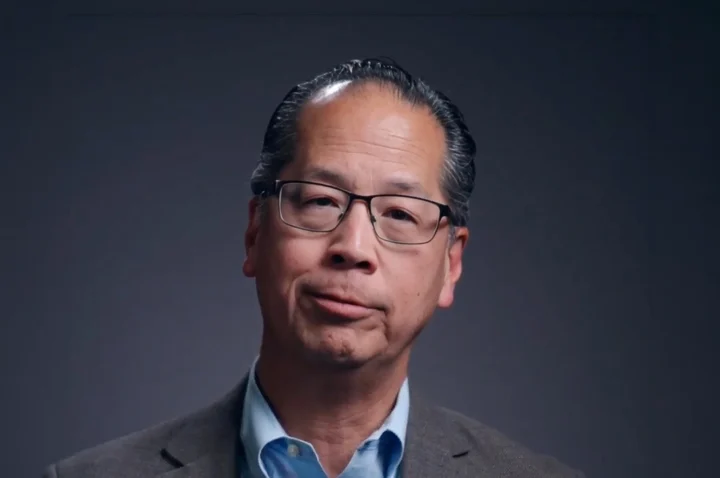
Most healthcare leaders would say they put patients first. But Dr. Michael Chang, chief physician executive and system chief medical officer at USA Health, takes that idea further — he uses it as a literal decision-making framework. If a choice doesn’t roll up to the patient, you don’t make it. In this video, Dr. Chang explains how a clear, patient-centered vision shapes culture, drives strategy and ultimately determines whether a health system can deliver on its promise of safe, high-quality care.
Watch Dr. Michael Chang explain how a patient-centered vision becomes the foundation for high-reliability care at USA Health.
Key takeaways from this conversation
- A patient-centered vision isn’t just a mission statement – it’s a practical filter for every decision, big or small.
- Quality and safety aren’t add-ons to good care. They are the foundation of it.
- Vision drives strategy, strategy drives tactics – and all three have to point in the same direction.
- When everyone in the organization shares the same ‘why,’ decision-making gets faster, clearer and more consistent.
The challenge facing healthcare leaders today
Healthcare organizations are complex by nature – dozens of teams, competing priorities and constant pressure to do more with less. Without a shared sense of direction, that complexity fragments into silos. Teams optimize for their department. Leaders make decisions that feel right locally but don’t add up systemically. And patients end up somewhere in the middle.
Dr. Chang’s answer to that problem is deceptively simple: keep the patient at the center of everything. Not as a value on a poster, but as a real question you ask before every decision: Does this serve the patient? That kind of clarity cuts through complexity. It gives teams at every level a shared framework – and it keeps leaders honest.
RLDatix helps health systems act on that vision by giving clinical and operational leaders the data and tools they need to make decisions grounded in evidence, not instinct.
The impact on teams and where this approach works
When patient-centered values are genuinely embedded into how a health system operates – not just stated, but built into the culture and supported by the right tools – you start to see real changes. Teams spend less time second-guessing decisions and more time delivering care. Leaders can hold the line on quality even when the pressure to cut corners is high. And organizations build the kind of reliability that actually reduces harm over time.
Dr. Chang’s framework works because it’s simple enough to scale. It doesn’t require a massive transformation program. It requires everyone – from the C-suite to the bedside – to genuinely believe that the patient comes first and to have the systems in place to back that up.
This approach applies to:
- Academic health systems managing multiple service lines and campuses
- Regional hospitals that are building or rebuilding a quality and safety culture
- Multi-site health networks trying to drive consistent standards across facilities
- Any organization going through leadership change or strategic transformation
Hello, my name is Michael Chang. I am the chief physician executive and system chief medical officer for USA Health, which is an academic health system in Mobile, Alabama. I’m also a professor of surgery at that organization.
One of the foundational building blocks to creating a high-performing group of people or a high-performing organization is being able to share a vision. You have to have vision because without vision, you don’t have strategy, and without strategy, you don’t have tactics. And the vision really ought to be what’s best for the patient. The patient is at the center of everything we do.
And if you take that as your foundation, you can make those big, medium-sized and small decisions because you can always ask yourself, ‘Is the decision we’re making one that rolls up to the patient being at the center of everything we do?’ And if the answer is yes, we do it. If the answer is no, we don’t do it.
When you put the patient at the center of what you do, it’s got to be about quality, safety and high reliability at the very foundation — because patients come to the hospital not only expecting to be safe, but they expect you to make them better, and you can’t make them better if you’re not safe.
So it’s one thing to say ‘Be better’ or ‘Be patient-centered,’ but it’s another thing to say ‘We’re going to be better performers. We’re going to provide optimal care in a patient-centered way, and here’s how we’re going to do it.’ If the patient is not at the center of everything you do, you’re going to have trouble being successful as you go forward.
FAQs
It means the patient’s needs, safety and outcomes drive every decision – not institutional efficiency, not departmental metrics, not budget cycles. Dr. Chang describes it as a constant gut-check: before any decision gets made, you ask whether it serves the patient. If it does, you do it. If it doesn’t, you don’t. It sounds simple, but building a culture where that question is genuinely asked at every level takes real commitment.
A clear vision sets the tone for everything downstream. When leadership articulates a genuine patient-centered mission – and backs it up with the right systems and accountability structures – frontline teams feel it. They know what they’re working toward. They’re more confident raising concerns because the culture supports it. And safety stops being a compliance exercise and starts being something people actually care about.
Technology doesn’t create a patient-centered culture – people do. But the right tools make it a lot easier to act on that culture at scale. RLDatix gives health system leaders the data and visibility they need to monitor quality, identify risks early and make sure decisions across the organization reflect the values at the top.
Not at all. The principles Dr. Chang describes – shared vision, consistent decision-making, alignment between leadership and frontline teams – are just as relevant in a community hospital or a regional clinic as they are in a large academic center. The scale changes. The fundamentals don’t.
You look at outcomes. Are adverse events going down? Is patient satisfaction improving? Are staff retention rates trending up? Are teams reporting near-misses rather than hiding them? These are the signals that a patient-centered culture has actually taken hold – not just been declared. RLDatix helps health systems track many of these indicators, giving leaders real visibility into whether their values are translating into results.