

Barts Health: Using NatSSIPs 2 and Datix Data to Improve Patient Safety
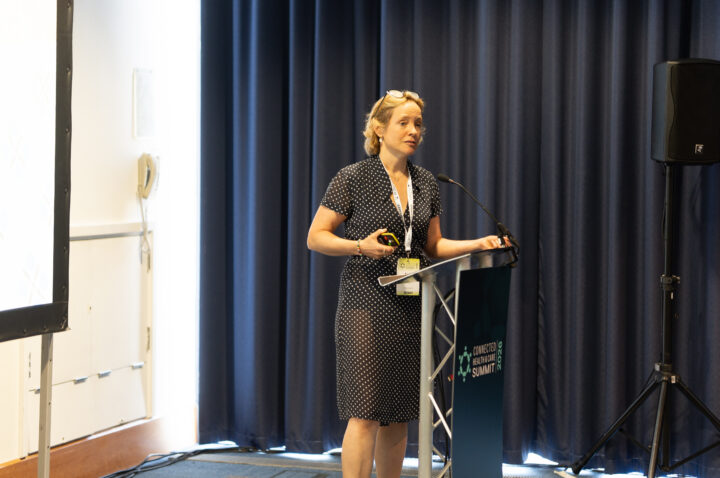
Never events are rare, have no denominator, and tell you almost nothing about the quality of teamwork and systems in invasive procedure areas. In this session from the Connected Health & Care Summit 2026, Dr Annie Hunningher, Consultant Anaesthetist and Group Safety Lead at Barts Health, and lead author of NatSSIPs 2, shows how her team created NatSSIPs – mapped subcategories in Datix and built a dashboard that reveals risk and harm patterns that traditional Never Event counting alone may not capture, including a death related to implants that was not classified as a Never Event.
Watch how Barts Health mapped the National Safety Standards for Invasive Procedures into Datix subcategories to create a new dataset that goes beyond never events, with real examples of work-as-done versus compliance on paper.
What the session covers and why the measurement matters
This session walks through what NatSSIPs 2 changed, why Never Events alone provide a limited measure of safety, and how Barts Health built a new data approach inside Datix. The key findings were:
- Since 2024, 372 incidents have been categorised against NatSSIPs 2 standards, with 94 involving harm
- 61% of incidents fell within the sequential standards, with implants and prostheses the highest category, despite no implant Never Events occurring
- A death related to an implant was recorded, but because it was not a Never Event, it would not have triggered the standard response
- Invasive Never Events show a downward trend at Barts Health, but the new subcategories reveal underlying risk patterns that Never Event counting alone would miss
- Documentation was the highest issue in the organisational standards, while site marking was one of the lowest
What NatSSIPs 2 changed and how Datix was configured
NatSSIPs 2, published in January 2023 and published by the Centre for Perioperative Care, shifted focus towards broader organisational and sequential safety standards rather than focusing solely on Never Events. The standards were written using Datix incident data from Barts Health, where Annie Hunningher’s team had already been mapping incidents to each standard in what they called the “NatSSIPs Wedding.” The new standards cover eight sequential steps, expanded from the original five steps to safe surgery, and apply beyond traditional surgical areas to include interventional radiology and other medical specialties performing invasive procedures.
To measure against these standards, Barts created subcategories in Datix aligned to each NatSSIPs 2 standard. A dashboard was built to visualise the data. This allows the trust to see which standards are generating the most incidents and harm, which areas need attention, and how incidents are flowing into PSIRF responses. Annie Hunningher argues this is easy for other organisations to replicate.
What this means for patient safety teams and who it is relevant to
Annie Hunningher makes a direct case for changing how the sector measures safety in invasive procedures. She presents a series of real photographs showing site markings that do not meet the standards, consent forms with crossed-out sides, unlabelled surgical samples, and dental extraction boards that set staff up to fail. In each case, compliance audits would show 100%, but the reality on the ground is different.
Her argument is that Never Events create panic and stigma, consume disproportionate resources, and do not include a denominator showing how many procedures were performed. Two trusts with the same number of Never Events may be performing vastly different volumes of procedures. A trust with no implant Never Events can still have a death related to implants. The new subcategory approach gives a richer and more proportionate picture.
The Northeast London ICB has asked Annie Hunningher to present this approach. The Healthcare Safety Investigation Branch (HSIB) is planning a national investigation into safety in invasive procedures. The NHS England never events review remains ongoing. Annie Hunningher argues that until technology like GS1 barcoding provides force functions, the sector will continue to rely on humans, and this data approach gives a better way to understand where systems are failing them.
This session is relevant to patient safety leads, theatre managers, surgical governance teams, anaesthetists, perioperative leads, Datix administrators, quality improvement teams and anyone responsible for never event reporting, invasive procedure safety or NatSSIPs implementation.
Frequently asked questions
The session is presented by Dr Annie Hunningher, Consultant Anaesthetist and Group Safety Lead at Barts Health. She was the lead author and clinical lead for NatSSIPs 2, is a patient safety specialist with Loughborough, a QA coach and a data analyst. She won the Dudley Buxton Prize for contribution to safety and anaesthesia from the Royal College of Anaesthetists and received a Summit Award for this work.
NatSSIPs stands for National Safety Standards for Invasive Procedures. The first version was published by NHS England. NatSSIPs 2 was published by Centre for Perioperative Care in January 2023. It covers the entire UK, not just England. It defines eight sequential standards for how teams should work during invasive procedures and organisational standards covering people, processes and performance. It applies beyond traditional surgery to invasive procedures across different clinical settings.
Annie Hunningher argues that Never Events are rare outcome measures that provide limited insight when considered without wider context of procedure volumes, near misses, process failures and system factors. They create panic and stigma, consume disproportionate resources, and do not reveal the quality of teamwork or systems. A trust performing 100,000 procedures a year should not be judged the same way as one performing 10,000. A death can occur from an implant issue without it being classified as a Never Event.
Barts Health created subcategories in Datix mapped to each NatSSIPs standard, both sequential and organisational. A NatSSIPs dashboard was built to visualise the data. This allows the trust to filter incidents specifically related to invasive procedure safety, see which standards generate the most incidents and harm, track trends over time and link incidents to PSIRF responses. Annie Hunningher says this would be easy for other organisations to replicate.
Since 2024, 372 incidents were categorised against NatSSIPs 2 standards, with 94 involving harm. Implants and prostheses were the highest subcategory despite no implant Never Events. A death related to an implant was recorded. Documentation was the highest organisational standard issue. Site marking was one of the lowest, which Annie Hunningher links to years of focused work in this area. The data shows risk patterns that Never Event counting alone would completely miss.
Annie Hunningher presents photographs of site markings using crosses instead of arrows, Biro instead of indelible markers, arrows with “enjoy” written underneath, consent forms with crossed-out sides, unlabelled surgical samples, and shared boards for swab counts and dental extractions. In each case, the session argues that a compliance audit could potentially show 100%, while the work-as-done reality is different. The session argues that auditing a tick on a sheet is fundamentally different from understanding what is actually happening in the room.
The Northeast London ICB has asked Annie Hunningher to present the approach. Healthcare Safety Investigation Branch is planning a national investigation into safety in invasive procedures. The NHS England Never Events review is ongoing. Annie Hunningher is also building a safety culture dashboard using 15 questions from the NHS staff survey, which can be drilled into by specialty and aligned with incident and NatSSIPs data for a holistic view.