

Care Outside of the Hospital: Changing Roles
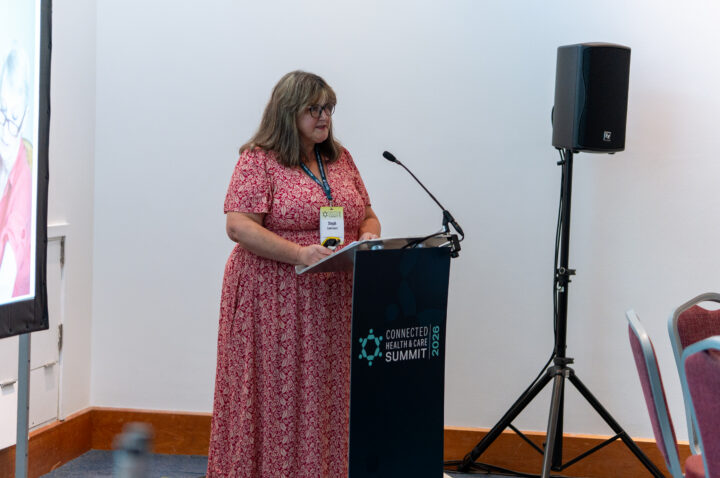
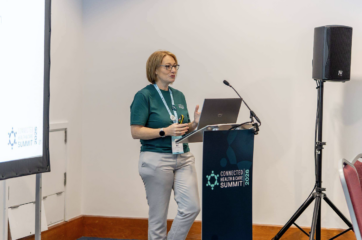
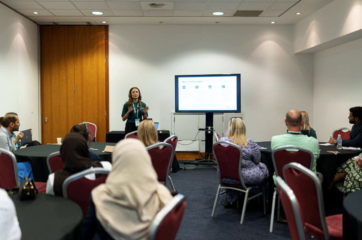
Healthcare delivery is shifting from hospitals into community settings, but the workforce, funding, and infrastructure have not kept pace. In this talk, Steph, Chief Executive of the Queen’s Institute of Community Nursing and former Chief Nurse at Leeds Community Healthcare, makes a compelling case for why community nursing must be recognised as a core part of the health and care system. She challenges leaders to confront the gaps that are putting patients at risk every day.
Key themes from the panel
- Community nursing is core infrastructure, not a peripheral service. It enables people to live well at home and prevents avoidable deterioration, admission, and institutionalised care.
- Understand the implications of the “left shift,” Including how moving care into community settings affects in responsibility, infrastructure, decision-making, and the management of professional risk.
- Care not done is causing real harm. Thousands of frail, elderly, vulnerable people across the country are not receiving their care because there is simply not the capacity in community nursing services.
- Pre-registration nurse training must change. At least 50% of training should take place in community settings to build a workforce fit for the future.
- Investment must follow the patient. Learn why Steph believes investment, staffing decisions and patient safety measures should better align with the continued shift of care into community settings.
The challenges addressed and how the products respond
Healthcare culture remains centred around hospitals. Nurses are trained to work in hospitals, not in community settings. The complexity and acuity of community caseloads has changed dramatically over the past decade, yet planning processes still default to hospital activity, bed flow, and acute metrics. Steph also highlights the challenges of measuring demand across dispersed community services and the impact this can have on workforce planning and resource allocation.
Drawing on her experience, Steph highlights concerns that nurses are choosing to go back into hospitals because it feels safer, when previously they could not wait to work more autonomously in the community. Community nursing services are being cut, particularly overnight, creating huge risk for patients who are dying at home.
The sector needs a community-first culture. That means recognising community nursing expertise in strategic decision-making, designing services around people’s lives rather than organisational boundaries, and supporting teams to manage complexity, uncertainty, and risk outside of controlled clinical environments.
What this means in practice and who it is relevant to
Steph discusses the real world consequences of capacity pressures within community nursing services, describing what she refers as the “invisible corridor care” happening in communities every day. Drawing on examples of data from different trusts, it shows that thousands of people, most of them frail, elderly, and vulnerable, do not receive their care because community nursing services lack the capacity. This leads to harm and death. There have been coroners’ cases citing a lack of district nursing capacity where patients have died, including cases where wound care was missed, patients developed sepsis, and subsequently died in hospital.
Disinvestment in community services does not save money. It causes more cost further down the line, both financial and human. Care not done in the community is also likely the ultimate reason behind corridor care in hospitals, because if everyone who needed to be seen in the community was seen, there would be far fewer people in hospital at any one time.
The future workforce is not just about head count. It is about capability, skill mix, supervision, leadership, and career development. Safe staffing depends on creating teams that are sustainable, resilient, and professionally supported.
Frequently Asked Questions
The left shift refers to the movement of care from hospitals into community settings. It includes moving from reactive care to prevention, from episodic treatment to ongoing support, and encompasses earlier intervention, supported discharge, complex care at home, rehabilitation, palliative and end-of-life care, long-term condition management, and public health activity.
Community nursing work often happens behind closed doors, across dispersed geography, and outside of hospital environments. Because it is less visible, community demand is harder to measure, fund, and staff for. This invisibility is a safety issue as much as a planning issue.
Care not done refers to the care that community nursing teams are unable to deliver because there is simply not the capacity. The QICN has established a coalition to lobby government and NHS leaders around this issue, because data shows it is leading to real harm and, in some cases, patient deaths.
Currently, 90% of care in the country happens outside of a hospital setting, yet only a tiny amount of a nurse’s pre-registration training takes place in the community. The QICN is calling for a minimum of 50% of nurse training to happen in community settings, including primary care and care homes.
Community nurses need advanced assessment skills, case management capabilities, and specialist knowledge around frailty, long-term conditions, wound care, medicines management, palliative care, mental health, safeguarding, and learning disability. They also need digital confidence and access to technology that works reliably in community environments.
If more care is moving into the community, the funding must follow. It makes no sense for resources to remain where the patient no longer is. Investment needs to cover workforce growth, education, supervision, leadership, digital infrastructure, equipment, and estates.
Community staffing cannot be reduced to a simple ratio. Staffing decisions must reflect caseload complexity, travel time, geography, patient acuity, safeguarding concerns, escalation routes, and continuity of care. Tools can support decisions, but they must be underpinned by clinical leadership, robust data, and governance.
Patient safety frameworks have historically been centred around hospitals. There is a need to strengthen patient safety structures in the community, beyond pressure ulcers, to include risks like falls, missed assessments, medication errors, and the harm caused when care cannot be delivered due to capacity constraints.