
Culture Card Workshop
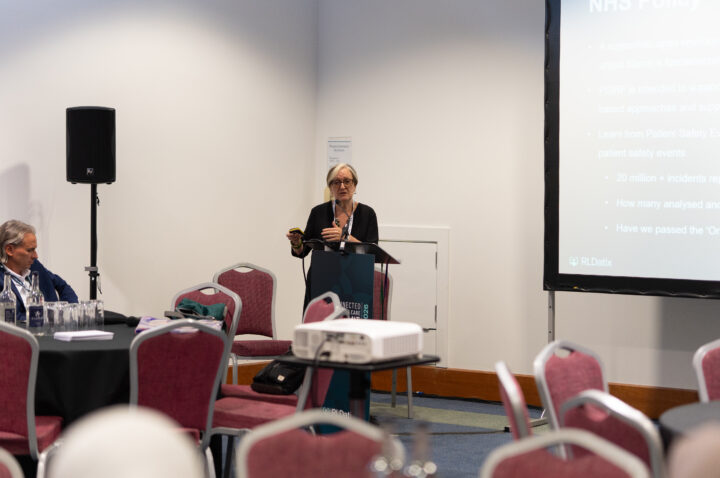
Processes and systems can only take patient safety so far. Without a culture that enables people to speak honestly, report without fear and learn from both failures and successes, organisations can struggle to turn those systems into safer practice. In this interactive workshop from the Connected Health & Care Summit 2026, Helen Hughes, Chief Executive of Patient Safety Learning, and Clare Wade Director at Patient Safety Learning, lead a hands-on session using the NHS Scotland safety culture cards, a free resource that gives teams questions to help start difficult conversations about safety culture, learning and speaking up.
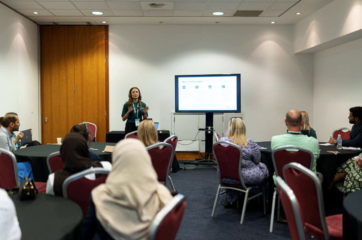
Watch Patient Safety Learning facilitate a workshop using the NHS Scotland safety culture cards, with table discussions on just culture, learning from incidents, staff support and what good practice looks like.
What the session covers and why the cards matter
This workshop introduces the NHS Scotland safety culture cards and puts them into practice through facilitated table discussions. The key themes were:
- Safety culture is described as values, behaviours and beliefs in alignment. If leaders behave differently from stated values, the culture can become disconnected from the organisations stated values.
- The cards are split into six safety culture domains, including just culture, reporting and learning. They do not give answers. They give the questions that teams can use to start conversations
- Having the question on a card removes the personal confrontation of raising it directly, making it part of being psychologically safe
- Table discussions surfaced persistent challenges: embedding learning on the frontline, supporting staff through investigations, disseminating lessons across organisations, and the gap between reporting incidents and seeing action taken
What the table discussions revealed
The discussions were candid and wide-ranging. One table that included family liaison officers described how staff are often forgotten during investigation processes. They carry the weight of incidents for months while processes play out, and the support offered to them is rarely as structured as what is provided to patients and families. Preparatory work before staff meet investigating officers was identified as critical to reducing fear and enabling honest sharing.
Another table highlighted that organisations are often challenged to disseminate lessons learned effectively. Newsletters exist but there is no way to know they have been read. A colleague from Ireland’s private sector noted that cross-system learning barely exists, and that access to NHS investigation findings would be valuable internationally.
A participant from Oman shared that her research found reporting alone improves patient safety, but that action plans and visible follow-through are what sustain a reporting culture. Her organisation now clusters recurring incidents into themes, conducts root cause analysis at that level, and uses unit-level dashboards showing problems, solutions and progress.
What this means in practice and who it is relevant to
The workshop surfaced a tension that runs through much of patient safety work. Organisations want more reporting, but frontline staff are already overwhelmed with workload and information. If they cannot see that their reports lead to action and change, they stop reporting. The cards provide a low-friction way to maintain the conversation about why reporting matters and what happens with the data.
A rostering manager who had moved from the private sector into the NHS raised an observation about staff confidentiality. Patient data is protected rigorously, but staff sickness reasons are sometimes shared casually in meetings and on rosters. She described turning off sickness reason access in Optima for her admin team as a practical response to a cultural gap that most NHS-embedded staff no longer notice.
Helen Hughes closed by noting that Patient Safety Learning’s Hub is now the largest knowledge repository in the world on patient safety, free to use, with 40% of users now international. The Patient Safety Management network has approximately 2,500 members and meets weekly. The NHS Scotland safety culture cards are freely available online and can be taken away from the session.
This session is relevant to patient safety leads, governance teams, speak-up guardians, family liaison officers, investigators, clinical managers, HR teams and anyone responsible for safety culture, incident learning or psychological safety across health and social care.
Frequently asked questions
The session is led by Helen Hughes, Chief Executive of Patient Safety Learning, and Clare Wade, Director of Patient Safety Learning. Patient Safety Learning is an independent charity that has been running since 2018. It listens to, learns from and promotes the voice of the patient safety frontline. Helen Hughes previously worked for the World Health Organization setting up the global programme on patient safety. The session includes facilitated table discussions with contributions from NHS, private sector and international participants.
The safety culture cards are a free resource developed by NHS Scotland. They are split into six safety culture domains and contain questions designed to start conversations about culture, reporting, learning and speaking up. They do not give answers. Having the question on a card makes it safer to raise difficult topics because it removes the personal confrontation. The cards are freely available online, and physical copies were distributed at the session.
Safety culture is described as the alignment of values, behaviours and beliefs within an organisation. Helen Hughes states it is a key predictor of performance across many industries, not just healthcare, and is the difference between a safe organisation and an accident waiting to happen. If leaders behave differently from stated values, systems and processes alone will not deliver safe care. Culture is one of six core foundations in Patient Safety Learning’s framework for what good looks like.
Multiple tables raised the same challenge: organisations are poor at getting learning from incidents to frontline staff who are already busy and overwhelmed. Newsletters exist but there is no way to confirm they have been read. The group noted that cross-organisation learning barely exists for investigations and reviews, even though incident reporting data is shared nationally. A colleague from Ireland’s private sector said access to NHS learning would be valuable internationally.
Family liaison officers described how staff are often forgotten during investigation processes. The focus tends to be on patients and families, while staff carry the weight of incidents for months as processes unfold. Historical blame culture means many staff still carry fear. Preparatory work before staff meet investigating officers, reducing expectations and fears, was identified as critical to enabling honest sharing and ultimately to shifting culture over time.
The Hub is Patient Safety Learning’s free online knowledge platform at pslhub.org. It is described as the largest knowledge repository in the world on patient safety. It hosts reports, inquiries, communities and networks, including the Patient Safety Management network with approximately 2,500 members that meets weekly on Fridays. While primarily UK-based, 40% of users are now international.
A rostering manager who had moved from the private sector into the NHS observed that patient data is protected rigorously, but staff sickness reasons are shared casually in meetings. She described turning off sickness reason access in Optima for her admin team and only re-enabling it when specifically asked to pull a report. She identified this as a cultural gap that may be overlooked in established working practices.
A participant from Oman shared that her master’s dissertation found reporting alone improves patient safety, but action plans and visible follow-through are what sustain a reporting culture. Her organisation now clusters recurring incidents into themes, conducts root cause analysis at that level, and uses unit-level dashboards showing problems, solutions and progress. She noted that a staff member left her organisation specifically because no action was taken on their reported incidents.