


From reporting to learning: building a health system that learns
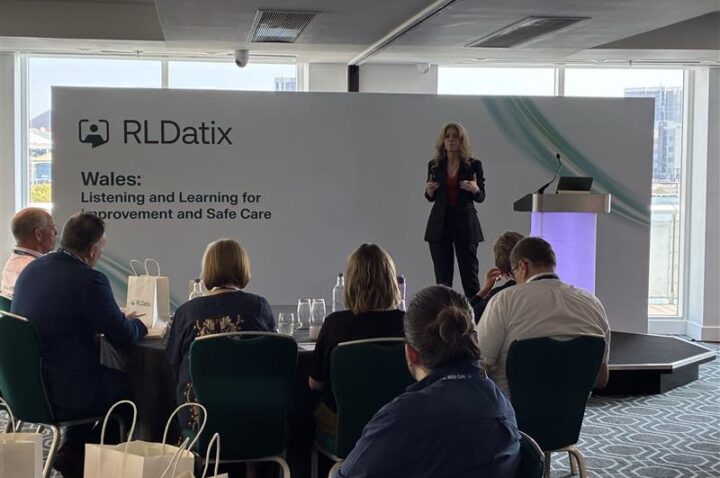
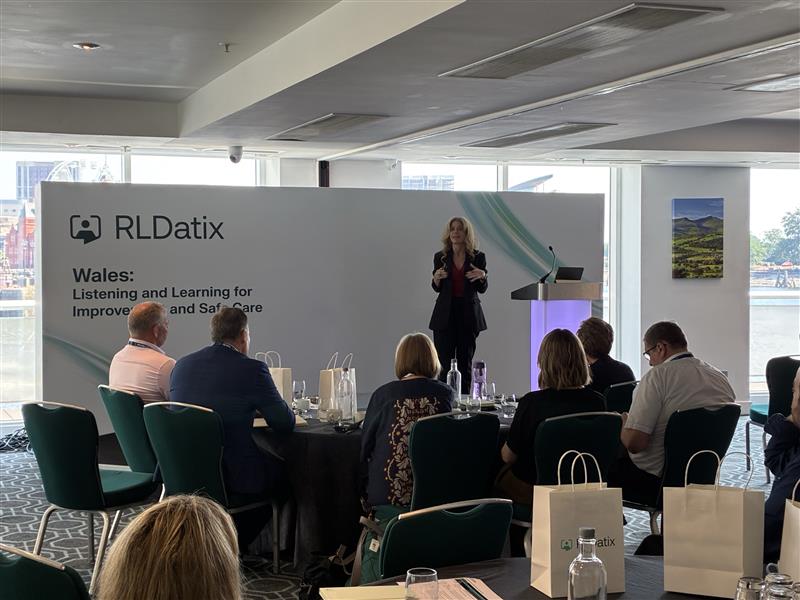
Insights from Dr Louise Schaper, digital health leader, recorded at the RLDatix Wales: Listening and Learning for Improvement and Safe Care event, 23 June 2026, St. David’s Cardiff
Healthcare collects an overwhelming amount of data. Incident reports, audits, compliance records, patient feedback. Yet after 30 years of collecting it, the harm numbers have barely moved. Dr Louise Schaper, a digital health informatician with over 20 years’ experience, flew in from Melbourne to make a direct case: the problem is not data. It is learning. And learning depends on structure as much as culture.
Key takeaways from this session
- Healthcare’s biggest safety problem is not a lack of data. It is a lack of learning. We collect more data than ever, but the harm numbers have barely changed in 30 years.
- A digitalised silo is still a silo. Going digital alone does not make you a learning organisation. The shift that matters is from digital to connected.
- A single adverse event is a tragedy. The same event across five boards is a signal. But siloed data hides that signal. The pattern is there; the system just can’t see it.
- Connected data is infrastructure for safety, not just an IT project. When digital is treated as a project with a start and end date, each organisation solves its own problem its own way, and you scale fragmentation instead of progress.
- AI is not magic over chaos. If you give AI siloed, inconsistent data, it will scale your blind spots faster. Connected, standardised data is the precondition for AI that helps you learn.
The paradox: more data, no less harm
30 years of collecting data, and the numbers haven’t moved
Healthcare’s biggest safety problem isn’t a lack of data. We produce incident reports, meet compliance obligations and capture clinical information at scale. But we have a paradox: we collect so much data, yet that does not equate to significant reductions in patient harm.
A 2019 meta-analysis found that one in 10 patients is harmed during care, around 6% of harm is preventable, and of that, 12% is either severe or fatal. The authors concluded that around half of all patient care harm is preventable.
"We have 30 odd years of collecting data in healthcare, and the numbers pretty much haven’t moved. And according to Imperial’s data from England, on a bunch of indices, it’s actually getting worse.”
Dr Louise Schaper, digital health informatician
Louise drew a comparison with the mining industry, where she previously worked. Every day on site, an electronic board displayed how many days had passed since the last severe incident. In healthcare, there is a completely different culture around safety, one where the scale of preventable harm has been quietly absorbed as the cost of doing business.
"Healthcare’s biggest safety problem is not a lack of data. It is a lack of learning.”
A digitalised silo is still a silo
Why going digital doesn’t make you a learning organisation
Louise presented a simple maturity map: paper, digital, connected, intelligent. Most organisations sit across multiple stages at once, but the bulk of the work still happens at the paper and digital end, which is about recording. Connected and intelligent are about learning.
"Going digital alone doesn’t make you a learning organisation. A digitalised silo is still just a silo. And we love our data silos in healthcare.”
The shift that matters
The critical transition is from digital to connected. AI and intelligence will only pay off once that connection is in place. Without it, health data gets captured in different systems, in different formats, across multiple care settings, and the people who need it most, the clinicians standing in front of patients, simply don’t have access to it.
In 2024, coroners across England and Wales issued 36 preventions of future death reports which involved failures to share critical patient information. A further 38 reports identified incomplete or inaccurate patient records as contributing factors.
"These aren’t software failures. They are learning failures. The information did exist. It exists in a system. But the clinician standing in front of the patient at the time certain decisions are made, they just didn’t have access to that data.”
Fragmentation scales when digital is treated as IT
When digital is treated as a project with a start and end date, each health board ends up solving its own problem its own way, and the result is scaled fragmentation rather than progress.
"Connected data is infrastructure for safety, not just an IT thing.”
Siloed data hides the signal
Why pattern recognition depends on connected systems
A learning organisation needs to run on its ability to see patterns in the data. And you can’t see patterns in your own organisation, let alone across health boards, if that data is siloed, inconsistent and doesn’t follow the patient.
Louise put it simply: a single adverse event is always a tragedy. But the same event occurring across five different boards is a signal. That signal is always there, but it only becomes visible if someone can see all five incidents at once.
"Siloed data just hides that signal. The pattern’s there, we just can’t see it. The system doesn’t perceive it. And this is where digital isn’t an IT topic, but a patient safety imperative.”
The learning loop, from capture to analysis to insight to action, depends on each stage connecting to the next. If you break the chain anywhere, learning stops.
"The loop only closes if the data can move. If you break the chain anywhere, learning stops.”
Learning is cultural and structural
Helen made the cultural case. This is the structural one.
Louise was clear that she was building on Helen Hughes’s earlier keynote, not replacing it. Hughes made the case for culture: psychological safety, just culture, curious leadership. Louise made the complementary case for structure: connected data, shared standards and systems that enable pattern recognition.
"Learning is both cultural and structural. Helen has made an excellent case for the cultural side. But the structural case, which we don’t talk about enough, is where connected data and shared standards come in. It is also critical to becoming a learning organisation.”
She pointed to Australia’s commitment to adopting FHIR (Fast Healthcare Interoperability Resources) as a single national standard for how health information is structured and exchanged. The principle is straightforward: data should mean the same thing everywhere, regardless of what software is being used. That foundation is what makes AI-enabled safety possible.
"AI is not magic over chaos. If you give it siloed, inconsistent data, all it’s going to do is scale those blind spots even faster. Connected, standardised data is the precondition for AI that helps you learn.”
What safety leaders can do
Four practical actions to advocate for connected data
Louise closed with four things that safety and quality leaders can do right now, regardless of where their organisation sits on the digital maturity journey.
Demand data portability in procurement
When commissioning or renewing systems, data portability should be a written requirement, not a nice-to-have. Safety leaders should not accept systems that don’t give them the data they need.
Make information gaps a formal finding
When investigations reveal that information existed but couldn’t be seen when it was needed, that should be recorded as a finding in its own right. Over time, this creates a data set that exposes the structural pattern.
Put interoperability on the agenda
Connected care, data portability and interoperability should be part of weekly management conversations, not something delegated to the IT department. If those words are not in your lexicon, you will never get better data access.
Ask whether your systems enable learning
The question is not whether you have systems. It is whether those systems enable you to see patterns and anticipate risk, or whether you are simply reacting to harm after it has occurred.
The common thread
The three behaviours of a learning organisation are that they anticipate risk, they close the loop and they improve continuously. The difference isn’t how much data they collect. It’s whether they collect data that can be seen, connected and then acted on.
The organisations that deliver the safest care are not those with the most reporting. They are those that learn the fastest. And to learn fast, you need connected data, connected systems and agreed standards.
"You all have a role to play in understanding that and advocating for it, not just within your organisations, but across the health system as well.”
Continue the Conversation
Reporting incidents is only the first step towards improvement. High-performing organisations focus on analysing trends, sharing lessons and embedding learning into everyday practice so that reporting becomes a catalyst for safer care rather than an administrative process.
Related Summit sessions:
Explore how healthcare leaders are transforming reporting processes into learning opportunities that support continuous improvement across teams, services and entire health systems. ons explore how healthcare organisations are strengthening learning cultures, improving information sharing and creating environments where lessons can be translated into meaningful action.
FAQs
Digital means capturing data electronically rather than on paper. Connected means that data can move between systems, organisations and care settings in a standardised format, so that patterns can be seen and acted on across the whole system. Most healthcare organisations have gone digital, but far fewer have achieved meaningful connectivity. As Louise put it, “A digitalised silo is still just a silo.”
Digital means capturing data electronically rather than on paper. Connected means that data can move between systems, organisations and care settings in a standardised format, so that FHIR (Fast Healthcare Interoperability Resources) is a globally recognised standard for how health information is structured and exchanged between digital systems. It enables data to mean the same thing regardless of which software captured it. Developed by Australian informatician Graham Grieve, FHIR has been adopted by major technology companies and healthcare systems worldwide. The Australian government committed in 2023 to adopting FHIR as its single national standard for health data exchange. can be seen and acted on across the whole system. Most healthcare organisations have gone digital, but far fewer have achieved meaningful connectivity. As Louise put it, “A digitalised silo is still just a silo.”
When health data is captured in different systems, in different formats, across multiple care settings, clinicians may not have access to the information they need when making decisions. In 2024, coroners across England and Wales issued 36 preventions of future death reports involving failures to share critical patient information, and a further 38 identified incomplete or inaccurate records as contributing factors. These are not software failures. They are structural failures that prevent learning.
AI requires connected, standardised data to deliver meaningful insights. If AI is applied to siloed or inconsistent data, it will scale existing blind spots rather than revealing patterns. Connected data is the precondition for AI-enabled safety management, not the other way around.
Louise identified four practical actions: demand data portability as a written requirement in procurement decisions; record information gaps as formal findings in investigations; ensure interoperability and connected care are on the agenda in management meetings, not just IT discussions; and regularly ask whether current systems enable pattern recognition or simply support reactive responses to harm.