

Temporary Staffing Masterclass: Managing Workforce Demand with Smart Match and AI
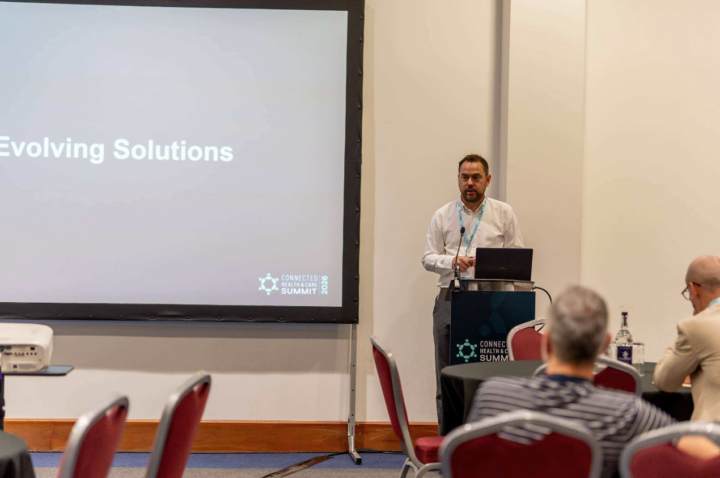
Agency spend is down 66% in two years. The number of agencies has halved. But fill rates have barely moved, and only 34% of bank workers are actually working. In this session from the Connected Health & Care Summit 2026, Richard Kitchen, Head of Product for Medics and Temporary Staffing, and Leigh Malyon, Vice President Solutions Advisory, both representing RLDatix share 10-year data showing the most turbulent period in temporary staffing history, introduce Smart Match, RLDatix’s first AI-enabled workforce capability, and bring two early adopter customers on stage to share results from three months of live uses.
Watch the full temporary staffing picture across 10 years of data, followed by early adopter results from Smart Match showing 10% bank fill increase, 18% self-booking increase and 88% of workers saying the process is fair.
What the session covers and the market context
This session covers the temporary staffing landscape, product evolution and Smart Match results. The headline data across more than 250 organisations were:
- Agency spend down 66% in two years, from a peak of £10 billion (£140 per person in the UK)
- Number of agencies down 46%, agency workers down 62%
- Agency fill rate dropped 8%, replaced by an 8% increase in bank fill
- Overall fill rate stable at 82%, meaning 18% of shifts remain unfilled
- Only 34% of registered bank workers are actively working in any given month
- 74% of bank workers choose bank for flexibility
- Only half of organisations use self-booking above 40%, while top performers exceed 70%
- RLD Intelligence data shows correlation between high agency use and safety incidents
Smart Match results and how the early adopters built it
Smart Match is an AI capability within BankStaff Plus that automatically offers urgent and very urgent shifts to bank workers ranked by their likelihood of accepting and based on recent working patterns. It went live in February with early adopters including Shrewsbury and Telford Hospital NHS Trust and Manchester University NHS Foundation Trust.
After three months, Shrewsbury and Telford reported bank fill up 10%, bank worker utilisation up 9% with 107 previously inactive workers booking shifts, self-booking up 18%, time to fill very urgent duties reduced from 5.8 hours to 4.1 hours, and agency usage stable despite increased demand. A survey showed 55% of workers are more likely to book bank duties because of Smart Match, 31% are more likely to work at other units, and 88% said the process is fair.
The early adopters worked through discovery, delivery, testing and launch, adjusting notification frequency based on worker feedback and completing full DPIA processes with information governance teams.
What this means for organisations and who it is relevant to
The session also covers three other product developments. Bank staff data is now available in RLD Intelligence across Oversight, Discover and Data Hub, with six customers on Data Hub early access. Temporary staffing KPIs including fill rates, self-booking and lead times can be benchmarked against similar organisations. Agency APIs are now generally available at no charge, with 10 customers signed up, removing the need for agencies to log into portals by streaming shift data directly to agency booking systems while maintaining all existing controls.
Loop Comms is positioned as a key opportunity for engaging bank workers at no additional cost, with Loop Engage adding targeted messaging with reply-to functionality. Richard Kitchen argues that engaging the 66% of inactive bank workers is an opportunity that organisations are overlooking.
Smart Match is planned for general availability in September, with a vanguard group of new customers for initial rollout. The roadmap includes configurable shift selection, additional data points for modelling, extension to collaborative banks, and an AI-powered operational assistant for BankStaff that surfaces KPIs and allows natural-language queries.
This session is relevant to temporary staffing leads, bank managers, workforce directors, finance teams, rostering leads and anyone responsible for agency reduction, bank optimisation or fill rate improvement.
Frequently asked questions
The session is presented by Richard Kitchen, Head of Product for Medics and Temporary Staffing, and Leigh Malyon, Vice President Solutions Advisory, both representing RLDatix providing the market context and data analysis. Lisa Welch, Workforce Service Manager, Manchester University NHS Foundation Trust and Denise Rotchell, Temporary Staffing Manager from Shrewsbury and Telford Hospital NHS Trust join as Smart Match early adopters. Lucy Bastock from Derbyshire is acknowledged as a pioneering customer unable to attend this session.
Smart Match automatically offers urgent shifts to bank workers ranked by their likelihood of accepting based on recent working patterns. The AI optimises across all available duties, helping organisations achieve the best overall fill rate while making the most effective use of their workforce. It targets urgent shifts within seven days and very urgent shifts within 24 hours. Workers receive proactive notifications through Loop and can self-book directly. It is part of BankStaff Plus.
After three months at Shrewsbury and Telford Hospital NHS Trust: bank fill increased by 10%, bank worker utilisation up 9% with 107 previously inactive workers booking shifts, self-booking up 18% (603 to 907 duties), time to fill very urgent duties down from 5.8 to 4.1 hours, agency usage stable despite increased demand, and bank team admin hours reduced. Survey results: 55% more likely to book bank, 31% more likely to work other units, 88% said the process is fair.
Agency spend peaked at £10 billion and has fallen 66% in two years. Price caps, Bank First and COVID had less impact than expected. The operational guidance mandating 30% spend reduction 18 months ago was the real turning point. Bank fill has increased 8% as agency fill dropped 8%. But overall fill rate remains at 82%, and only 34% of registered bank workers are actively working.
Bank staff data is now in RLD Intelligence across Oversight, Discover and Data Hub. Agency APIs are generally available at no charge, with 10 customers signed up. Loop Comms enables targeted engagement of bank workers at no additional cost. An AI-powered operational assistant for BankStaff, allowing natural-language queries about unfilled shifts and KPIs, is in the ideation stage.
Smart Match is planned for general availability in September. A vanguard group of new customers will be onboarded initially. Organisations can register interest via the QR code shown in the session. The roadmap includes configurable shift selection, more data points, and extension to collaborative banks.