

Case Study: How an Understaffed Team Transformed Performance and Delivered Outstanding Care
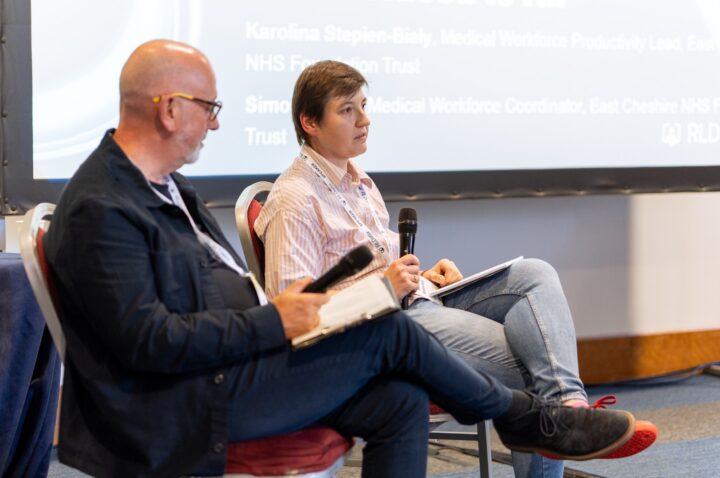
Medical workforce teams in the NHS are often under-resourced, reactive and stretched beyond capacity. In this session from the Connected Health & Care Summit 2026, Karolina, Medical Workforce Productivity Lead, and Simon, rota coordinator, share how their team went from a group of three with no processes and no reputation to a centralised team of 12 delivering 96% job planning compliance, over 90% return-to-work completion and significant reductions in agency spend, all built on Allocate, now part of RLDatix.
Watch how an NHS medical workforce team transformed its approach to staffing, centralised processes, improved workforce planning and built a culture focused on collaboration and continuous improvement.
Key outcomes from the transformation
This session tells the story of a medical workforce team that went from constant firefighting with a staff turnover of 23 people in the first two years to a stable, high-performing unit of 12. The headline outcomes were:
- Team grew from 3 to 12, with zero current vacancies and staff describing it as the best team they have ever worked in
- 96% job planning compliance achieved before the national deadline
- Over 90% return-to-work interview completion, compared with previously limited completion rates
- All rotas planned six weeks ahead, replacing reactive day-to-day gap filling
- Agency staff successfully converted to bank, with millions saved through rate negotiation and tiering
- ED medical staffing increased from 14 to 34 doctors, with consultants supported to self-roster
The challenges they faced and how they responded
The team started during the NHS centralisation drive as a group of two rota coordinators and one administrator. Every service had its own localised procedures. Everything was on paper. Staff were leaving faster than their notice periods. The team’s reputation across the hospital was, as Simon put it, “no one would touch us with a barge pole.”
They faced a clear choice: decentralise and send everything back to the services, or put a business case to the executive team for investment. They chose to invest. The trust backed the case, recognising that under-investment in medical workforce infrastructure could result in higher agency spend and unfilled shifts.
The team implemented Allocate, now part of RLDatix, across the entire trust in a single rollout. Every department went electronic on the same day. There was no opt-out. From there, they built standardised processes, weekly deployment meetings with every service, and a culture of proactive planning.
What this means in practice and who it is relevant to
The results speak through the detail. Return-to-work interviews, which had previously not been conducted at all, now run daily with over 90% completion. Karolina describes how the process changed the team’s relationship with medics entirely. Initially sceptical, doctors began approaching the team with wider issues, from ward pressures to stress, because they had developed greater trust in the team and its processes.
On agency spend, the team negotiated bespoke agreements with agencies, re-implemented a tiering structure abolished during COVID and challenged every booking above the agreed rate. They set up a medical bank from scratch and converted agency doctors to bank arrangements. The savings, described as “literally millions,” came from relentless process, not a single initiative.
Karolina also redesigned rotas to build annual leave and study leave cover into the core, so that temporary staffing was no longer the default. In ED alone, incorporating supernumerary F1s into the medical rota saved £25,000 per year on a single rotation. The team rebranded from “medical staffing” to “medical workforce team,” reflecting a scope that now covers rotations, job planning, sickness, recruitment, rota design and finance liaison.
This session is relevant to medical workforce managers, rota coordinators, medical directors, HR leads, finance directors and anyone responsible for medical staffing, temporary workforce management or job planning in an NHS trust.
Frequently asked questions
The session features Karolina, Medical Workforce Productivity Lead, East Cheshire NHS Trust, who started 11 years ago in medical staffing and has a degree in health and management, and Simon Plevin, Medical Workforce Coordinator at East Cheshire NHS Foundation Trust, who began his NHS career as a porter. Both have been with the trust throughout its transformation. The session is chaired by Darren Kilroy, Medical Director at RLDatix, who was previously involved in the trust’s executive team and instrumental in securing the original business case for investment.
The team began as two rota coordinators and one administrator during the NHS centralisation of medical staffing. Every department had its own processes, everything was on paper, and staff turnover was extreme. They went through 23 team members in the first two years. One band five put in their notice after just three weeks. The team’s reputation was at rock bottom, with no culture, no proactive planning and constant firefighting. The choice was to decentralise and give up, or invest and rebuild.
Karolina and Simon presented the executive team with two options: decentralise and push everything back to the services, which would require recruiting and training new staff across eight or nine departments, or invest in the existing centralised team to build capability and standardise processes. Darren, who was deputy at the time, notes that the exec team had to accept that without proper investment, they would spend far more on agency staff and plugging gaps. The board backed the investment as a strategic decision to rebuild the team’s capability.
The trust procured and implemented Allocate across the entire hospital in a single rollout, moving from paper-based rostering to electronic rostering in approximately six months. Every department went live on the same date, December 7th. There was no phased approach and no opt-out. Simon describes this as deliberate. It forced every service to engage with electronic rostering and removed the option of continuing with paper. The e-rostering team helped build the system, and the medical workforce team then ran it.
The team achieved 96% job planning compliance before the national deadline. They delivered workshops for operations teams, service managers, clinical leads and finance colleagues, with RLDatix consultants providing training on the system itself. The approach was fully standardised, so every department followed the same process. Karolina notes that the new calendar-based job planning interface will make the process even more intuitive for clinicians going forward.
The team took a multi-pronged approach. They set up a medical bank from scratch and converted agency doctors onto it. They negotiated bespoke agreements with agencies, re-implemented a tiering structure where tier one agencies had to accept reducing commission rates the longer a doctor worked at the trust. They challenged every agency booking above the agreed rate, holding weekly reduction meetings with the director of finance. They also redesigned rotas to build leave cover into the core, so that temporary staffing was only needed for genuine sickness rather than predictable absences.
Simon says the first thing is to take the team out and build trust. Onboarding and getting clinicians on side is critical, and the best way is to ask them to teach you how their service works. Karolina advises writing down all standard operating procedures before doing anything else, understanding each person’s strengths, standardising processes across the board being prepared to make changes where people are unable to adapt to the new approach. The most important thing, she says, is to have people who want to do the job, not people who feel forced into it.
The team now operates as a “one-stop shop” for everything related to the medical workforce. Their scope includes rotations, job planning, sickness management, return-to-work interviews, recruitment tracking, rota design, exception reporting, deployment meetings with every service and liaison with finance. They cover all directorates, from planned care through to acute and integrated services, and work with everyone from the CEO and medical director down to individual trainees.