

Is the World of Work Really Changing That Much in Health and Social Care?
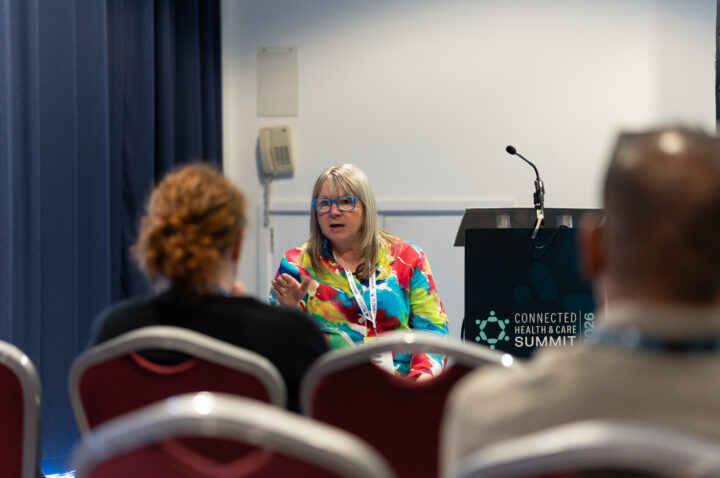
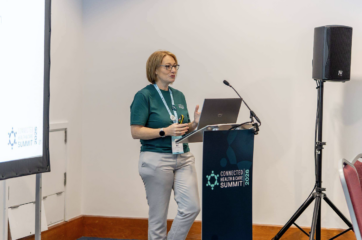
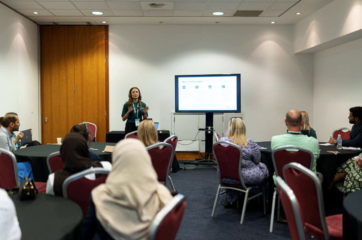
The 10-year plan is aspirational. The three big shifts sound fantastic. Everyone nods sagely and goes back to the day job. But nobody has answered the question of how. In this session from the Connected Health & Care Summit 2026, Kate Harper, a workforce strategist with 20 years of experience across academia, NHS Professionals and consulting, challenges the sector to stop waiting for a plan that may never come and start doing the things that matter regardless of which future scenario plays out.
Watch Kate Harper challenge two decades of strategic workforce planning, present three scenarios for the NHS workforce, and argue that failure demand, not headcount, is the real productivity problem to solve.
What the session covers and the central argument
This session takes a bird’s-eye view of NHS workforce planning and asks what organisations should be doing today when nobody knows what the future will look like. The central arguments were:
- The 10-year plan and the long-term workforce plan are aspirational but contain no plan for the “how”
- Strategic workforce planning, as traditionally practised, has often struggled to translate workforce projections into action when funding and organisational constraints remain fixed
- The Health Foundation estimates approximately one third of all NHS work is failure demand, work created by broken processes, workarounds and duplication
- Contradictory signals make planning more difficult: 100,000 vacancies but agency spending is being cut, graduates cannot get jobs, and the biggest temporary staffing supplier had its credit rating downgraded in the same week a US firm spent $437 million buying into the UK market
- The things worth doing now are the things that matter across different scenarios
The three scenarios and why failure demand matters more than headcount
Kate Harper outlines three scenarios. The current trajectory, where the three shifts remain aspirational, pay is inadequate, staff are being cut and the workforce is demoralised. The great redesign, where everything works, care shifts to the community and digital systems eliminate waste. And the middle ground, where pockets of excellence exist but are not scaled or sustained.
She argues that the real opportunity is not simply in headcount but in failure demand. She describes watching a hospital administrator walk pieces of paper up and down a corridor for four hours while both she and the doctor had screens in front of them. The Health Foundation estimates that a third of NHS work is created by system failures. If that third were freed up, she argues, those staff would be doing the backlog. The problem is not only the number of people available, but how effectively their time is used.
What organisations should do now and who it is relevant to
Kate Harper identifies four areas that matter under every scenario. Productivity: understand failure demand and eliminate workarounds. Work redesign: ask frontline staff how to do things better rather than bringing in consultants to tell them. Workforce flexibility: train more broadly, specialise later and use “train to task” approaches. She references the pandemic vaccinator programme, where air stewards brought exceptional people skills, but 25 trusts refused to use them.
On data, she argues that sharing workforce data with frontline teams is essential. Roster Perform and intelligence tools should be taken to wards, not just boards. RAG status should be abandoned because green can hide massive problems when nobody understands the context. People and data together is more important than data alone.
On AI, Kate Harper describes flipping strategic workforce planning on its head. Instead of big upfront analysis, feed data into a system, ask it to find anomalies, act, measure impact and iterate. She is doing this with Claude and argues it does not require sophisticated technology, just curiosity and a willingness to learn with the system.
This session is relevant to workforce directors, HR leads, chief operating officers, finance directors, rostering leads, ICB workforce teams and anyone responsible for strategic workforce planning, productivity or workforce transformation.
Frequently asked questions
The session is presented by Kate Harper, a workforce strategist with an academic background who previously worked at NHS Professionals and has spent 20 years in strategic workforce planning. She describes herself as opinionated and evidence-based and is comfortable with contentious positions. The session is structured as a presentation followed by open discussion with the room.
Kate Harper has worked in strategic workforce planning for 20 years and says she has never seen it work brilliantly. She describes the former workforce development agencies that produced detailed analyses of training pipelines, population trends and staffing projections, only for someone at the end to say “here’s your budget.” The planning made no difference because the funding was fixed. She argues the approach needs to be flipped, starting with data and learning iteratively rather than producing large reports upfront.
Failure demand is a concept from the Health Foundation describing work that exists only because processes are broken. Kate Harper estimates approximately one third of all NHS work falls into this category, including workarounds, duplication, systems that do not talk to each other, and paper-based processes that exist alongside digital tools. She argues that eliminating failure demand would free up the equivalent of a third of the workforce to do productive clinical work.
The current trajectory: three shifts remain aspirational, pay inadequate, staff being cut, over 80,000 vacancies, less than 40% satisfied with pay. The great redesign: all three shifts realised, everything digital, lower vacancies, people more satisfied. The middle ground: pockets of excellent innovation that are not scaled or sustained. Kate Harper argues organisations need to invest in things that matter under all three scenarios.
Kate Harper argues the UK trains into specialisms too early, creating a disjointed and inflexible workforce. She references the concept of “pluripotential” training, where staff are trained more broadly and can be topped up with task-specific skills. During the pandemic, non-clinical vaccinators, many of them air stewards, brought exceptional people skills. But she cites an example in which 25 trusts did not use them, risking vaccine wastage rather than accepting non-clinical staff could be trained to vaccinate under supervision.
Kate Harper and the audience agree that workforce data is rarely shared with the people it describes. Roster performance tools go to boards and managers but not to wards. She argues frontline staff have the ideas for improvement because they do the work every day, and that empowering them with their own data, with the relevant operational context, is more effective than top-down directives based on data they never see.
Kate Harper proposes flipping strategic workforce planning by feeding data into AI tools and asking them to find anomalies, bottlenecks and cost patterns. She is doing this with Claude and says it does not require sophisticated technology. The approach is iterative: ask a question, act, go back and measure the impact. She describes it as going on a journey with the data rather than producing a plan nobody reads.