

Learning from Claims Data: A Systems Approach to Improving Patient Safety
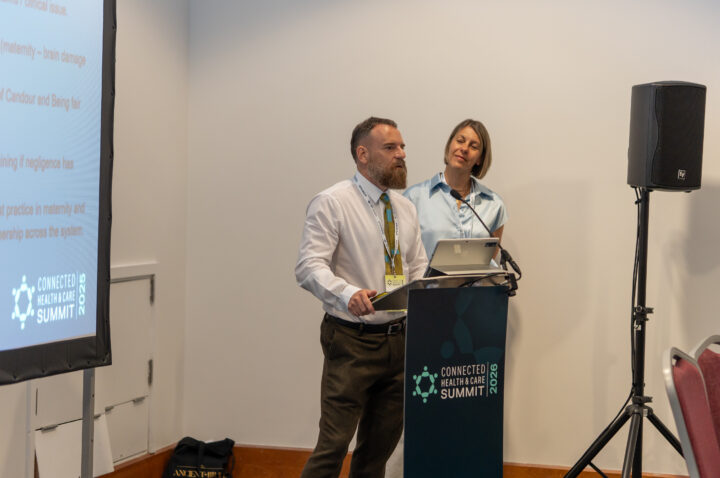
Claims data can be seen as too old to be useful. But when triangulated with incidents and complaints, it becomes a powerful rear-view mirror that reveals whether the same themes are still recurring years later. In this session from the Connected Health & Care Summit 2026, Nick Rigg, Senior Programme Lead for Maternity Schemes Evaluation and Implementation, and Naomi Assame, Deputy Director of Safety and Learning at NHS Resolution, explain how claims data can support learning and how a neonatal jaundice case study demonstrates the value of looking at harm through a systems lens.
Watch NHS Resolution explain how claims data, maternity incentive schemes and SEIPS-based case studies are being used to learn from harm and drive improvement across the NHS.
What the session covers and the key messages
This session introduces NHS Resolution’s role, its data, and how the safety and learning team uses both quantitative and qualitative information to support improvement. The key messages were:
- NHS Resolution holds over 30 years of claims data. This year, approximately 14,200 claims were notified across all schemes, a very small proportion of total healthcare episodes
- The primary motivation for people making a claim is not financial. It is wanting to prevent the same harm to happen to someone else
- Saying sorry is never an admission of liability. NHS Resolution has never held back paying on a claim because someone apologised
- The Maternity Incentive Scheme has been simplified for year eight, reducing 10 safety actions to six with the aim of , reducing complexity and demands on resource, with a shift toward using outcome-driven measures and greater local flexibility
- A neonatal jaundice case study, created at the request of affected families during a mediation, demonstrates how SEIPS analysis reveals system-level factors that a blame-focused approach would miss
How NHS Resolution uses claims data and what it reveals
Nick Rigg explains that NHS Resolution manages seven clinical and four non-clinical indemnity schemes. The largest is the CNST, of which all NHS trusts in England are members. Contributions are calculated annually using the Government Actuaries Department and vary by trust size, type, specialties, clinical WTE and claims experience.
Claims data has a built-in time lag of up to three years, and longer for claims affecting minors or those lacking mental capacity. The Early Notification Scheme addresses this for maternity brain injuries by requiring trusts to report specific incidents via the SPEN portal, enabling earlier investigation, faster interim payments for families and learning from harm. Naomi Assame describes claims data as a rich qualitative dataset that is useful as a rear-view mirror when triangulated with incidents and complaints. If the same themes from claims three to five years ago are still appearing in current incident data, that signals something has not been addressed.
What the neonatal jaundice case study shows and who it is relevant to
The case study was created because families affected by neonatal jaundice harm told NHS Resolution during a mediation that they wanted a learning resource produced. It traces the care of a Black British mother through pregnancy, birth and postnatal community visits, identifying multiple points where care could have been optimised.
Naomi Assame uses the SEIPS framework to analyse the case from a systems perspective. The Apgar score, designed for white babies, has significant bias that the NHS Race and Health Observatory recommended addressing in 2023. A community midwife did not properly assess the mother’s concerns about jaundice. A planned visit was missed due to midwifery sickness. A different midwife on day four did not convey urgency. At hospital, the bilirubin result was plotted incorrectly, leading to the wrong treatment and ultimately kernicterus.
The SEIPS analysis draws out factors including workforce sickness, cultural competency training, continuity of care, tool bias, lone working and the external guidance environment. Naomi Assame argues that looking at claims through a systems lens removes the focus on individual blame and addresses the fear that stops healthcare professionals from engaging with claims, inquest and incident data.
This session is relevant to patient safety leads, governance teams, maternity leads, clinical negligence teams, medical directors, quality improvement leads and anyone responsible for learning from harm, claims management or maternity safety across the NHS.
Frequently asked questions
The session features Nick Rigg, Senior Programme Lead for Maternity Schemes Evaluation and Implementation at NHS Resolution, and Naomi Assame, Deputy Director of Safety and Learning at NHS Resolution. Naomi Assame is a nurse by background and still works in urgent care. NHS Resolution was formerly the NHS Litigation Authority and has operated under its current name since 2019.
NHS Resolution manages indemnity schemes for NHS bodies in England, resolves disputes and claims, and uses data to drive improvement. It has four core services: Claims Management, Safety and Learning, Practitioner Performance Advice, and Primary Care Appeals. It is not a regulator, provider nor patient safety body, but its strategy positions it firmly in the patient safety landscape. All NHS trusts in England are members of its largest indemnity scheme, the Clinical Negligence Scheme for Trusts (CNST).
The primary motivation is not financial. Research shows the most common driver is not wanting the same harm to happen to someone else. Other motivations include getting an apology, holding services to account, getting a clear explanation of what happened, frustration about how an incident or complaint was handled, and feeling ignored. Over three quarters cited frustration, but fewer than one in ten said it was their primary motivation.
The Maternity Incentive Scheme rewards trusts that meet safety actions by returning part of their CNST contribution. It has been developed with NHS England’s National Maternity Safety Champions and a collaborative advisory group including professional bodies such as RCOG, DHSC, NHSE and patient representatives. For year eight, the number of safety actions has been reduced from ten to six. The scheme is being simplified, made more outcome-driven and given more flexibility for local adaptation.
The Early Notification Scheme requires CNST members to report specific brain injuries at birth via the SPEN portal. Claims for cerebral palsy were previously taking six to seven years to be lodged. The scheme enables earlier investigation, interim payments for families, faster learning and reduced legal costs. An evaluation is underway covering financial impact, processes, stakeholder feedback and learning from harm.
The case study traces the care of a Black British mother and her baby through a series of opportunities where care could have been optimised. A community midwife did not properly assess jaundice concerns. A planned visit was missed due to sickness. Urgency was not communicated. At hospital, a bilirubin result was plotted incorrectly. The baby developed kernicterus. Using SEIPS, the case reveals system factors including tool bias in the Apgar score, workforce sickness, cultural competency gaps, continuity of care failures and lone working.
Scorecards provide each NHS trust with 10 years of their claims data, updated annually. They include cost, value and causes of claims, covering both clinical and non-clinical information. NHS Resolution advises looking at them holistically alongside incident and complaint data, and bringing together clinical, legal and governance perspectives to understand what the data means locally. Safety and learning leads are available to walk trusts through their scorecards.
Nick Rigg is direct: saying sorry is never an admission of liability. NHS Resolution has never held back paying on a claim because someone apologised. It is always the right thing to do. Research into why people make claims consistently shows that an apology and a clear explanation are among the most important things families are seeking.