


Policy Round-Up: What Healthcare Leaders Should Focus on Now
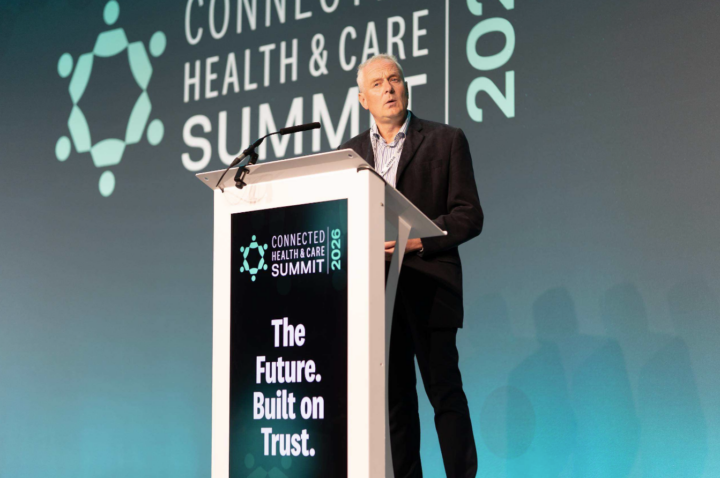
The NHS runs on goodwill. Except much of that goodwill has been withdrawn bt staff in response to pressures on pay, working conditions and trust. In this keynote from the Connected Health & Care Summit 2026, Andy Cowper, a journalist who has covered NHS politics and policy for 26 years, examines what the arrival of Prime Minister Andy Burnham means for health and social care, dissects three broken psychological contracts with staff, the public and future generations, and argues that the system’s tendency to cover up and lawyer up remains its most dangerous cultural failure.
Watch Andy Cowper examine what Andy Burnham’s premiership means, why three psychological contracts are broken, and why trust, the word on the lectern, is the only thing the NHS cannot afford to lose.
What the keynote covers and the central argument
This keynote covers political change, social care reform, devolution, culture, regulation and trust. The central arguments were:
- Andy Cowper argues that Andy Burnham has so far made limited substantive policy commitments, giving himself maximum room to manoeuvre. He questions his political consistency has not been his strong point, and points to Greater Manchester’s devolution record including significant financial overspend during his time as mayor.
- Three psychological contracts are broken: with staff whose goodwill was withdrawn after austerity, COVID and the Hadiza Bawa-Garba case; with the public whose confidence in the NHS is at historic lows; and with future generations who will not accept funding social care from housing wealth they do not have
- The NHS needs a chief anthropologist more than it needs any chief inspector, in Andy Cowpers view.
- Just accountability is far better than no-blame culture, but Andy Cowper argues that the system needs stronger root-cause analysis and human-factors capability
- Andy Cowper argues the duty of candour is too often absent when things go wrong
The political landscape and social care
Andy Cowper traces Andy Burnham’s political trajectory from opposing Manchester devolution to championing it, from NHS preferred provider to Greater Manchester mayor. He notes that Andy Burnham is the UK’s first prime minister who was previously health secretary, and that he is a localiser inheriting a centralising NHS Modernisation Bill.
On social care, Andy Cowper walks through every failed attempt at reform: the Dilnot commission’s £35,000 cap, Osborne’s £86,000 cap, Sunak’s health and social care levy, Kwarteng’s cancellation, Hunt’s delay, and Reeves’s abandonment. Baroness Casey is now leading work on the future of social care and its funding. The Health Foundation estimated a universal care service could cost £17 billion in additional funding by 2035-36. Andy Burnham’s previous proposal was a 10% levy on all estates replacing inheritance tax, but whether that remains his thinking is unclear.
What this means for the sector and who it is relevant to
Andy Cowper argues that the most experienced staff are leaving in the greatest numbers, creating a loss of institutional memory. He cites the Hadiza Bawa-Garba case as an example of an event that contributed to concerns among some medics that the system no longer had their backs. The NHS pension, which he describes as literally to die for, is poorly understood by younger staff. The psychological contract on pay used to be modest start, better middle, well-paid third decade. Andy Cowper argues that this contract has eroded.
On regulation, Andy Cowper criticises the CQC (Care Quality Commission) historical approach, with inspectors copy-pasting reports describing services that hospitals did not provide. He argues that patient-reported outcome measures have been reduced rather than expanded, and that the private sector is now ahead on quality transparency.
On culture, he cites embedded bullying from the Messenger Review, concerns about discrimination identified in staff-survey data, and NHS staff inappropriately accessing medical records of Southport and Nottingham victims. He references Professor Michael West’s pillars for high-functioning teams and argues these remain aspirational in most of the NHS.
This session is relevant to chief executives, board members, medical directors, policy leads, HR directors, patient safety teams and anyone responsible for strategy, regulation, workforce culture or governance.
Frequently asked questions
The keynote is presented by Andy Cowper, a journalist who has written about the politics, management and policy of the NHS in England since 2000. He writes for several publications and is known for his analysis of NHS policy and culture. All views are his own professional analysis and commentary.
Andy Cowper argues that Andy Burnham has so far made relatively few major policy commitments, leaving room to manoeuvre. He examines Andy Burnhams political flexibility, including opposing then championing Manchester devolution within a year. Andy Cowper mentions his Manchester model delivered health improvements between 2016 and 2020 but overspent significantly, with the ICB running significant deficits that led to NHS England imposing legal undertakings. Andy Cowper describes devolution critically, arguing that local leaders gain greater freedom to make decisions, and mistakes, when powers are devolved.
First, with staff: Andy Cowper argues that goodwill was withdrawn after austerity-era wage suppression, COVID trauma and the Hadiza Bawa-Garba case, which he says contributed to concerns among some medics about whether the system had their backs. Second, with the public: the British Social Attitudes Survey found that only 26% were satisfied with how the NHS runs in 2025, while 16% expected the standard of the NHS care to improve over the next five years. Third, with future generations: the current model of funding social care from housing wealth is time-limited as subsequent generations have proportionately less unearned equity.
Culture is a central theme of the keynote and, in Andy Cowpers view, is too rarely analysed seriously. The Messenger Review described embedded bullying, while the latest staff survey data shows continued concerns around discrimination. Andy Cowper references staff inappropriately accessed medical records of Southport and Nottingham victims. Andy Cowper argues the NHS needs a chief anthropologist more than any chief inspector, and that just accountability is better than no-blame culture, but the system needs stronger root-cause analysis and human-factors capability to deliver it.
Andy Cowper strongly criticises the historical approach to CQC (Care Quality Commission) regulation, citing examples where he says inspection reports did not accurately reflect the services being provided. He argues that monitoring lost clarity of purpose when quality regulation was added to its remit. He also argues that patient-reported outcome measures have been reduced rather than expanded and that the private sector is now ahead on quality transparency. Andy Cowper describes the regulatory approach of the mid-2010s as a constellation of inept regulatory death stars.
Andy Cowper traces every failed reform attempt from Dilnot through to Reeves’s decision not to proceed with the previously planned reforms. Baroness Casey is now leading work on the future of social care. Andy Burnham previously proposed replacing inheritance tax with a 10% levy on all estates. The Health Foundation estimated a universal model could cost £17 billion in additional funding by 2035-36. Dame Ruth Carnall’s call for longer-term contracts to free hospital beds is referenced as a practical interim step.
Andy Cowper does not offer a single policy prescription but identifies areas where he believes change is needed. The broken psychological contracts must be acknowledged. Transparency must be pursued even though it is uncomfortable. The system must avoid becoming defensive when mistakes happen and strengthen its approach to learning from them. Workforce and Patient Safety, the twin themes of the conference, are described as the start of the solution.