


Learning must travel faster than risk
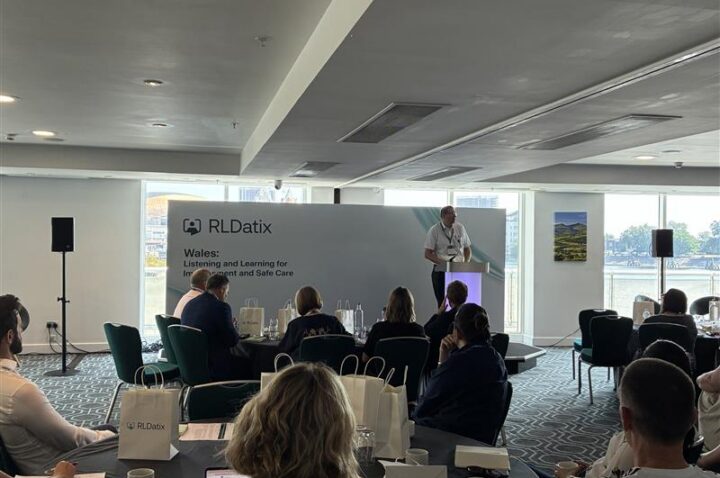
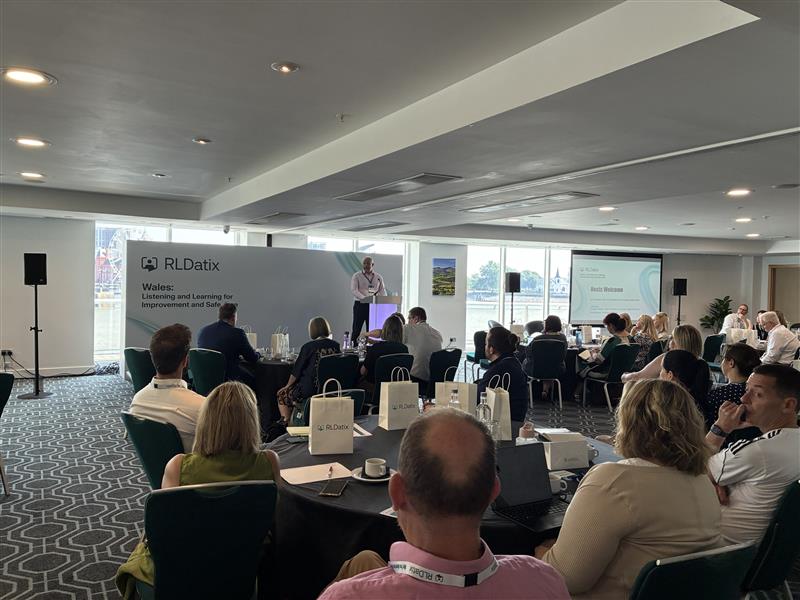
Insights from Jan Williams, Jonathan Webb and Paul Sanders, recorded at the RLDatix Wales: Listening and Learning for Improvement and Safe Care event, 23 June 2026, St. David’s Cardiff
NHS Wales delivers millions of patient contacts safely every year. But when harm does occur, the consequences are profound. The question is not whether learning happens locally. It does. The question is whether it travels fast enough to prevent the same harm recurring elsewhere. That challenge framed the opening session of the RLDatix Wales event, where Jan Williams (Chair, Swansea Bay University Health Board), Jonathan Webb (Head of Safety and Learning, Welsh Risk Pool) and Paul Sanders (UK and Ireland President, RLDatix) set the context for the day ahead.
Key takeaways from this session
- The financial cost of claims in NHS Wales now exceeds £800 million, equivalent to the annual running cost of a major health board. Every pound spent settling a claim is a pound that cannot be spent on frontline care.
- Three themes appear in claims consistently: communication, documentation, escalation. They sit at the heart of safe, reliable care, and addressing them requires system-wide focus.
- Wales is data rich but still information poor. With 150,000 records captured through Datix Cymru each year, the challenge is not collecting data but using it to inform and drive improvement.
- Learning happens locally but doesn’t travel far enough. What happens in one organisation must inform learning across all of NHS Wales.
- As macro pressures increase, safety is the variable most at risk. Rising complexity, workforce challenges and financial austerity demand that safety remains the constant, not the thing that gives way.
The scale of the problem
£800 million in claims, and the human cost behind every one
The total value of known claims in NHS Wales, where settlement is assessed as probable or certain, now exceeds £800 million. Jan Williams put that in context:
"The cost of running Swansea Bay University Health Board for one year is £1.8 billion. Betsi Cadwaladr is £2.2 billion. So we are spending as much on claims as we are on the running of a health board.”
Jan Williams, Chair, Swansea Bay University Health Board
But the figures only tell part of the story. Behind every claim is a patient, a family and often a member of staff whose lives have been changed.
"Families and patients live with the fact it didn’t go well for their lifetime. And that’s always got to be at the centre of our thinking.”
Jan Williams, Chair, Swansea Bay University Health Board
Every pound spent settling a claim is a pound that cannot be spent directly on healthcare for the people of Wales. There is both a moral responsibility to reduce harm and a practical necessity for a sustainable NHS.
Communication, documentation, escalation
The three themes at the heart of safe, reliable care
Across the claims reviewed by the Welsh Risk Pool, three themes come through consistently: communication, documentation and escalation. They are powerful because they sit at the very heart of safe, reliable care.
Communication
Failures appear between teams, between primary and secondary care, between patients and staff, and between the systems that hold and transfer information. When communication fails, risk increases.
Documentation
Issues include failure to record findings, decisions or care plans clearly enough, making it difficult to demonstrate what happened and why specific decisions were made. It also makes learning harder because the evidence of what happened is incomplete.
Escalation
Issues can involve delays between junior staff alerting senior staff, delays in seeking expert advice or uncertainty about how and when to raise concerns. Clear escalation saves time, supports staff, protects patients and can avoid harm.
Jan shared a stark example from a national review of radiology reports, where suspected lung cancer identified on emergency department x-rays was never acted on because the reports had not reached the right person.
"Some printed reports had simply fallen down behind the desk. That’s a stark reminder that safety depends on the reliability of the whole system and not just on the skill or intention of individual staff.”
Jan Williams, Chair, Swansea Bay University Health Board
Data rich, information poor
150,000 records a year, and the challenge of turning data into action
Through Datix Cymru, NHS Wales captures approximately 150,000 records each year, covering incidents, claims, complaints, mortality reviews and more. The data exists. What is missing is the discipline to use it consistently.
"We are so data rich and we’re still a little information poor. One of the challenges I want to set to you is how we can use that data to inform and drive our improvement strategies.”
Jonathan Webb, Head of Safety and Learning, Welsh Risk Pool
Jonathan acknowledged progress through the learning from events process, which has strengthened assurance around organisational learning over six years. But he was candid: learning is happening locally; it is not travelling across organisations at the pace needed.
"We’re learning quite well locally, but we’re not sharing that learning as we need to. That’s what I’ll be driving us forward on in the next 18 months.”
Jonathan Webb, Head of Safety and Learning, Welsh Risk Pool
Protecting safety as pressures rise
Why patient safety must be the constant, not the variable
Paul Sanders broadened the lens to the macro pressures bearing down on health and care. Complexity and demand continue to rise. Workforce capacity is under strain. Financial austerity is likely to intensify as government priorities shift toward defence spending. In that environment, something has to give, and Paul argued it must not be safety.
"All of those pressures combining on the system, for me the variable that’s probably most at threat is risk and the impact that has on patient safety. We have to protect safety and risk. That has to be the constant.”
Paul Sanders, UK and Ireland President, RLDatix
He framed the day’s purpose clearly: becoming a learning organisation is about more than process. It is about culture, leadership, behaviours, trust and the willingness to turn insight into action.
"In health and care, learning is never theoretical. It matters because it shapes experiences, outcomes and safety for patients, families and staff.”
Paul Sanders, UK and Ireland President, RLDatix
The common thread
Across the three opening contributions, one message came through clearly. NHS Wales has the data, the collaborative culture and the shared commitment to make learning work at a system level. What it needs now is the discipline to turn that into consistent action.
As Jan Williams put it in the challenge she left with the room:
"Learning must travel faster than risk.”
That is the standard. The question is how Wales builds the systems, culture and leadership to meet it.
Continue the Conversation
Creating safer healthcare systems depends on ensuring that learning is shared, applied and acted upon before risks result in harm. From incident reporting to organisational learning, the challenge is not simply gathering information but making sure insight reaches the people who can use it to drive improvement.
Related Summit sessions:
These sessions explore how healthcare organisations are strengthening learning cultures, improving information sharing and creating environments where lessons can be translated into meaningful action.
FAQs
The Welsh Risk Pool is the mechanism through which clinical negligence and personal injury claims against NHS Wales organisations are managed and funded. It also plays a national role in identifying learning from claims, coordinating improvement programmes and providing assurance around the quality and timeliness of organisational learning. Cases are reviewed by a national committee of leaders drawn from NHS Wales organisations and Welsh Government.
Three themes appear consistently across claims reviewed by the Welsh Risk Pool: communication failures (between teams, between services and between patients and staff), documentation issues (incomplete or unclear recording of findings, decisions and care plans) and escalation gaps (delays in alerting senior staff or seeking expert advice). These sit at the heart of safe, reliable care and are relevant across all clinical specialties and services.
The redress regulations, now known as the Listening to People regulations, provide a framework for managing lower-value clinical negligence cases more fairly and efficiently. Where a breach of duty is identified and the case is managed through the redress process, the average saving is approximately £40,000 per case. Managing just 10 cases through this route in a year can fund seven or eight midwives.